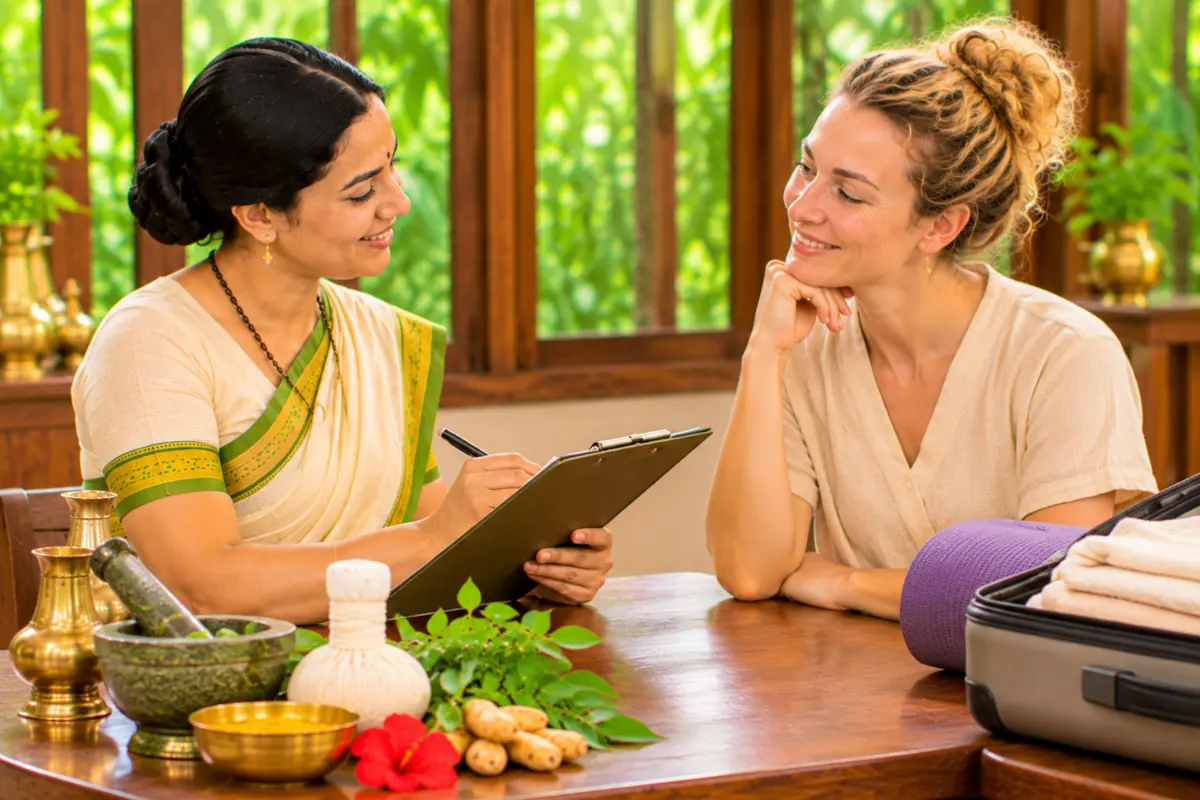
This guide explains why mornings can be stiff, how an integrative Ayurveda programme approaches it with warmth, movement, diet and routine, what a morning in a residential centre looks like, how to build a helpful routine at home and what to discuss with your own doctors. And throughout, it shows how MyVaidyam can walk beside you as your friend and guide.
Ayurveda is offered here as a complementary, supportive approach that works alongside your own doctor's care, never as a replacement for it. It does not promise to remove stiffness, and your own doctors should assess any long-standing joint problem.
Quick Facts - Managing Morning Joint Stiffness With an Integrative Ayurveda Program
| Topic | Summary |
|---|---|
| Pattern | Stiffness on waking that eases with movement |
| Ayurvedic approach | Warmth, oil, diet, routine |
| Combined with | Physiotherapy and gentle yoga |
| Typical length | Two to four weeks |
| Discuss with | Your own doctors, especially if prolonged |
| Not | A promise of relief |
| Visa | e-Medical visa: 60 days from first arrival, triple entry, non-extendable |
| Your companion | MyVaidyam: planning, coordination and support before, during and after |
Why mornings can feel stiff
During sleep, we move very little, and joints and surrounding tissues can feel tight on waking. In some conditions, such as osteoarthritis, stiffness is usually brief. In others, notably inflammatory arthritis, it can last longer. Because the length and character of morning stiffness give doctors useful information, it is worth mentioning to your own doctor, especially if it lasts for more than half an hour or is getting worse.
A morning, eased gradually
| On waking | Stiffness at its strongest |
|---|---|
| After warm water | Softening a little |
| After warm bath | Softer still |
| After gentle movement | Easier to move |
| Mid-morning | Often much easier |
The picture is only an illustration of how a gentle morning routine may feel, and everyone is different.
How Ayurveda approaches stiffness
Ayurveda traditionally links stiffness with dryness and cold, and the response is warmth, oil and nourishment. A physician considers your constitution, digestion, sleep and activity, and builds a plan in which warm therapies, simple food, rest and movement work together. The emphasis is on rhythm, so that mornings, in particular, begin gently.
A morning at a residential centre
| Time | What may happen | Why |
|---|---|---|
| On waking | Warm water, gentle bed stretches | Wakes the joints without strain |
| Early morning | Warm bath or steam, as planned | Relaxes stiff tissue |
| Mid-morning | Oil massage or local therapy | Soothing and nourishing |
| Later morning | Physiotherapy or yoga | Builds easy, confident movement |
Warm therapies that are often used
Programmes commonly use warm herbal oil massage, gentle herbal steam and local warm therapies for particular joints, chosen by the physician to suit your condition. These are traditionally described as soothing, and many guests find that the morning routine of warmth followed by movement is where they feel the biggest difference during a stay.
Movement and physiotherapy
Gentle, graded movement is essential. A physiotherapist can teach joint-by-joint exercises for waking up the body, such as ankle circles, knee bends, hand opening and closing and gentle trunk rotations, along with strengthening for the muscles that support the joints. Yoga adds breath and flexibility. Together, they teach you how to begin a day gently, which you can repeat at home.
Diet, sleep and evening routine
A good morning often begins the evening before. Light, early suppers, an unhurried wind-down and consistent bedtimes help sleep, and good sleep helps joints. Meals in a residential programme are usually warm, simple and freshly cooked, and many guests find that their energy and comfort improve with the regular rhythm.
Building a morning routine at home
- Keep a glass of warm water by your bed.
- Stretch gently in bed before getting up.
- Take a warm shower or bath, if suitable.
- Move gently for ten minutes before breakfast.
- Pace yourself through the morning, and avoid rushing.
- Keep a note of how stiff you feel, to share with your doctors.
Evenings, sleep and the next morning
Many guests notice that a settled evening shapes the following morning. Avoid heavy meals late at night, keep the room comfortably warm, use pillows that support sore joints and keep to regular sleep times. A few gentle stretches and a warm drink before bed prepare the body for rest. If pain or stiffness regularly wakes you, mention it to your doctors.
When stiffness needs a closer look
Stiffness that lasts more than half an hour on most mornings, comes with swelling, warmth or tiredness, or is steadily worsening deserves a conversation with your own doctor, who may suggest tests. Your Ayurvedic physician will ask about this too, and will work alongside your doctor's advice rather than instead of it.
Setting honest expectations
Everyone's joints respond differently, and a thoughtful physician will speak of comfort, ease and routine, and not promise that mornings will become effortless. Many guests nonetheless find that a few weeks of rhythm, warmth and gentle movement teach them how to begin the day more kindly, and that is a skill worth keeping.
Working alongside your own doctors
Please keep your own doctors informed. Share your medical summary, bring your reports and keep taking whatever you have been prescribed. Please discuss prolonged or worsening morning stiffness with your own doctors, and keep taking prescribed medicines as advised. Please do not change medicines without medical advice.
Choosing a centre
Look for a qualified Ayurvedic doctor (BAMS or MD Ayurveda), registered with the appropriate board, a physiotherapist on the team, trained therapists and a clear written plan. Be cautious of anyone who promises to cure arthritis or who promises relief from stiffness within days.
Planning the journey
Apply for your e-Medical visa on India's official portal, usually with a hospital letter, a few weeks before travel. It is valid for 60 days from first arrival, allows three entries and cannot be extended. Book flights after approval, arrange travel insurance and choose an arrival time that gives you a rested first day. Check the portal for current rules before you apply.
Your friend and hand-holder in easing your mornings: MyVaidyam
Better mornings begin with a good plan, and that is where MyVaidyam comes in. We walk with you from your very first question to the day you return home, answering every question patiently and making sure that nothing is left to chance.
- An online consultation with an Ayurvedic physician to discuss your joints and goals.
- Help preparing your health summary and reports.
- Guidance on choosing a reputable integrative centre.
- Help understanding your written plan.
- Support with your e-Medical visa documents, flights, airport pickup and accommodation.
- A warm point of contact during your stay, and follow-up after you return home.
You are welcome to reach out at any stage. We would be delighted to help you begin.