This is a natural part of life, and for many people it is quite manageable: with the right movement, support and routine, joints can stay comfortable and useful for a long time.
This guide explains in plain language what age-related joint change means, how supportive Ayurvedic care may fit alongside your doctor's advice, what a residential programme can offer older guests, how stiffness is eased, how to travel comfortably and what to keep doing at home. It also covers age-related joint stiffness. And throughout, it shows how MyVaidyam can walk beside you as your friend and guide.
Ayurveda is offered here as a complementary, supportive approach that works alongside your own doctor's care, never as a replacement for it. It does not promise to reverse joint change.
Quick Facts - Ayurveda Support for Age-Related Joint Degeneration for International Patients
| Topic | Summary |
|---|---|
| What it is | Gradual change in joint cartilage and tissues over time |
| Common joints | Knees, hips, hands, spine |
| Diagnosis | By your own doctor, with examination and imaging if needed |
| Ayurvedic support | Warm therapies, movement, diet, routine |
| Typical length | Two to four weeks |
| Not | A promise of reversal or cure |
| Visa | e-Medical visa: 60 days from first arrival, triple entry, non-extendable |
| Your companion | MyVaidyam: planning, coordination and support before, during and after |
What changes with age
Over the years, the smooth cartilage covering the ends of the bones slowly thins, the fluid that lubricates joints changes and surrounding muscles may weaken if we move less. This is often called wear and tear, though it is better described as gradual change, and it does not always cause symptoms. When it does, it usually shows as stiffness after rest, aching with activity and sometimes brief swelling. Your own doctor can tell you what is going on in your joints and what medical options exist.
Looking after joints through the years
Keep moving
Regular, gentle, joint-friendly activity
Strengthen
Muscles that cushion and support the joints
Warm and soothe
Warm therapies, rest and relaxation
Nourish
Simple, regular, balanced food and good sleep
The picture shows layers of support, and each helps the others.
How Ayurveda looks at it
Ayurveda associates the later years with a tendency toward dryness and stiffness, and its traditional response is warmth, oil, nourishment and regularity. A physician considers your constitution, digestion, sleep, strength and activity, and shapes a gentle plan. The tone is one of care and support, and not of fighting the years.
What a residential programme may offer
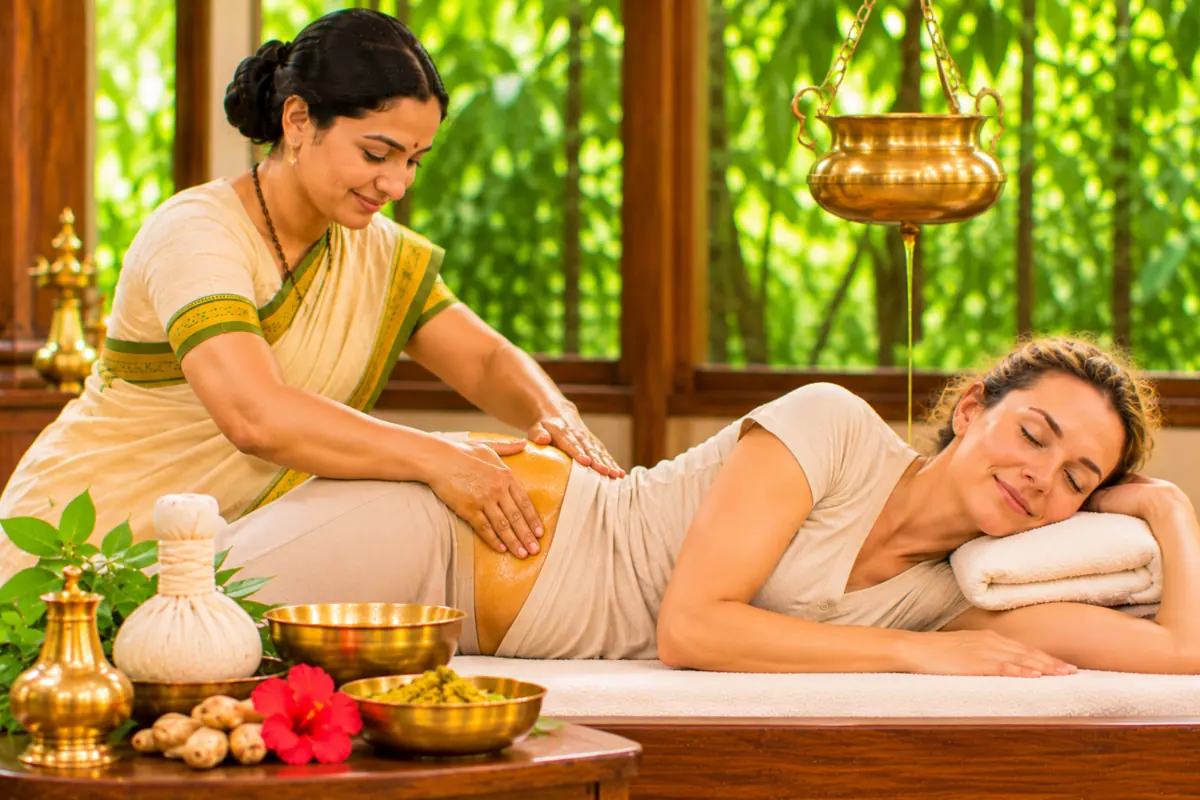
Typical elements include warm herbal oil massage, gentle steam, local warm therapies for the knees, hips or back, a simple warm diet, regular rhythm and rest. Many guests describe these as deeply soothing, and the daily routine as restorative in its own right. Physiotherapy and gentle yoga are commonly added, so that warmth is followed by guided movement.
Easing stiffness
Age-related stiffness is usually worst after rest, and eases with gentle movement and warmth. A programme that begins the day with warm water, light stretches, a warm therapy and unhurried movement teaches a pattern you can copy at home. Many guests are surprised to find how much a regular morning routine changes the way the day begins.
Strength and balance
Strong muscles take load off joints, and good balance prevents falls. A physiotherapist can assess strength and balance and teach safe exercises, such as sit-to-stand practice, gentle leg strengthening and balance work near a support. These are not strenuous, and they are among the most useful things an older guest can bring home.
A pace that suits you
Older guests are often best served by a gentler pace, with more rest between therapies, softer diet steps and closer reviews. Tell your physician about your usual energy, any history of falls and any other conditions, so that the programme is fitted to you.
Travelling comfortably
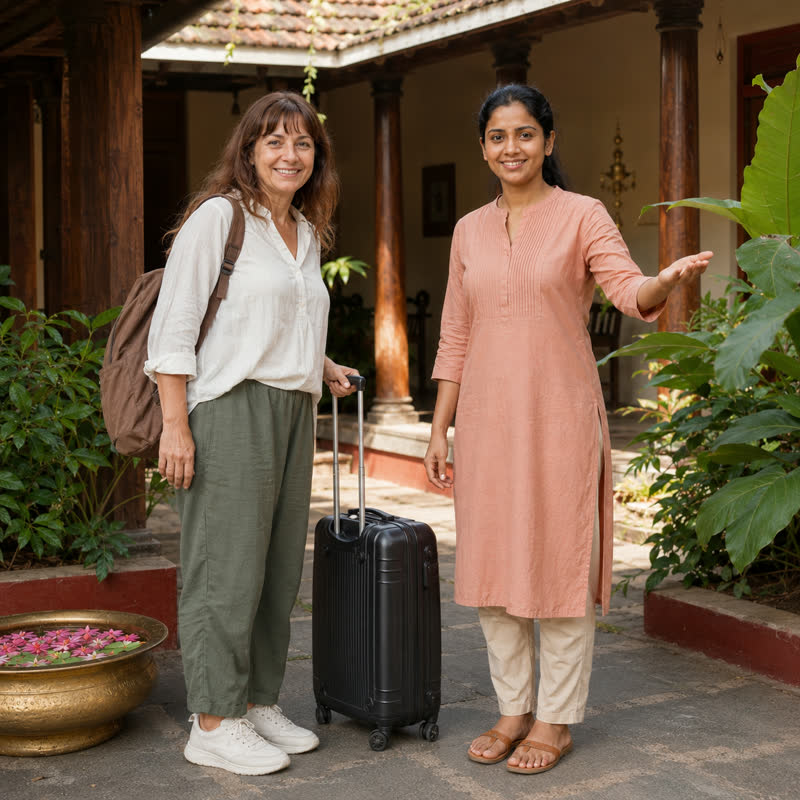
Plan the journey with comfort in mind: sensible flight times, an aisle seat, regular movement on board and airport assistance if long walks tire you. Carry medicines in hand luggage with a doctor's letter, and allow a rest day on arrival. Many guests travel with a spouse, relative or friend, and many centres welcome companions.
Keeping it going at home
- Move every day, in ways your joints enjoy.
- Keep up the strengthening and balance exercises.
- Eat simple, regular, balanced meals.
- Keep a warm, steady routine and sleep well.
- See your own doctors regularly and share the centre's summary.
Hands, knees, hips and spine
Age-related joint change shows up differently in different places. In the hands, it may cause stiffness and bony enlargement of the finger joints, in the knees, aching on stairs and after sitting, in the hips, stiffness in the groin or thigh and, in the spine, morning stiffness and aching with prolonged standing. Your physician will focus on the joints that trouble you, and adapt the therapies and exercises accordingly.
Food, weight and joints
Gentle attention to food and weight can ease the load on joints. In a residential programme, meals are warm, simple and freshly cooked, with regular times and a lighter supper, and they are adapted to any medical diet you follow. Many guests find that the rhythm helps them feel lighter and more energetic, which in turn makes movement easier.
Working alongside your own doctors
Please keep your own doctors informed. Share your medical summary, bring your reports and keep taking whatever you have been prescribed. Please keep taking prescribed medicines, and discuss any new therapy with your own doctors first. Please do not change medicines without medical advice.
Choosing a centre
Look for a qualified Ayurvedic doctor (BAMS or MD Ayurveda), registered with the appropriate board, a physiotherapist on the team, accessible facilities, a hospital nearby and a clear written plan. Be cautious of anyone who promises to reverse joint wear or who ignores your own doctor's advice.
Planning the journey
Apply for your e-Medical visa on India's official portal, usually with a hospital letter, a few weeks before travel. It is valid for 60 days from first arrival, allows three entries and cannot be extended. Book flights after approval, arrange travel insurance and choose an arrival time that gives you a rested first day. Check the portal for current rules before you apply.
Your friend and hand-holder in finding a gentle, supportive programme:
MyVaidyam
A kind plan begins with a good conversation, and that is where MyVaidyam comes in. We walk with you from your very first question to the day you return home, answering every question patiently and making sure that nothing is left to chance.
- An online consultation with an Ayurvedic physician to discuss your joints and goals.
- Help preparing your health summary and reports.
- Guidance on choosing a reputable, accessible centre.
- Help planning comfortable travel, with a companion if you wish.
- Support with your e-Medical visa documents, flights, airport pickup and accommodation.
- A warm point of contact during your stay, and follow-up after you return home.
You are welcome to reach out at any stage. We would be delighted to help you begin.