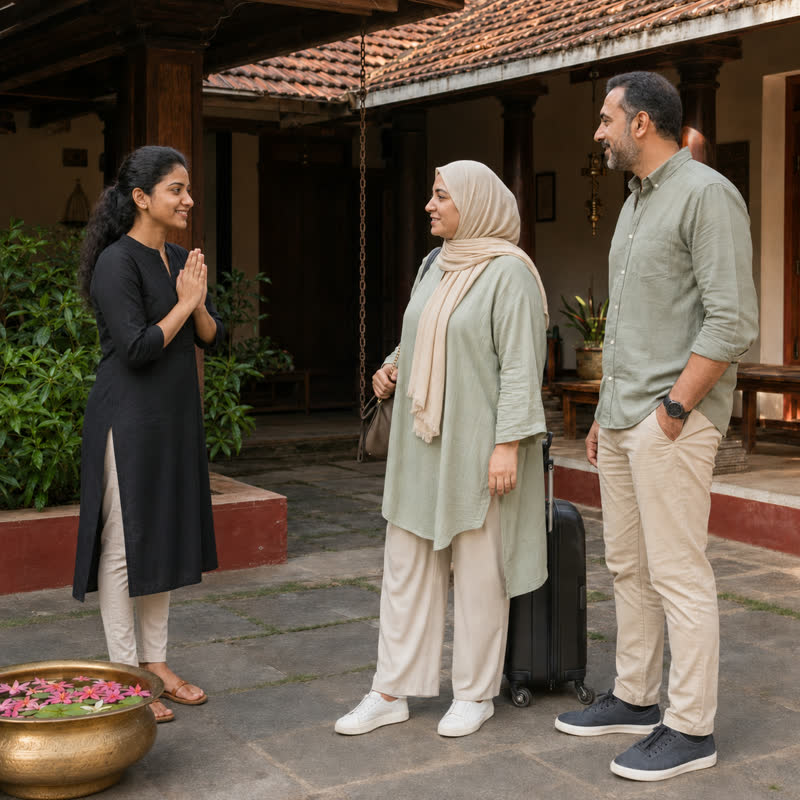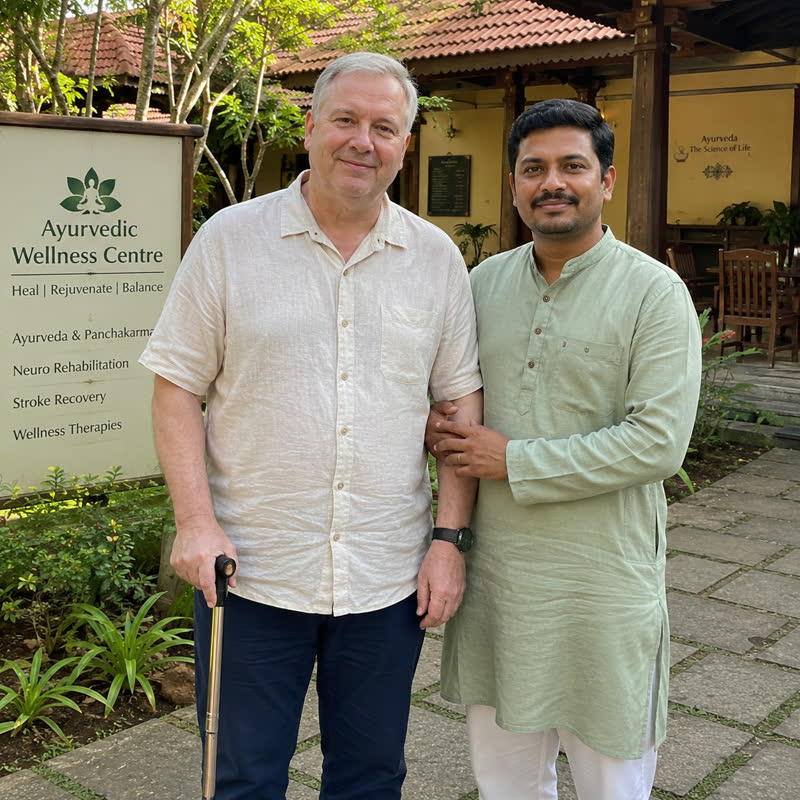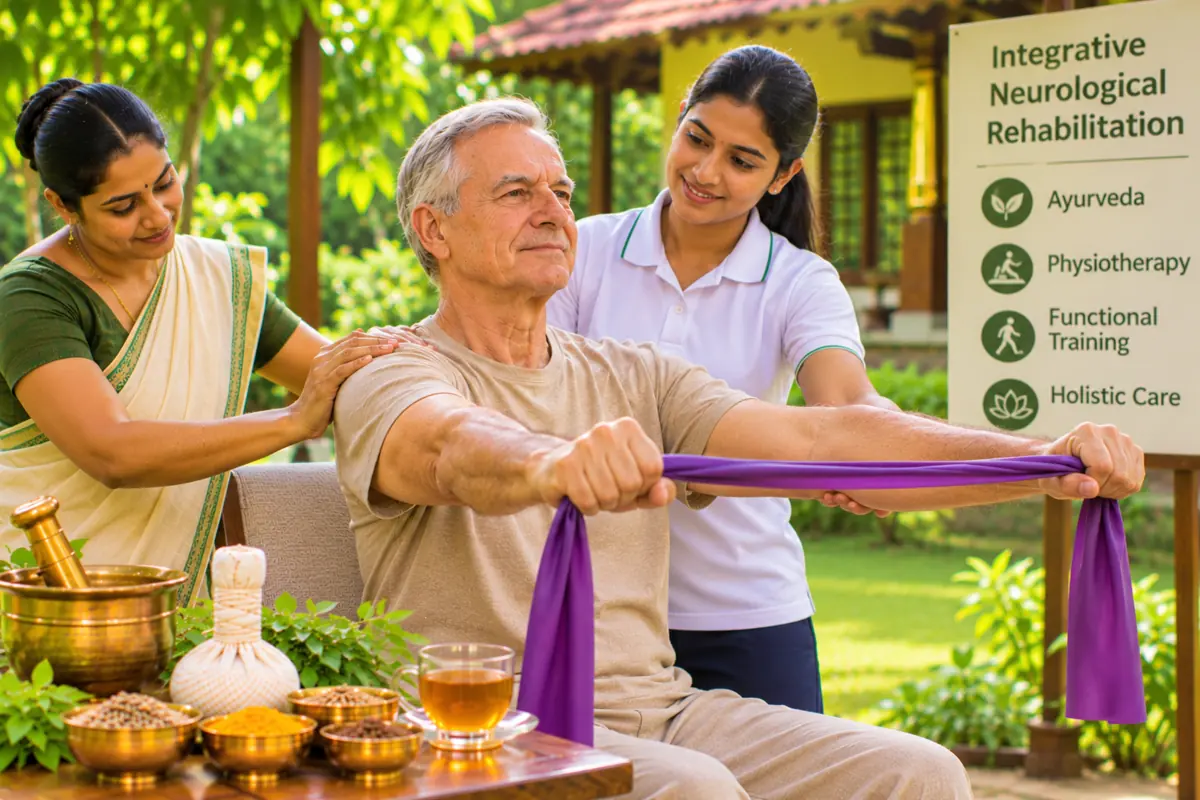
Alongside, some families wish to add gentle supportive care from Ayurveda, and some centres in India bring the two together under one roof.
This guide explains how Ayurveda and physiotherapy may be combined in neurological rehabilitation: what each offers, how a combined plan works, what safety questions matter, how to choose a centre, what a typical week looks like and how to continue at home. It is supportive only, and it does not promise recovery of function. And throughout, it shows how MyVaidyam can walk beside you as your friend and guide.
Ayurveda is offered here as a complementary, supportive approach that works alongside your own doctor's care, never as a replacement for it. It does not replace your neurologist or rehabilitation team.
Quick Facts - Ayurveda and Physiotherapy in Neurological Rehabilitation for International Patients
| Topic | Summary |
|---|---|
| Physiotherapy | Strength, balance, mobility and function |
| Ayurveda | Gentle warm therapies, diet, calm routine |
| Key | One shared, written plan |
| Led by | Your neurologist and rehabilitation team |
| Travel | After clearance, with a companion |
| Not | A promise of recovery |
| Visa | e-Medical visa: 60 days from first arrival, triple entry, non-extendable |
| Your companion | MyVaidyam: planning, coordination and support before, during and after |
Two approaches around one person
Ayurveda
Warmth, diet, routine, calm
Physiotherapy
Assessment, exercise, mobility
In the overlap: a relaxed body that is ready to practise movement
The aim is a single, coordinated plan, not two programmes running separately.
What physiotherapy contributes
Neurological physiotherapists work on movement and function: stretching to keep muscles supple, strengthening, balance and walking practice, practice with everyday tasks and advice on aids and braces. The work is patient and repetitive, because the nervous system learns through practice. Whatever else you add, this work should continue.
What Ayurveda may contribute
Centres experienced in neurological care may offer warm herbal oil therapies, gentle warmth, a nourishing, simple diet, a calm routine and relaxation practices. These are traditionally described as soothing and supportive, and many guests and families value the calm they bring. They are offered alongside rehabilitation, never as a substitute for it.
How a combined day may look
| Time | What may happen | Why |
|---|---|---|
| Morning | Warm therapy, gentle and supervised | Relaxes tight muscles |
| Mid-morning | Physiotherapy: stretching, strengthening, balance | Makes use of the relaxed state |
| Midday | Simple, adapted meal and rest | Restores energy |
| Afternoon | Second, lighter physiotherapy or occupational practice | Builds on morning work |
| Evening | Relaxation, supper, early sleep | Supports recovery |
Safety first
In neurological rehabilitation, safety deserves particular attention. Ask about fall prevention, non-slip floors, rails, supervised bathing, help with transfers, and how the centre manages swallowing difficulty, seizures, blood pressure or other medical needs. Check that a hospital is nearby and that emergency arrangements are clear. A good centre will talk about these things openly.
Which conditions
Combined programmes are most often considered for stroke recovery, Parkinson's disease, some spinal conditions and long-standing nerve problems. Each condition calls for its own care, and your neurologist's advice about what is suitable is the starting point. Your Ayurvedic physician should be told the diagnosis, the medicines and any recent changes in condition.
Medicines and medical care
Please keep taking all prescribed medicines exactly as directed. Many neurological medicines are time-critical, so ask the centre to give them at the right times, and never alter them without medical advice. Share the full list with the Ayurvedic physician, including any supplements, so that nothing is combined unwisely.
The role of a companion
A companion is a great help, practically and emotionally. They can assist with mobility, mealtimes and communication, and take part in the conversations with the physician and physiotherapist. A medical attendant visa is typically used for the companion alongside the patient's e-Medical visa. Ask whether the centre welcomes companions, and what arrangements exist.
Setting honest expectations
Recovery in neurological conditions is gradual and individual, and no programme can promise a particular result. A residential stay can offer structure, practice, comfort and encouragement, and the habits learned there often matter more than the stay itself. Talking about this honestly before you travel helps everyone feel at ease.
Continuing at home
- Keep up the exercises your physiotherapist has taught you.
- Follow the diet and routine that suited you.
- Arrange follow-up with your own neurologist and therapists.
- Make your home safe, with clear paths and rails.
- Share the centre's summary with your own team.
Stroke recovery
After a stroke, rehabilitation focuses on regaining movement, balance, speech and daily skills, and physiotherapists work closely with occupational and speech-language therapists. Ayurvedic centres may offer supportive care, such as warm oil therapies and a calm routine, alongside. We discuss upper limb, lower limb, mobility and speech and swallowing in our separate stroke guides.
Parkinson's disease and other conditions
In Parkinson's disease, physiotherapy emphasises large, deliberate movements, balance, posture and walking strategies, and medicines must be taken on time. Ayurvedic centres may offer gentle supportive care and a regular routine. For spinal cord conditions and nerve injuries, the same principle applies: your neurologist leads, rehabilitation is central and Ayurveda is supportive only.
Questions to ask the centre
- Is there a neurological physiotherapist on the team?
- How are the two teams coordinated?
- How are my medicines given on time?
- What accessibility and fall-prevention arrangements exist?
- How close is a hospital, and how are emergencies handled?
- Can my companion stay with me?
Mind, mood and encouragement
Living with a neurological condition can be tiring, and mood can dip. A calm setting, kind company and a gentle rhythm of days can lift spirits. Breathing and relaxation practices are often included. If low mood or anxiety is a concern, share it with your own doctors and the physician.
Planning around your visa
The e-Medical visa is valid for 60 days from first arrival, with triple entry and no extension. Plan dates with your physician and neurologist, and leave spare days at the end for rest before your flight home.
Learning to practise
The nervous system learns through repetition, so daily practice matters more than any single session. Physiotherapists often set short, achievable goals, such as standing a minute longer or taking a few more steps, and measure progress against them. A calm environment with fewer distractions can make this practice easier, and families can help by encouraging regular, unhurried repetition.
Keeping everyone informed
Ask your neurologist and therapists at home to share a brief summary of your condition and goals with the centre, and ask the centre to send a summary back at the end. Keeping the whole circle informed protects continuity, and makes the transition home smoother.
Working alongside your own doctors
Please keep your own doctors informed. Share your medical summary, bring your reports and keep taking whatever you have been prescribed. Please keep taking all prescribed medicines and continue your neurologist's and therapists' advice. Please do not change medicines without medical advice.
Choosing a centre with experience
Look for a qualified Ayurvedic doctor (BAMS or MD Ayurveda), registered with the appropriate board, a qualified neurological physiotherapist, accessible facilities, a hospital nearby, a team that communicates and a clear written plan. Be cautious of anyone who promises recovery, suggests stopping medical treatment or offers the same programme to everyone.
Planning the journey
Apply for your e-Medical visa on India's official portal, usually with a hospital letter, a few weeks before travel. It is valid for 60 days from first arrival, allows three entries and cannot be extended. Book flights after approval, arrange travel insurance and choose an arrival time that gives you a rested first day. Check the portal for current rules before you apply.
Your friend and hand-holder through the whole journey: MyVaidyam
A journey like this is best taken with a friend beside you, and that is where MyVaidyam comes in. We walk with you from your very first question to the day you return home, answering every question patiently and making sure that nothing is left to chance.
- An online consultation with an Ayurvedic physician to discuss your needs with your family.
- Help preparing your health summary, reports and therapists' programme.
- Guidance on choosing a reputable, accessible centre with physiotherapy on the team.
- Help planning comfortable travel for you and a companion.
- Support with your e-Medical visa documents (including for a companion), flights, airport pickup and accommodation.
- A warm point of contact during your stay, and follow-up after you return home.
You are welcome to reach out at any stage. We would be delighted to help you begin.