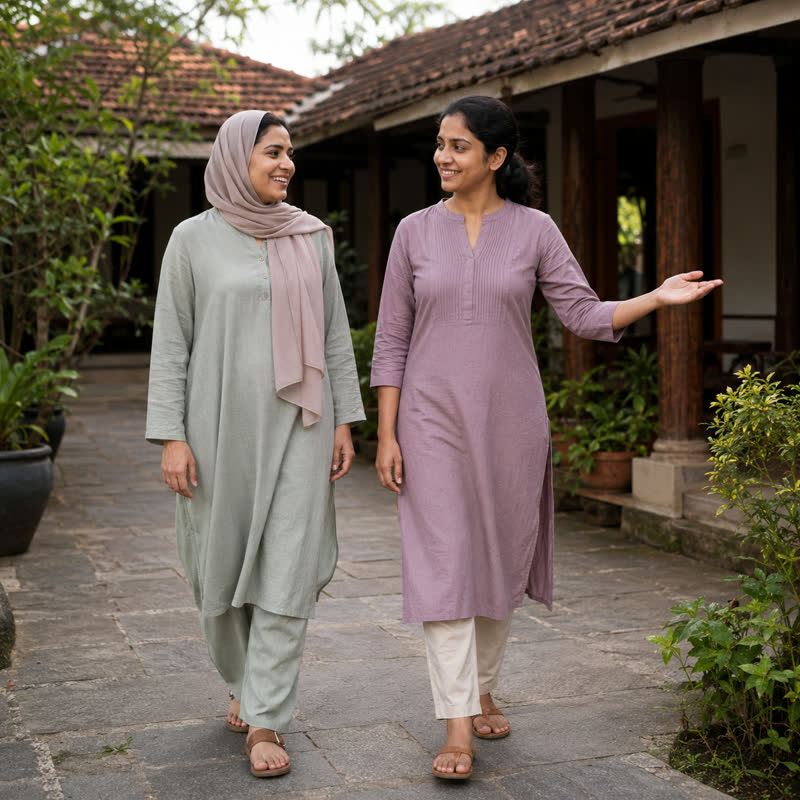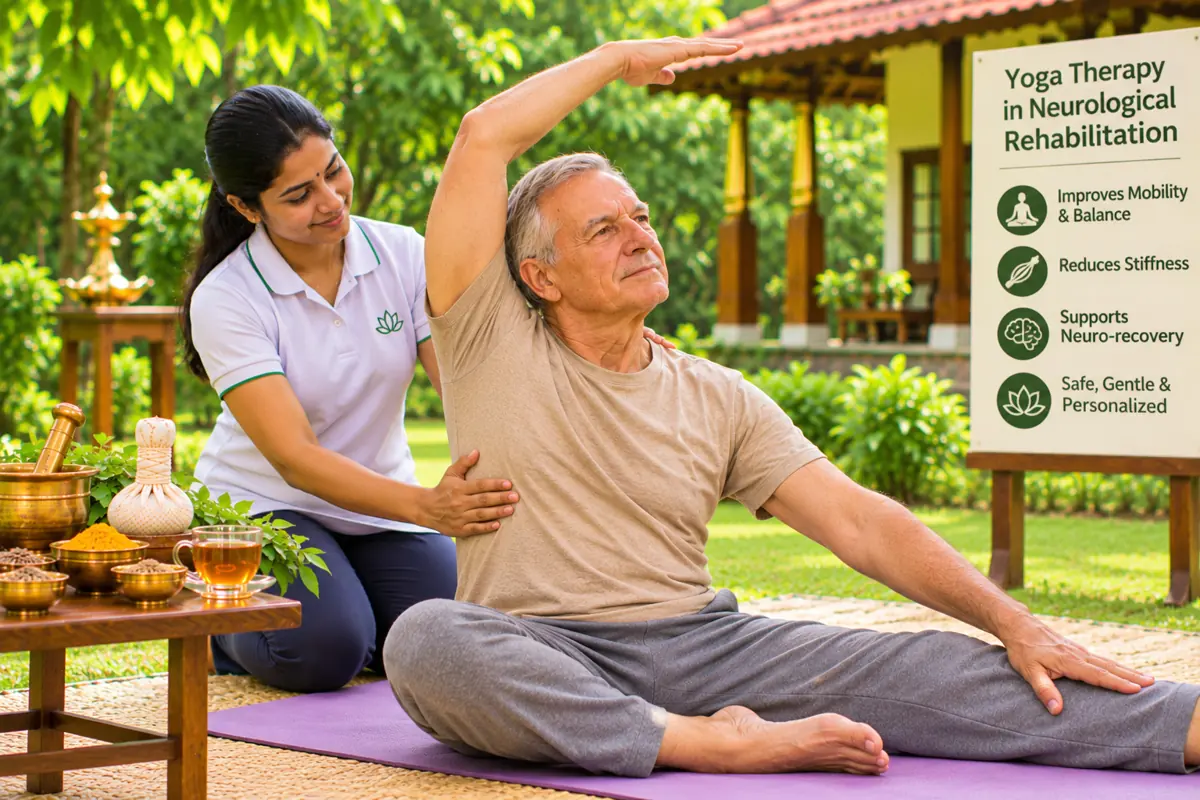
For people living with neurological conditions such as stroke, Parkinson's disease or other long-standing nerve conditions, a trained yoga therapist can offer supported postures, breathing and relaxation that sit comfortably alongside physiotherapy and medical care.
This guide explains what yoga therapy can appropriately offer in neurological rehabilitation, what it should not be used for, how sessions are adapted for safety, which elements are most often used, how it fits with physiotherapy, what to ask a centre and how to continue at home. It is supportive only, and it does not promise recovery. And throughout, it shows how MyVaidyam can walk beside you as your friend and guide.
Ayurveda is offered here as a complementary, supportive approach that works alongside your own doctor's care, never as a replacement for it. Yoga therapy complements, and does not replace, the care of your neurologist and rehabilitation team.
Quick Facts - Yoga Therapy in Neurological Rehabilitation
| Topic | Summary |
|---|---|
| What it is | Adapted yoga practices for individual needs |
| Elements | Supported postures, breathing, relaxation, attention |
| Role | Complements physiotherapy and medical care |
| Led by | A trained yoga therapist, with your doctors' advice |
| Format | Often seated or supported, with a companion nearby |
| Not | A replacement for rehabilitation, or a promise of recovery |
| Visa | e-Medical visa: 60 days from first arrival, triple entry, non-extendable |
| Your companion | MyVaidyam: planning, coordination and support before, during and after |
What yoga therapy means here
In rehabilitation, yoga therapy is a gentle, individualised use of yoga's tools: simple movements and postures, often seated or supported; slow, easy breathing; guided relaxation; and gentle attention practices. There is no emphasis on flexibility, performance or difficult shapes. The therapist begins from where you are, and the practice follows your ability, energy and safety.
Yoga therapy, adapted for rehabilitation
| Seated and supported | Breath | Relaxation | Attention |
|---|---|---|---|
| Chair-based postures, supported lying | Slow, easy breathing without strain | Guided rest and release | Simple focus and calm |
Each element is adjusted for you, and nothing is pushed.
Appropriate supportive uses
Yoga therapy may appropriately support rehabilitation in several gentle ways. Supported movement can encourage easy mobility and body awareness. Breathing practices may support relaxation and a sense of calm. Relaxation can help with tension and sleep. Gentle attention practices may offer a calm focus. All of these are offered as supportive aids, with no promise of any particular result, and always alongside the work of your therapists.
What yoga therapy should not be used for
It should not replace physiotherapy, occupational therapy, speech therapy or medical treatment. It should not promise recovery of movement, speech or function. Strenuous postures, forceful breathing, breath holding, inversions and extreme stretches are not suitable in neurological rehabilitation, and a responsible therapist avoids them. If a centre suggests otherwise, please take that as a reason for caution.
Adapting for safety
Safety shapes every session. Practice is often done seated on a firm chair, lying on a supported mat or standing with a stable support. The therapist checks blood pressure or fatigue where appropriate, keeps movements small and slow, avoids positions that provoke dizziness and watches for fatigue. Your companion may stay close, and sessions are kept short, with generous rests.
How it fits with physiotherapy
Yoga therapy and physiotherapy have different strengths. Physiotherapy focuses on specific functional goals, such as walking, balance and limb use, and measures progress. Yoga therapy adds calm, breath and body awareness. The best arrangement is one where the yoga therapist and physiotherapist know about each other's work, and where yoga never takes the place of your physiotherapy sessions.
Conditions commonly seen
After stroke, practice may focus on supported movement, breathing and relaxation. In Parkinson's disease, large, easy movements, posture and rhythmic breathing are often emphasised, along with relaxation. For other long-standing conditions, the therapist will adapt accordingly. In every case, your neurologist's advice comes first, and the therapist should know your diagnosis, medicines and any precautions.
A typical session
| Stage | What happens | Why |
|---|---|---|
| Arrival | Settle in, check how you feel | Sets the pace for the day |
| Gentle warm-up | Seated joint movements | Wakes up the body |
| Supported practice | A few simple postures, with props | Builds body awareness |
| Breath | Slow, easy breathing | Calms the system |
| Relaxation | Guided rest | Eases tension, supports sleep |
Questions to ask the centre
- Who is the yoga therapist, and what is their training?
- Have they worked with people with neurological conditions?
- How will my doctors' and therapists' advice be followed?
- How are sessions adapted for balance and fatigue?
- Can my companion join the sessions?
Taking it home
- Keep a short, simple routine of five to ten minutes.
- Practise seated or supported, as taught.
- Use breathing and relaxation when you feel tense.
- Continue your physiotherapy exercises.
- Share your routine with your own therapists.
Breathing in neurological rehabilitation
Breathing practices are among the most useful tools, because they can be done anywhere, seated or lying, with no strain. Slow, even breathing with a gentle, comfortable pause between breaths is typically taught. Forceful breathing, breath holding and rapid techniques are avoided. Many people find that a few minutes of easy breathing before therapy or at bedtime helps them feel steadier and calmer.
Relaxation and sleep
Fatigue and disturbed sleep are common in many neurological conditions. Guided relaxation, in which you are led gently through the body, can help release tension and prepare for rest, and it is easy to repeat at home with a recording. Your therapist will keep sessions short and comfortable, and will adjust to your energy on the day.
Mood and attention
Living with a neurological condition can be wearying, and mood may dip. A calm, structured session, gentle company and a few minutes of quiet attention can lift spirits. These practices are not a substitute for medical or psychological care, and if low mood or anxiety is a concern, share it with your own doctors and the physician.
Working with your companion
A companion can be a great help in yoga therapy. They can learn the seated practices, support transfers and positioning, and help you to continue at home. Many therapists invite companions to join the final relaxation, which can be a quiet pleasure for both of you.
Making sessions comfortable
- Wear loose, comfortable clothes and non-slip footwear.
- Eat lightly before a session, and bring water.
- Tell the therapist about dizziness, fatigue or pain at once.
- Rest as long as you need between practices.
- Keep sessions short, and stop whenever you wish.
Planning around your visa
The e-Medical visa is valid for 60 days from first arrival, with triple entry and no extension, and a companion usually travels on a medical attendant visa. Plan dates with your physician and neurologist, and leave a few spare days at the end for rest before your flight home.
Working alongside your own doctors
Please keep your own doctors informed. Share your medical summary, bring your reports and keep taking whatever you have been prescribed. Please keep taking all prescribed medicines and continue your neurologist's and therapists' advice. Please do not change medicines without medical advice.
Choosing a centre with experience
Look for a trained yoga therapist, a qualified Ayurvedic doctor (BAMS or MD Ayurveda), registered with the appropriate board, a physiotherapist on the team, accessible facilities, a hospital nearby and a willingness to work within your doctors' advice. Be cautious of anyone who promises recovery or suggests strenuous practice.
Planning the journey
Apply for your e-Medical visa on India's official portal, usually with a hospital letter, a few weeks before travel. It is valid for 60 days from first arrival, allows three entries and cannot be extended. Book flights after approval, arrange travel insurance and choose an arrival time that gives you a rested first day. Check the portal for current rules before you apply.
Your friend and hand-holder in finding appropriate, gentle yoga therapy:
MyVaidyam
The right guidance makes all the difference, and that is where MyVaidyam comes in. We walk with you from your very first question to the day you return home, answering every question patiently and making sure that nothing is left to chance.
- An online consultation with an Ayurvedic physician to discuss your needs and goals.
- Help preparing your health summary and your therapists' programme.
- Guidance on choosing a reputable centre with trained yoga therapy and physiotherapy.
- Help understanding how yoga fits into your plan.
- Support with your e-Medical visa documents (including for a companion), flights, airport pickup and accommodation.
- A warm point of contact during your stay, and follow-up after you return home.
You are welcome to reach out at any stage. We would be delighted to help you begin.