For some people, a calm residential programme that brings gentle Ayurvedic support together with physiotherapy offers a pleasant way to spend part of this period.
This guide explains how the two may be combined after surgery: what each does, who leads, how a plan is shared, which limits must be respected, how it differs across joint, spine and other operations and how to plan with your surgeon's agreement. It is supportive only, and it does not promise faster healing. And throughout, it shows how MyVaidyam can walk beside you as your friend and guide.
Ayurveda is offered here as a complementary, supportive approach that works alongside your own doctor's care, never as a replacement for it. Your surgeon and physiotherapist lead your recovery.
Quick Facts - Ayurveda and Physiotherapy in Post-Surgical Rehabilitation for International Patients
| Topic | Summary |
|---|---|
| Leads | Surgeon and physiotherapist |
| Ayurveda offers | Rest, diet, routine, gentle support |
| Key | One shared plan and respected limits |
| Timing | Only with your surgeon's agreement |
| Companion | Strongly recommended |
| Not | A promise of faster recovery |
| Visa | e-Medical visa: 60 days from first arrival, triple entry, non-extendable |
| Your companion | MyVaidyam: planning, coordination and support before, during and after |
Two kinds of help
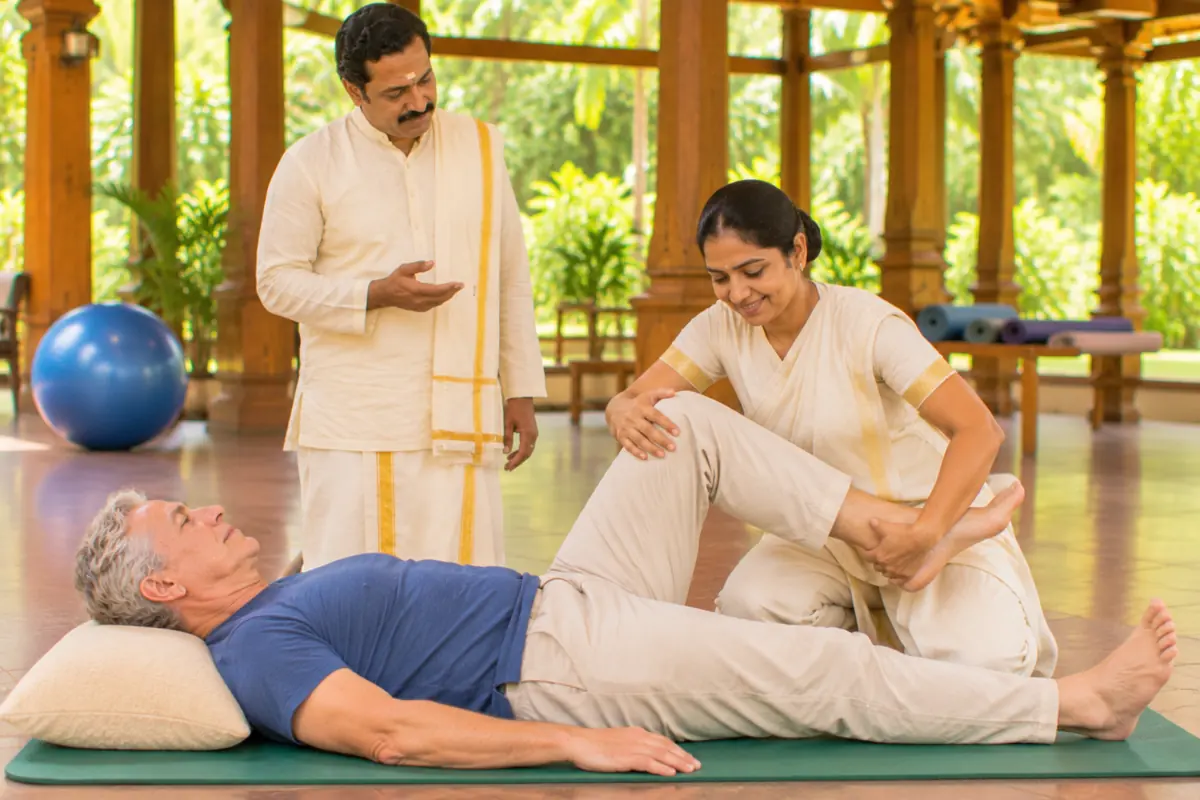
Physiotherapy rebuilds movement: it assesses how you move, sets progressive exercises, teaches you to walk and use your body safely and measures progress. Ayurvedic support offers something different: a restful setting, simple food, good sleep, calm and, where appropriate, gentle care for the parts of the body that are not healing. Put together, they can make a long recovery feel kinder.
Who does what, after surgery
| Surgeon | Operation, wound, limits, follow-up |
|---|---|
| Physiotherapist | Exercises, mobility, strength, walking |
| Ayurvedic physician | Rest, diet, routine and gentle support within limits |
| You and your companion | Daily practice, communication, patience |
Everyone shares one aim: a safe, steady recovery.
Surgeon first
Your surgeon decides when travel is safe, what limits apply and which therapies are acceptable. Ask specific questions, and ask for answers in writing: flight timing, movement limits, wound care, braces or aids, medicines and when to return for review. Share these with the physiotherapist and the Ayurvedic physician, and ask the centre to keep a copy.
How the two plans fit
| Stage | Physiotherapy | Supportive Ayurvedic care |
|---|---|---|
| Early recovery | Rest, wound protection, gentle walking | Calm routine, light diet, relaxation |
| Middle recovery | Progressive exercises, mobility | Warm therapy for other areas, simple diet, sleep |
| Later recovery | Strength, endurance, function | Routine, yoga as cleared, home plan |
Limits that must be respected
Every operation has its own limits. After joint replacement, certain positions or loads are avoided. After spine surgery, bending, twisting and lifting are limited. After abdominal or chest surgery, there are restrictions on straining and lifting. These limits apply during massage, steam, bathing and exercise, and no therapy should ever override them. A good centre asks about your limits and records them.
Wounds and the surgical area
Your wound or scar belongs to your surgical team. Do not allow oils, heat, massage or applications near a healing area unless your surgeon has approved them. If you notice swelling, warmth, redness, discharge, fever or increasing pain, contact your surgeon promptly.
Across different operations
The principles are the same, but details differ. After a knee or hip operation, the emphasis is on safe walking, range of movement and strength. After spine surgery, it is on protecting the operated area and posture. After heart or abdominal surgery, it is on gentle breathing, walking and gradual return to activity, always with the surgical team's agreement. We have separate guides for knee, hip and spine surgery, and for recovery after major surgery more broadly.
Medicines after surgery
Please keep taking pain relief, blood-thinning medicines, antibiotics and other prescriptions exactly as directed. Share the complete list with the Ayurvedic physician, including supplements, so that nothing is combined unwisely. Carry medicines in hand luggage with a doctor's letter.
Travel and companions
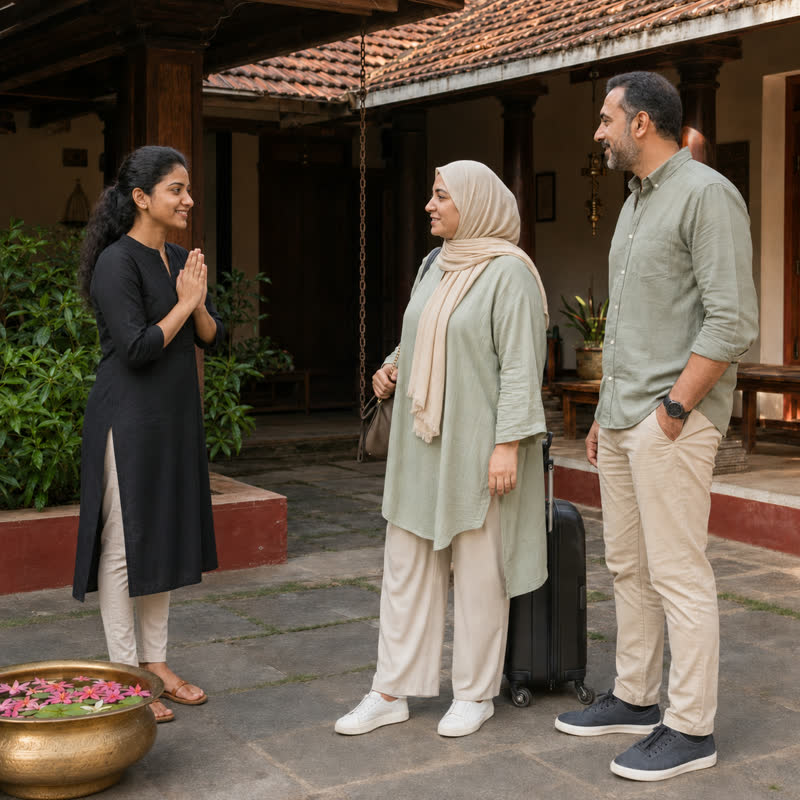
Ask your surgeon about timing and conditions for flying. Choose an aisle seat, request airport assistance, avoid lifting bags and allow a rest day on arrival. A companion is strongly recommended, for practical help and reassurance, and is usually on a medical attendant visa alongside your e-Medical visa.
Setting honest expectations
A calm stay can bring rest, routine, comfort and encouragement, and a well-led physiotherapy programme can keep your recovery on track. Neither can be promised to speed healing, and a reputable physician will say so. Patience, and trust in your surgical team, are the best companions.
Taking it home
- Continue your physiotherapy exercises daily.
- Keep up simple, regular meals and good sleep.
- Attend follow-up appointments with your surgeon.
- Share the centre's summary with your own doctors.
- Stay in touch with the centre for encouragement.
Rest, food and healing
Healing depends on rest and good nourishment. Meals at a residential centre are usually vegetarian, warm and simply spiced, and your physician will adapt them to any advice from your surgeon or dietitian. Adequate fluids, regular meals and early nights help the body repair. Tell the kitchen about allergies and medical diets.
Mind and confidence
After surgery, many people feel cautious about moving, and confidence returns in steps. Quiet days, kind company, breathing practices and a physiotherapist's patient encouragement help rebuild trust in your body. If worries feel heavy, share them with your doctors.
Questions to ask the centre
- Have you cared for guests recovering from operations like mine?
- Who is the physiotherapist, and how will they liaise with mine?
- How will my surgeon's limits be recorded and respected?
- What happens if I feel unwell or a wound concern arises?
- How close is a hospital, and how are emergencies handled?
- Can a companion stay with me?
Planning around your visa
The e-Medical visa is valid for 60 days from first arrival, with triple entry and no extension. Plan dates with your surgeon and the centre, and leave a few spare days before your return flight.
A simple recovery diary
A short daily note of walking, pain, sleep and mood helps you and your doctors see progress clearly. Bring the diary to follow-up appointments, and share it with the centre's physician during your stay.
Knowing when to call your surgeon
Whatever the plan, you and your companion should know the signs that call for prompt medical attention after surgery, such as fever, increasing pain, swelling, redness, breathlessness or anything your surgeon has told you to watch for. A good centre keeps these in mind, has a clear route to a nearby hospital and encourages you to speak up early.
Records to carry
- Your discharge summary and operation notes.
- Recent reports, scans and blood tests.
- A complete medicine list with doses.
- Your surgeon's letter on activity and travel.
- Your physiotherapist's programme.
Working alongside your own doctors
Please keep your own doctors informed. Share your medical summary, bring your reports and keep taking whatever you have been prescribed. Please follow your surgeon's instructions throughout, and tell them about every Ayurvedic therapy and product you plan to use. Please do not change medicines without medical advice.
Choosing a centre with care
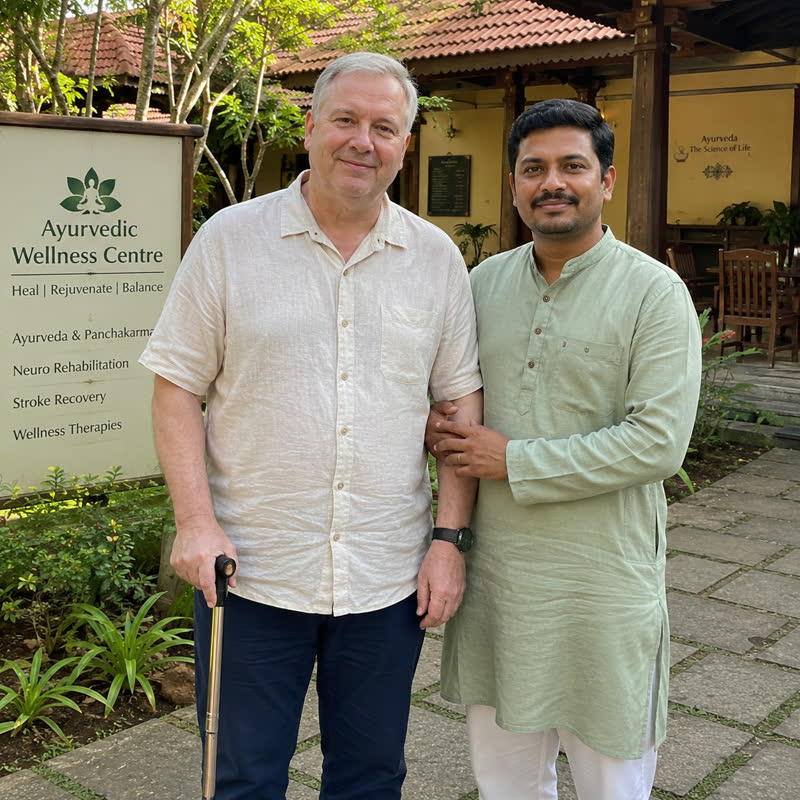
Look for a qualified Ayurvedic doctor (BAMS or MD Ayurveda), registered with the appropriate board, experience of post-surgical guests, a qualified physiotherapist on the team, a hospital nearby and a willingness to work within your surgeon's advice. Be cautious of anyone who promises faster healing, ignores your limits or suggests stopping medicines.
Planning the journey
Apply for your e-Medical visa on India's official portal, usually with a hospital letter, a few weeks before travel. It is valid for 60 days from first arrival, allows three entries and cannot be extended. Book flights after approval, arrange travel insurance and choose an arrival time that gives you a rested first day. Check the portal for current rules before you apply.
Your friend and hand-holder through your recovery: MyVaidyam
Recovering well is easier with a friend beside you, and that is where MyVaidyam comes in. We walk with you from your very first question to the day you return home, answering every question patiently and making sure that nothing is left to chance.
- An online consultation with an Ayurvedic physician to discuss your situation, with your surgeon's advice in hand.
- Help preparing your health summary, operation notes and medicine list.
- Guidance on choosing a reputable centre with physiotherapy and nearby medical backup.
- Help planning comfortable, well-timed travel for you and a companion.
- Support with your e-Medical visa documents (including for a companion), flights, airport pickup and accommodation.
- A warm point of contact during your stay, and follow-up after you return home.
You are welcome to reach out at any stage. We would be delighted to help you begin.