This guide explains why weakness follows prolonged bed rest, why your doctors should clear you first, how supportive Ayurvedic care may sit alongside rehabilitation, what a gentle programme includes, how to build strength safely and how to plan travel. It also covers mobility recovery after hospitalisation. And throughout, it shows how MyVaidyam can walk beside you as your friend and guide.
Ayurveda is offered here as a complementary, supportive approach that works alongside your own doctor's care, never as a replacement for it. It does not promise to restore strength, and your doctors lead your recovery.
Quick Facts - Ayurveda Support for Muscle Weakness After Prolonged Bed Rest for International Patients
| Topic | Summary |
|---|---|
| Cause | Muscle loss and deconditioning during rest |
| First step | Clearance from your treating doctors |
| Ayurvedic support | Nourishing diet, warm therapies, calm routine |
| Central | Graded movement with a physiotherapist |
| Typical length | Two to four weeks |
| Not | A promise of restored strength |
| Visa | e-Medical visa: 60 days from first arrival, triple entry, non-extendable |
| Your companion | MyVaidyam: planning, coordination and support before, during and after |
Why bed rest weakens us
Muscles stay strong because we use them. During prolonged bed rest, whether after surgery, a serious illness or an injury, muscles can lose strength quickly, bones and joints stiffen, balance and stamina fall and appetite may drop. This pattern is often called deconditioning. It is a normal consequence of being unwell, and not a sign of failure. With gradual, regular activity, nourishment and patience, strength usually returns.
Rebuilding strength, one step at a time
Rest and nourish
Sleep, food, calm
Sit and stand
Short, supported practice
Walk
Short distances, with help
Strengthen
Gentle, graded exercises
Everyday life
Stairs, shopping, outings
The picture shows the general idea. Your own pace is set by your doctors and therapist.
Mobility recovery after hospitalisation
Many people come home from hospital stronger in health but weaker in body. Stairs, shopping and the walk to the corner can feel daunting. Recovery is best approached in stages: first rest and food, then short, supported practice, then walking, then strengthening, and finally everyday activity. A residential programme can offer a structured, restful setting in which to take each stage in turn.
Clearance first
Before planning a stay, ask your doctors whether you are medically stable, fit to travel and ready for activity. Ask about the cause of your illness, any limits on exertion, your medicines, any signs to watch for and when to return for review. A short letter and your discharge summary are very helpful for the centre. If you are still unwell, recovery at home with your own team should come first.
How Ayurveda may support
Ayurveda traditionally speaks of rebuilding and nourishing the body after illness, with attention to digestion, food, sleep and calm. A physician considers your constitution, appetite, bowels and energy, and shapes a gentle plan. Warm herbal oil massage may be offered, traditionally described as nourishing and relaxing, along with a warm, simple, easily digested diet, regular rest and a calm daily rhythm.
Food that rebuilds
Muscle needs good nutrition. Meals at a residential centre are usually vegetarian, freshly cooked and warm, with lentils, grains, vegetables, ghee and milk products as suited to you. If your appetite is low, small, frequent meals are often easier. Tell the physician and kitchen about allergies, medical diets and any dietitian's advice, and drink warm water through the day.
Graded movement with a physiotherapist
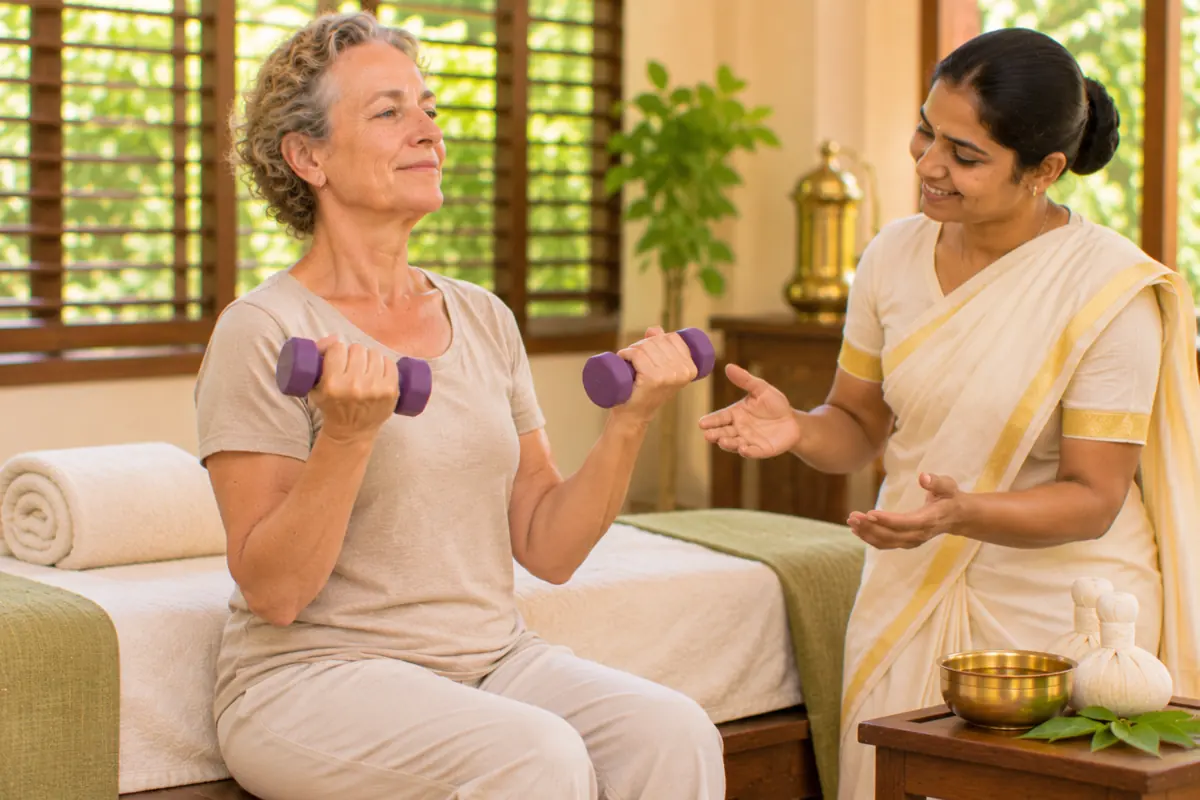
A physiotherapist can assess your strength, balance and walking and set a graded plan: sitting and standing practice, short supported walks, simple leg and arm strengthening with light resistance and balance work. Each stage builds on the last, with rest between. Progress is measured gently, and the programme is increased only as you are ready.
Rest and sleep
Rebuilding strength needs rest as much as exercise. Good sleep, a quiet afternoon rest and a calm evening routine help the body repair. Do not push through unusual breathlessness, dizziness, chest discomfort or severe tiredness, and tell the team at once if they occur.
A typical day
| Time | Typical activity |
|---|---|
| Early morning | Warm water, gentle seated stretches |
| Morning | Warm therapy and review |
| Late morning | Physiotherapy, graded practice |
| Midday | Nourishing meal and rest |
| Afternoon | Short walk, light activity |
| Evening | Light supper, relaxation, early sleep |
Taking it home
- Keep up your graded exercises, a little each day.
- Walk daily, increasing gradually.
- Eat regular, nourishing meals.
- Rest well and keep a calm routine.
- Keep follow-up appointments and share the centre's summary.
Mind and confidence
Weakness after a long illness can shake confidence. Quiet days, kind company, gentle encouragement and small, visible achievements, such as an extra walk around the garden, help trust in the body return. If low mood or worry feels heavy, share it with your doctors.
Working alongside your own doctors
Please keep your own doctors informed. Share your medical summary, bring your reports and keep taking whatever you have been prescribed. Please keep taking prescribed medicines, and follow your doctors' advice about activity and follow-up. Please do not change medicines without medical advice.
Choosing a centre
Look for a qualified Ayurvedic doctor (BAMS or MD Ayurveda), registered with the appropriate board, a qualified physiotherapist on the team, experience of recovering guests, a hospital nearby and a clear written plan. Be cautious of anyone who promises quick strength gains or discourages medical follow-up.
Planning the journey
Apply for your e-Medical visa on India's official portal, usually with a hospital letter, a few weeks before travel. It is valid for 60 days from first arrival, allows three entries and cannot be extended. Book flights after approval, arrange travel insurance and choose an arrival time that gives you a rested first day. Check the portal for current rules before you apply.
Your friend and hand-holder through your recovery: MyVaidyam
Rebuilding is easier with a friend beside you, and that is where MyVaidyam comes in. We walk with you from your very first question to the day you return home, answering every question patiently and making sure that nothing is left to chance.
- An online consultation with an Ayurvedic physician to discuss your recovery, with your doctors' advice in hand.
- Help preparing your health summary, discharge notes and medicine list.
- Guidance on choosing a reputable centre with physiotherapy and medical backup.
- Help planning comfortable travel for you and a companion.
- Support with your e-Medical visa documents (including for a companion), flights, airport pickup and accommodation.
- A warm point of contact during your stay, and follow-up after you return home.
You are welcome to reach out at any stage. We would be delighted to help you begin.