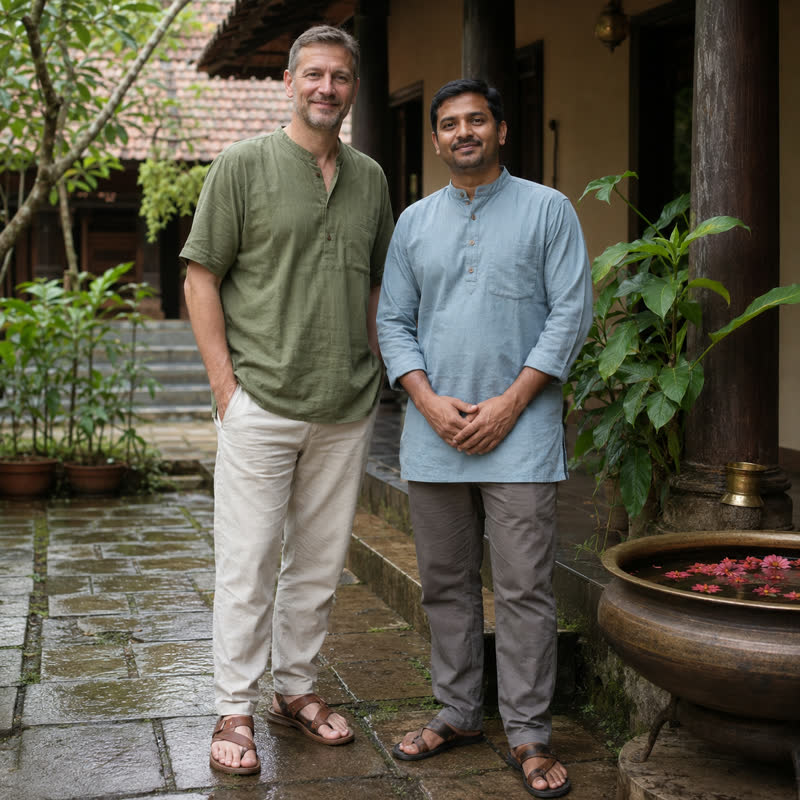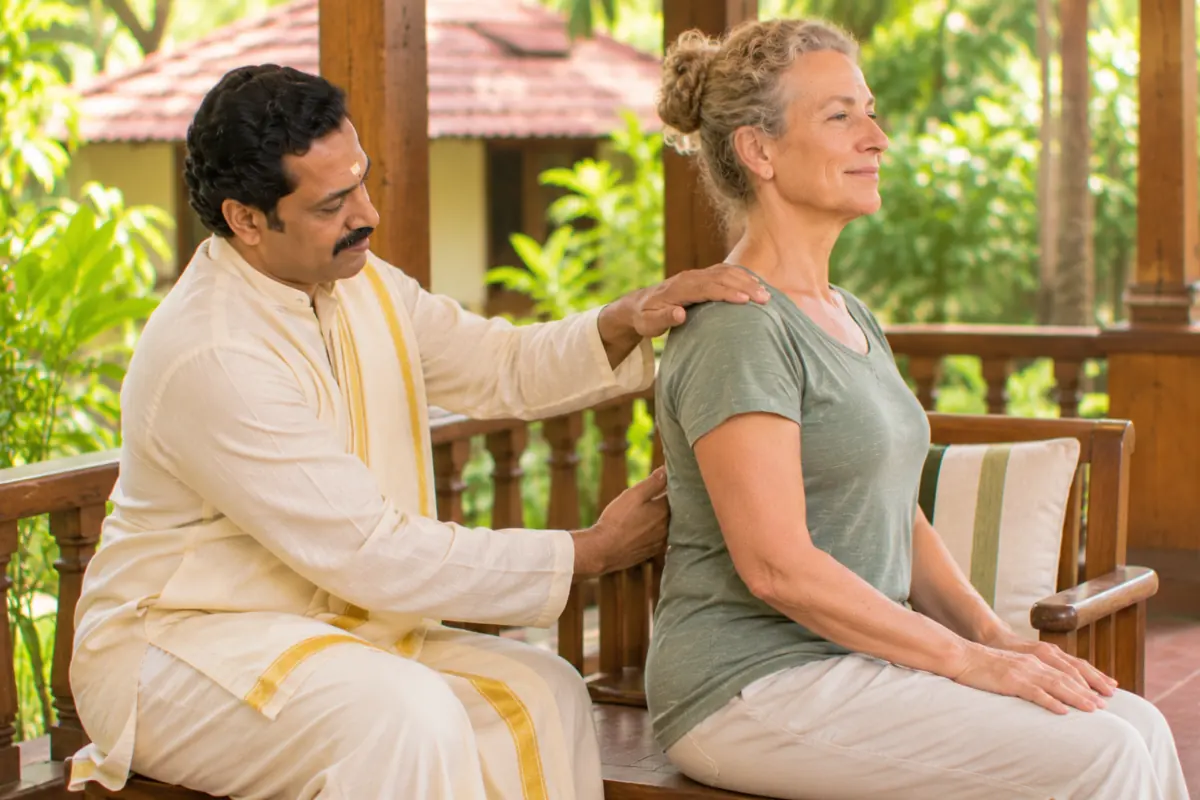
Some people wish to spend part of this time in a calm, supportive environment, and a few Ayurvedic centres in India offer gentle wellness programmes for this stage.
This guide, a companion to our broader guide on recovery after major surgery, explains how supportive Ayurvedic care may fit around your spine surgeon's and physiotherapist's plan: why the surgeon's movement limits come first, what supportive care can include and what it should never include, how to plan travel, what to ask a centre and how to carry the benefit home. It is supportive only, and it does not promise faster healing or better surgical results. And throughout, it shows how MyVaidyam can walk beside you as your friend and guide.
Ayurveda is offered here as a complementary, supportive approach that works alongside your own doctor's care, never as a replacement for it. Your surgeon and physiotherapist lead your recovery.
Quick Facts - Ayurveda Wellness After Spine Surgery
| Topic | Summary |
|---|---|
| Role | Supportive wellness care, after your surgeon's clearance |
| Led by | Your spine surgeon and physiotherapist |
| Key | Movement limits respected during all therapies |
| Typical elements | Rest, diet, relaxation, guided movement |
| Companion | Strongly recommended |
| Not | A promise of faster recovery |
| Visa | e-Medical visa: 60 days from first arrival, triple entry, non-extendable |
| Your companion | MyVaidyam: planning, coordination and support before, during and after |
Where this fits
Recovery after spine surgery follows a path set by your surgical team: protecting the operated area, then reintroducing movement, then rebuilding strength and endurance. The timeline depends on the type of operation and on you. Supportive Ayurvedic care does not alter that path. What it can offer is a restful setting, regular meals, good sleep, gentle care for the rest of the body and encouragement, all valuable in a period that can feel long.
A calm path after spine surgery
Surgeon first
Clearance, movement limits, follow-up plan
Protect and rest
Spine precautions, light diet, short walks
Gentle support
Relaxation, nourishing routine, guided movement
Home plan
Exercises, posture, follow-up
The picture shows where each kind of support belongs. The order and the limits are your surgical team's to decide.
Starting with your spine surgeon
Before planning anything, ask your surgeon very specific questions. When may I fly, and what should I do on the flight? How long may I sit, bend, lift or twist? Do I need a brace, and when? When may I shower, and how do I care for the wound? Which activities, therapies and positions are off limits? Ask for the answers in writing, and bring them to your first consultation with the Ayurvedic physician.
Spinal precautions at every step
After spine surgery there may be firm limits on bending, twisting, lifting and sometimes on lying positions. These apply at all times, including during massage, steam, bathing and exercise. Massage involving pressure, twisting or manipulation of the spine, vigorous kneading near the operated area or any forceful movement should never be part of the plan unless your surgeon explicitly approves it. Tell every therapist your limits, and ask for a written copy to be kept in your file.
What supportive care may include
| Element | What it may involve | Why it helps |
|---|---|---|
| Rest and routine | Regular sleep, quiet days, unhurried meals | Gives tissues time to heal |
| Diet | Warm, simple, freshly cooked food | Supports appetite and bowel comfort |
| Gentle therapies | Light, non-pressured relaxation for areas away from the spine, only if approved | Eases general tension |
| Guided movement | Short walks and your physiotherapist's exercises | Keeps recovery on track |
| Calming practices | Breathing and relaxation | Supports sleep and mood |
The operated area
Your wound and spine belong to your surgical team. In the early period, no oil, heat, steam, poultice or pressure should be placed on or near the operated area, and kati basti or similar local therapies for the back should be avoided unless your surgeon has given clear approval. If you notice increasing pain, new numbness or weakness, wound redness, swelling or discharge, contact your surgeon at once rather than waiting for the next scheduled review.
Physiotherapy comes first
Spine rehabilitation is guided by a physiotherapist who knows your operation and your limits. The programme set by your own therapist should continue during your stay, and a good centre will help you keep to it, ideally with a physiotherapist on the team who will liaise with yours. Ask how often sessions are held, who leads them and how they follow your therapist's programme. Rest between sessions is part of the plan.
Medicines and pain relief
Many people take pain relief, nerve-pain medicines, muscle relaxants or blood-thinning medicines after spine surgery. Please keep taking them exactly as prescribed, and never change them without medical advice. Share the complete list, including supplements, with the Ayurvedic physician, so nothing is combined unwisely. Carry medicines in hand luggage with a doctor's letter.
Travelling after spine surgery
Long journeys deserve careful thought. Ask your surgeon about timing, seating, how long you may sit without moving and how to manage luggage. Choose an aisle seat, request airport assistance and avoid lifting bags. Take a cushion if recommended, and move as advised. Allow a rest day on arrival, and travel with a companion who can help practically and offer reassurance.
Comfort at the centre
- Ask about a firm, supportive mattress and a chair of suitable height.
- Choose a ground-floor or lift-accessible room.
- Request help with bathing, dressing and getting in and out of bed, if needed.
- Keep walking aids and braces within reach.
- Tell the team about any change in how you feel at once.
Food, bowels and bladder
After spine surgery, appetite, bowel habits and comfort can change, partly because of medicines and reduced movement. A simple, warm diet with plenty of fluids and fibre, eaten at regular times, is generally helpful. Tell the centre about any constipation, and follow your surgeon's advice about any symptoms involving bladder or bowel control, which should always be reported promptly.
Taking it home
- Continue your physiotherapy exercises daily.
- Keep up your posture habits and movement limits until cleared.
- Eat simple, regular meals and sleep well.
- Attend your follow-up appointments with your surgeon.
- Share the centre's summary with your own doctors.
A simple recovery diary
A short daily note of walking distance, sitting tolerance, pain, sleep and mood helps you, your physiotherapist and your surgeon see progress clearly. Bring the diary to follow-up appointments, and share it with the centre's physician during your stay. Many guests find it encouraging to read back.
Planning around your visa
The e-Medical visa is valid for 60 days from first arrival, with triple entry and no extension, and a companion usually travels on a medical attendant visa. Plan dates with your surgeon and the centre, and leave a few spare days before your return flight.
Working alongside your own doctors
Please keep your own doctors informed. Share your medical summary, bring your reports and keep taking whatever you have been prescribed. Please follow your surgeon's instructions throughout, and tell them about every Ayurvedic therapy and product you plan to use. Please do not change medicines without medical advice.
Choosing a centre with care
Look for a qualified Ayurvedic doctor (BAMS or MD Ayurveda), registered with the appropriate board, experience of post-surgical guests, a physiotherapist on the team, a hospital nearby and a willingness to work within your surgeon's advice. Be cautious of anyone who promises faster healing, offers spinal manipulation or pressure massage, or suggests stopping medicines.
Planning the journey
Apply for your e-Medical visa on India's official portal, usually with a hospital letter, a few weeks before travel. It is valid for 60 days from first arrival, allows three entries and cannot be extended. Book flights after approval, arrange travel insurance and choose an arrival time that gives you a rested first day. Check the portal for current rules before you apply.
Your friend and hand-holder through your recovery: MyVaidyam
Recovering well is easier with a friend beside you, and that is where MyVaidyam comes in. We walk with you from your very first question to the day you return home, answering every question patiently and making sure that nothing is left to chance.
- An online consultation with an Ayurvedic physician to discuss your situation, with your surgeon's advice in hand.
- Help preparing your health summary, operation notes and medicine list.
- Guidance on choosing a reputable centre with physiotherapy and nearby medical backup.
- Help planning comfortable, well-timed travel for you and a companion.
- Support with your e-Medical visa documents (including for a companion), flights, airport pickup and accommodation.
- A warm point of contact during your stay, and follow-up after you return home.
You are welcome to reach out at any stage. We would be delighted to help you begin.