This guide explains why stiffness can persist after orthopaedic surgery, why your surgeon and physiotherapist should assess it first, how supportive Ayurvedic care may sit alongside rehabilitation, what to ask a centre and how to plan a stay. It is supportive only, and it does not promise to restore range of movement. And throughout, it shows how MyVaidyam can walk beside you as your friend and guide.
Ayurveda is offered here as a complementary, supportive approach that works alongside your own doctor's care, never as a replacement for it. Your surgeon and physiotherapist lead your recovery.
Quick Facts - Ayurveda Support for Persistent Stiffness After Orthopaedic Surgery for International Patients
| Topic | Summary |
|---|---|
| Common causes | Swelling, guarding, reduced movement, scar tissue |
| First step | Review by your surgeon and physiotherapist |
| Central | Physiotherapy and your surgeon's advice |
| Ayurvedic support | Warmth, relaxation, routine, diet |
| Typical length | Two to three weeks |
| Not | A promise of restored movement |
| Visa | e-Medical visa: 60 days from first arrival, triple entry, non-extendable |
| Your companion | MyVaidyam: planning, coordination and support before, during and after |
Understanding persistent stiffness
After orthopaedic surgery, joints often take longer to regain movement than people hope. Swelling can persist, muscles tighten around the joint to protect it, rest and pain reduce movement and the healing tissues themselves can feel firm and tight for a time. Most of this improves with steady, supervised rehabilitation. When stiffness persists beyond what your surgeon expected, it deserves a proper review.
Why a joint can stay stiff after surgery
| Swelling | — can linger for weeks or months |
|---|---|
| Protective tightness | — muscles guard the joint after surgery |
| Less movement | — rest and pain reduce range of motion |
| Healing tissue | — scar tissue forms and matures slowly |
Understanding the likely reasons helps make sense of the plan your team proposes.
See your surgeon and physiotherapist first
Ask your surgeon whether your stiffness is within the expected course, whether any investigation or other treatment is needed and whether a residential supportive stay would be appropriate. Ask your physiotherapist what exercises to continue and how to progress them. Their advice, ideally in writing, should be shared with the Ayurvedic physician.
How Ayurveda may support
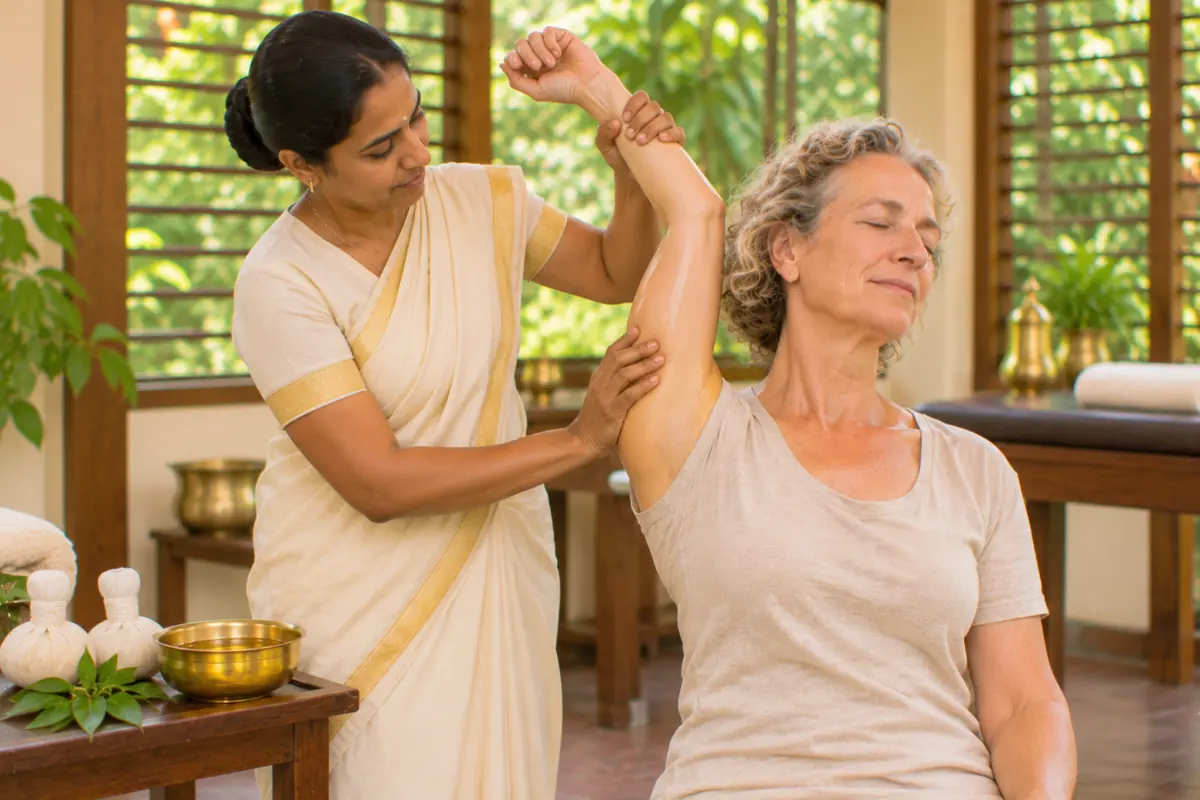
Ayurveda traditionally links stiffness with dryness and tightness, and the response is warmth, oil, relaxation and rhythm. In a residential programme, gentle warm therapies for areas other than the operated joint, and, where your surgeon agrees, carefully applied warmth near it, may help the body relax so that movement practice feels easier. A calm routine, simple food and good sleep support general recovery.
Warmth, then movement
Many guests find that the combination works best in sequence: warmth and relaxation first, then supervised movement. The physiotherapist then works on range of movement, stretching and strengthening, while the Ayurvedic team supports the rest of the day. Ask how the two are timed at the centre, so that you are relaxed, not tired, when you practise.
The operated joint and scar
Your scar and joint belong to your surgical team. Do not allow oils, heat, massage or applications on or near them unless your surgeon has approved, and never accept forceful stretching or manipulation by anyone other than your physiotherapist. If there is increasing pain, swelling, warmth, redness or any wound concern, contact your surgeon promptly.
Different joints, different care
The details depend on the joint. After knee surgery, bending and straightening, and walking, are central. After hip surgery, positions and safe walking matter. After shoulder surgery, protected, graded movement is key. After spine surgery, posture and limits on bending and twisting apply. We have separate guides for knee, hip and spine surgery, and for post-surgical rehabilitation in general.
Medicines and pain relief
Please keep taking all prescribed medicines exactly as directed, and share the full list, including supplements, with the Ayurvedic physician. Good pain control helps rehabilitation, so do not stop pain medicines on your own. Carry them in hand luggage, with a doctor's letter.
Setting honest expectations
Persistent stiffness often needs patience, and results vary. A residential stay may offer time, routine and comfort, but cannot promise to restore a particular range of movement. A kind physician will say so plainly, and focus on what is achievable: comfort, good habits and steady progress.
Taking it home
- Continue your physiotherapy exercises daily.
- Warm up gently before stretching.
- Keep a regular, calm routine and sleep well.
- Attend follow-up with your surgeon and physiotherapist.
- Share the centre's summary with your own doctors.
Keeping a simple movement diary
A short daily note of how far you can bend or straighten, how long you can walk, swelling, pain and sleep helps you, your physiotherapist and your surgeon see progress clearly, even when it feels slow. Bring the diary to follow-up appointments, and share it with the centre's physician during your stay.
Working alongside your own doctors
Please keep your own doctors informed. Share your medical summary, bring your reports and keep taking whatever you have been prescribed. Please follow your surgeon's instructions throughout, and tell them about every Ayurvedic therapy and product you plan to use. Please do not change medicines without medical advice.
Choosing a centre with care
Look for a qualified Ayurvedic doctor (BAMS or MD Ayurveda), registered with the appropriate board, experience of post-surgical guests, a qualified physiotherapist on the team, a hospital nearby and a willingness to work within your surgeon's advice. Be cautious of anyone who promises restored movement or offers forceful manipulation.
Planning the journey
Apply for your e-Medical visa on India's official portal, usually with a hospital letter, a few weeks before travel. It is valid for 60 days from first arrival, allows three entries and cannot be extended. Book flights after approval, arrange travel insurance and choose an arrival time that gives you a rested first day. Check the portal for current rules before you apply.
Your friend and hand-holder through your recovery: MyVaidyam
Steady progress is easier with a friend beside you, and that is where MyVaidyam comes in. We walk with you from your very first question to the day you return home, answering every question patiently and making sure that nothing is left to chance.
- An online consultation with an Ayurvedic physician to discuss your situation, with your surgeon's advice in hand.
- Help preparing your health summary, operation notes and medicine list.
- Guidance on choosing a reputable centre with physiotherapy and nearby medical backup.
- Help planning comfortable, well-timed travel for you and a companion.
- Support with your e-Medical visa documents (including for a companion), flights, airport pickup and accommodation.
- A warm point of contact during your stay, and follow-up after you return home.
You are welcome to reach out at any stage. We would be delighted to help you begin.