This is why a whole-person approach, with good medical care at its centre, often serves people best.
This guide explains why pain can persist during rehabilitation, why your own doctors and therapists must lead, how supportive Ayurvedic care may sit alongside, what a calm programme can offer, how to pace activity and what to keep doing at home. And throughout, it shows how MyVaidyam can walk beside you as your friend and guide.
Ayurveda is offered here as a complementary, supportive approach that works alongside your own doctor's care, never as a replacement for it. It does not promise to remove pain, and nothing here replaces your doctors' pain management.
Quick Facts - Ayurveda Support for Chronic Pain During Rehabilitation for International Patients
| Topic | Summary |
|---|---|
| Why it lingers | Healing tissue, tight muscles, poor sleep, worry |
| First step | Review by your doctors and therapists |
| Central | Your pain management plan and rehabilitation |
| Ayurvedic support | Warmth, relaxation, rest, diet, routine |
| Typical length | Two to three weeks |
| Not | A promise of pain relief |
| Visa | e-Medical visa: 60 days from first arrival, triple entry, non-extendable |
| Your companion | MyVaidyam: planning, coordination and support before, during and after |
Why pain can persist
After surgery or injury, tissues heal at their own pace, muscles guard the area, scar tissue forms and nerves can stay sensitive for a time. Pain is also influenced by sleep, tiredness, worry and expectation. This does not mean it is imaginary; it means that pain is a whole-body experience, and that addressing sleep, mood and routine can ease it alongside medical care.
Pain is felt in the body and the mind
Body
Healing tissue, tight muscles, stiffness
Sleep and energy
Tiredness amplifies pain
Mood and worry
Fear of movement, low mood
Routine and support
Predictable days, kind company
A kind programme pays attention to all four layers.
Your doctors and therapists lead
Persistent pain deserves a proper review. Ask your doctors whether the pain is within the expected course, whether any investigation or medicine adjustment is needed, which movements to avoid and whether a residential stay is appropriate. Share your pain management plan, including any medicines, with the Ayurvedic physician. Please do not stop or change pain medicines on your own.
How Ayurveda may support
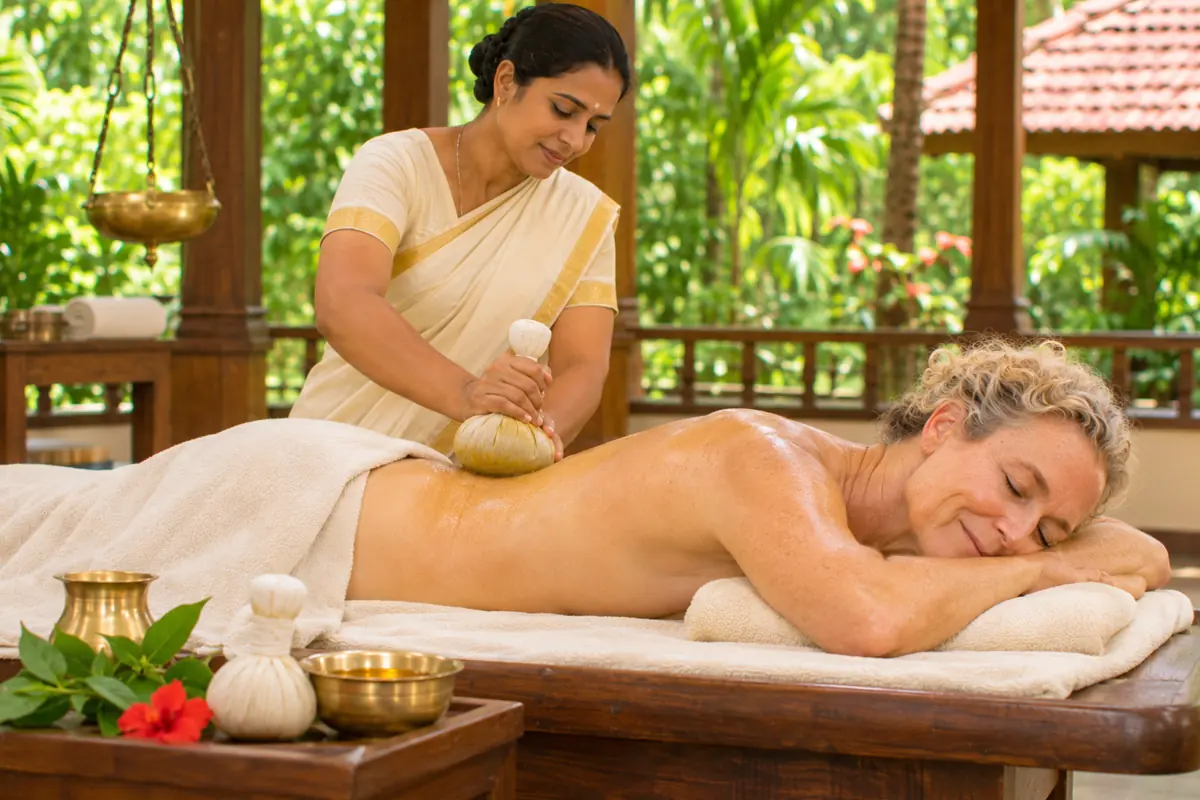
Ayurveda sees pain within the whole picture of the person: constitution, digestion, sleep, energy and the rhythm of daily life. Supportive care typically includes warm herbal oil therapies, gentle steam, a simple, warm, nourishing diet, regular rest and a calm daily rhythm. These are traditionally described as soothing, and many guests value the relaxation. Areas near a surgical site are treated only as your surgeon allows.
Warmth and relaxation
Warm therapies help tight muscles let go, and the relaxation they bring often eases the overall sense of pain. Breathing, gentle yoga and guided relaxation add to this, teaching the nervous system to settle. These are skills you can use whenever pain flares, and many guests say that having a simple tool to use is empowering.
Pacing, not pushing
A common pattern is to do too much on good days and too little on bad ones. Pacing means choosing a steady, comfortable amount of activity each day, resting before you become exhausted and increasing gradually. A physiotherapist can help you find your baseline, and a residential programme, with its regular rhythm, makes this easier to practise.
Sleep and mood
Poor sleep makes pain feel louder, and pain disturbs sleep, a difficult loop. Early nights, a quiet room, a warm drink, relaxation and time away from screens help to break it. If low mood or anxiety is a concern, share it with your doctors, who can offer further support. A kind setting and company can lift spirits.
A day at a residential centre
| Time | Typical activity |
|---|---|
| Early morning | Warm water, gentle stretching, breathing |
| Morning | Warm therapy, as your doctors allow |
| Late morning | Physiotherapy, paced movement |
| Midday | Light meal and rest |
| Afternoon | Short walk, relaxation or gentle yoga |
| Evening | Light supper, calm, early sleep |
Taking it home
- Keep a steady, paced routine of movement and rest.
- Use breathing and relaxation when pain flares.
- Protect sleep with a calm evening routine.
- Continue your physiotherapy exercises.
- Follow up with your own doctors and share the centre's summary.
Setting honest expectations
Persistent pain responds differently from person to person, and no programme can promise to remove it. A residential stay may offer comfort, rest, routine and useful skills. A thoughtful physician will say plainly what to expect, and will focus on what can be achieved: easier days, better sleep and more confidence.
Planning around your visa
Most programmes run for two to three weeks, within the e-Medical visa, which is valid for 60 days from first arrival, with triple entry and no extension. Plan dates with your doctors and the centre, and leave a few spare days at the end.
Keeping a simple pain diary
A short daily note of pain, sleep, mood and activity helps you and your doctors see patterns. Bring the diary to follow-up appointments, and share it with the centre's physician.
Working alongside your own doctors
Please keep your own doctors informed. Share your medical summary, bring your reports and keep taking whatever you have been prescribed. Please keep taking prescribed pain medicines exactly as directed, and discuss any new therapy with your own doctors first. Please do not change medicines without medical advice.
Choosing a centre
Look for a qualified Ayurvedic doctor (BAMS or MD Ayurveda), registered with the appropriate board, a qualified physiotherapist on the team, experience of post-surgical guests, a hospital nearby and a clear written plan. Be cautious of anyone who promises to cure pain or suggests reducing prescribed medicines.
Planning the journey
Apply for your e-Medical visa on India's official portal, usually with a hospital letter, a few weeks before travel. It is valid for 60 days from first arrival, allows three entries and cannot be extended. Book flights after approval, arrange travel insurance and choose an arrival time that gives you a rested first day. Check the portal for current rules before you apply.
Your friend and hand-holder through your recovery: MyVaidyam
Comfort is easier to find with a friend beside you, and that is where MyVaidyam comes in. We walk with you from your very first question to the day you return home, answering every question patiently and making sure that nothing is left to chance.
- An online consultation with an Ayurvedic physician to discuss your pain and recovery.
- Help preparing your health summary, reports and medicine list.
- Guidance on choosing a reputable centre with physiotherapy and medical backup.
- Help planning comfortable travel for you and a companion.
- Support with your e-Medical visa documents, flights, airport pickup and accommodation.
- A warm point of contact during your stay, and follow-up after you return home.
You are welcome to reach out at any stage. We would be delighted to help you begin.