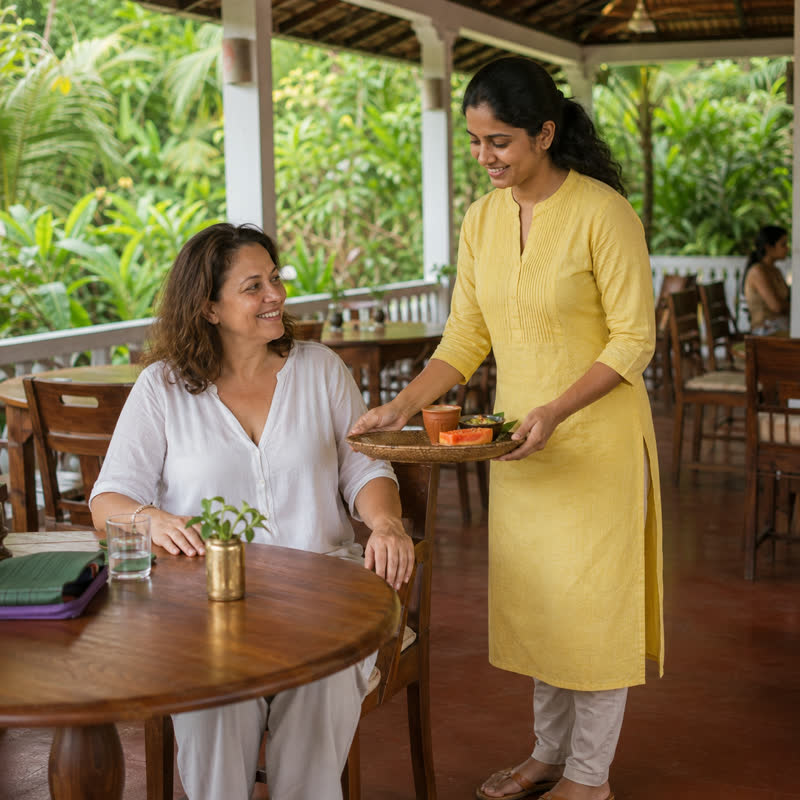
A good programme begins with a person, not with a package, and the plan is built around who you are, what you hope for, how your body is today and the practical shape of your journey from overseas.
This guide walks through how that personalisation happens: what the physician listens for, how they decide which therapies to recommend, why two people with the same diagnosis may receive quite different programmes, what is special about planning for an overseas guest and how the plan stays flexible once you arrive. And throughout, it shows how MyVaidyam can walk beside you as your friend and guide.
Ayurveda is offered here as a complementary, supportive approach that works alongside your own doctor's care, never as a replacement for it. A personalised plan supports wellbeing. It does not promise a cure.
Quick Facts - How an Ayurveda Treatment Plan Is Personalized for an Overseas Patient
| Topic | Summary |
|---|---|
| Starting point | A conversation about you, not a fixed package |
| Inputs | Goals, reports, constitution, present balance, medicines, daily life, travel dates |
| What it shapes | Therapies, diet, herbal preparations, yoga, rest, review points |
| Flexibility | The plan is reviewed and adjusted through your stay |
| Not | A cure, or a one-size-fits-all programme |
| Where it begins | An online pre-consultation before you travel |
| Visa | e-Medical visa: 60 days from first arrival, triple entry, non-extendable |
| Your companion | MyVaidyam: planning, coordination and support before, during and after |
Why personalisation is the point
Ayurveda sees each person as having their own constitution, their own strengths and their own pattern of balance. It follows that the best care is shaped to the individual. The same warm oil that soothes one guest can be too heavy for another. A diet that nourishes one person may need adjusting for someone else. This is why you will meet questions rather than answers at the beginning of a good consultation.
For international guests, personalisation has a further meaning: the plan must also work in the real world of flights, visas, time zones and life back home. The best plans honour both.
From your story to your plan
What we learn about you
Your goals and priorities
Your reports and diagnoses
Your constitution and present balance
Your medicines and daily life
Your dates, climate and journey
What it shapes
Which therapies, and how gently
Your diet and daily rhythm
Herbal preparations, shared with your doctors
Yoga, rest and movement
Review points and a plan for home
Each of these inputs is explored in conversation, and the plan begins to take shape as they come together.
Step one: listening to your goals
The physician begins by asking what you hope to achieve. Is it comfort, rest, relief from stress, a gentler pace of life or support alongside a medical condition? Goals shape everything that follows, and it helps to be honest and specific. A clear goal, such as sleeping better or being able to walk further, allows the plan to be built with purpose.
Step two: reading your reports
Your own doctors' reports, scans and medicines are the foundation of safe care. The physician reads them carefully and asks about your diagnosis, your treatments and your recent health. This is also why it helps to arrange an online pre-consultation in advance: the physician can study your reports before you travel and begin planning with real information.
Step three: understanding you
Next comes the Ayurvedic assessment, which looks at your constitution (prakriti) and present balance (vikriti) through conversation, observation and examination. It also considers your strength and digestion, your age, your work and your sleep. This is explained in more detail in our guide to how Ayurvedic doctors assess prakriti and vikriti.
How physicians decide which therapies to recommend
With the full picture in view, the physician chooses therapies. Several questions guide the choice:
- How strong is the guest? Stronger guests may tolerate a fuller programme; others need a softer approach.
- How is the digestion? A body with a weak appetite is prepared more gently.
- What is the goal? Relaxation, rejuvenation and condition-specific support call for different plans.
- What is the season and climate? Heat, cold and damp all influence the choice.
- What medicines and conditions are present? Some therapies are adjusted or avoided.
- How much time is there? A week, two weeks or more shape what is sensible.
The result is rarely a long list. It is a short, purposeful plan, with room to change.
Why two people with the same diagnosis may receive different
programmes
This is one of the most common questions, and the answer lies in everything above. A diagnosis names the condition. A plan is built for the person who has it. The illustration below shows how two guests with similar knee discomfort might be guided differently.
| Illustration only | Guest A | Guest B |
|---|---|---|
| Constitution and strength | Lean, quick and tires easily | Sturdy, calm and strong |
| Digestion and sleep | Variable appetite, light sleep | Steady appetite, deep sleep |
| Likely emphasis | Warmth, nourishing oils, rest, gentle movement | Lighter diet, more active movement, stimulating therapies |
| Pace | A softer, slower start | A fuller programme sooner |
Neither plan is better. Each is right for its person, which is exactly what personalisation means. Your physician decides what is right for you.
What is special about planning for an overseas guest
Personalisation reaches beyond the body. For a guest travelling from abroad, a thoughtful plan also considers:
- Jet lag and arrival. A quiet first day or two, before treatments begin in earnest.
- Climate change. Moving from cold to tropical heat, or the reverse, affects how you feel.
- Food habits. Your usual diet, allergies and preferences, and how the kitchen can adapt.
- Dates and visa. The e-Medical visa is valid for 60 days from first arrival and cannot be extended, so plans are built with a margin.
- Language and comfort. Clear explanations in a language you understand.
- Follow-up at home. A plan you can continue after you return, with your own doctors.
Building a holistic plan that includes more than therapies
A personalised plan is more than a list of treatments. It brings together oil therapies where suitable, a diet that suits you, herbal preparations chosen by your physician, yoga, breathing and rest, and time in a calm setting. In some centres it may also include naturopathy or physiotherapy, with the physicians coordinating. The whole is intended to feel like one thoughtful programme rather than a set of separate appointments.
Questions a physician may ask you
A good consultation is full of gentle questions. You may be asked how you sleep and when you wake, what you usually eat and when, how your digestion behaves, whether you tend to feel warm or cold, what stresses you and how you spend a typical day. None of these is a test. Each helps the physician understand your rhythm so that the plan can fit it. Answer as honestly and as simply as you can, and do not worry if you are unsure. The physician will help you.
When a companion travels with you
If a family member or friend is coming with you, tell the physician. A companion may follow their own plan, share meals and take part in yoga or gentle activities, and the centre can arrange their room and schedule. Many guests find the experience richer when it is shared, and the physician can also help the companion understand how best to support you during and after the stay.
A plan that stays flexible
The written plan you receive is a starting point. Your physician reviews you each day, listens to how you feel and adjusts as needed: lighter one day, longer another, a therapy changed or paused. This ongoing conversation is one of the greatest strengths of residential care, and you are always welcome to speak up.
Your written plan: what it should include
Before treatment begins, ask for a plan in writing. It should list the therapies, the diet, the herbal preparations, the length of the programme, review points, what is included and what is arranged separately, and what happens at the end of your stay. It is yours to share with your own doctors.
Taking your plan home
A good plan does not end at the door. Before you leave, ask for a written summary, a simple routine, diet notes and a follow-up plan, and share them with your own doctors. Many guests find that a few lasting habits, such as regular meals, a calmer evening and a short morning routine, are the most valuable souvenirs of all.
Working alongside your own doctors
Please keep your own doctors informed. Share your medical summary, bring your reports and keep taking whatever you have been prescribed. Ask your Ayurvedic physician to write down any herbal preparations so that you can show them at home. Please do not change medicines without medical advice.
Preparing for your online pre-consultation
A little preparation makes the conversation more useful:
- Your medical summary, recent reports and a list of medicines and supplements.
- Notes on your sleep, digestion, energy and appetite over recent weeks.
- Your goals, in your own words, and your preferred travel dates.
- Any dietary needs or allergies.
- Your questions.
Planning the journey
Once your plan is shaped, apply for your e-Medical visa on India's official portal, usually with a hospital letter, a few weeks before travel. It is valid for 60 days from first arrival, allows three entries and cannot be extended. Book flights after approval, arrange travel insurance and choose an arrival time that gives you a rested first day. Check the portal for current rules before you apply.
Your friend and hand-holder on the way to a plan made for you:
MyVaidyam
Having a plan built around you from thousands of miles away is a lovely thing, and that is where MyVaidyam comes in. We walk with you from your very first question to the day you return home, answering every question patiently and making sure that nothing is left to chance.
- An online pre-consultation with an Ayurvedic physician, so your plan is personal from the start.
- Help preparing your health summary and organising your reports.
- Guidance on choosing a reputable centre and a programme length that suits you.
- Help reviewing your written plan, including what is included and what is arranged separately.
- Support with your e-Medical visa documents, flights, airport pickup and accommodation.
- A warm point of contact during your stay, and follow-up after you return home.
You are welcome to reach out at any stage. We would be delighted to help you begin.