This guide explains what pulse examination is, how it is carried out, what a physician may be attending to, how it fits among the other parts of an assessment, what it can and cannot tell you, how to prepare for it and how it works when your first consultation is online. And throughout, it shows how MyVaidyam can walk beside you as your friend and guide.
Ayurveda is offered here as a complementary, supportive approach that works alongside your own doctor's care, never as a replacement for it. Pulse examination is a traditional method of assessment. It is not a substitute for modern medical tests or diagnosis.
Quick Facts - How Pulse Diagnosis Is Used in an Ayurvedic Consultation
| Topic | Summary |
|---|---|
| Name | Nadi pariksha, traditional pulse examination |
| Where | At the radial pulse of the wrist |
| What is observed | Rate, rhythm, strength and quality of the pulse |
| Used with | Conversation, observation, examination and your reports |
| Not | A replacement for modern diagnostic tests |
| Online consultations | The pulse is examined in person, on arrival |
| Visa | e-Medical visa: 60 days from first arrival, triple entry, non-extendable |
| Your companion | MyVaidyam: planning, coordination and support before, during and after |
What is pulse examination?
Pulse examination, or nadi pariksha, is a traditional method in which the Ayurvedic physician feels the pulse at the wrist, attending to its qualities. Ayurvedic texts describe it as one way of understanding a person's constitution and present state of balance, and skilled physicians develop their touch over many years of practice.
It is worth being clear about its place. Pulse examination is a traditional art, offered as one part of a wider assessment. It is not a medical test in the modern sense, and a good physician will say so.
Three fingers, one gentle listening
At the wrist
The physician rests three fingers gently on the radial pulse, with the guest seated, calm and relaxed.
- 1
Vata
- 2
Pitta
- 3
Kapha
Alongside
Conversation, observation and your reports. The pulse is one part of the picture, never the whole.
The illustration shows the traditional approach. Each finger is associated, in tradition, with one of the three doshas, and the physician attends to how the pulse feels under each.
How it is carried out
The examination is quiet and unhurried. You sit comfortably, with your hand resting, and the physician places three fingers gently on the pulse at your wrist. They may take a minute or two, sometimes pressing a little more lightly or firmly, sometimes closing their eyes to concentrate. They may do the same on the other wrist.
What the physician pays attention to
Physicians describe a range of qualities, using a rich traditional vocabulary. In plain language, they may notice:
- Rate. Whether the pulse feels quick, steady or slow.
- Rhythm. Whether it is regular or varies.
- Strength. Whether it feels full or soft.
- Quality. Whether it feels light and quick, warm and bounding, or slow and steady, in traditional descriptions.
Taken together with the rest of the consultation, these impressions help the physician form a picture of your constitution and current balance.
The pulse as part of the whole picture
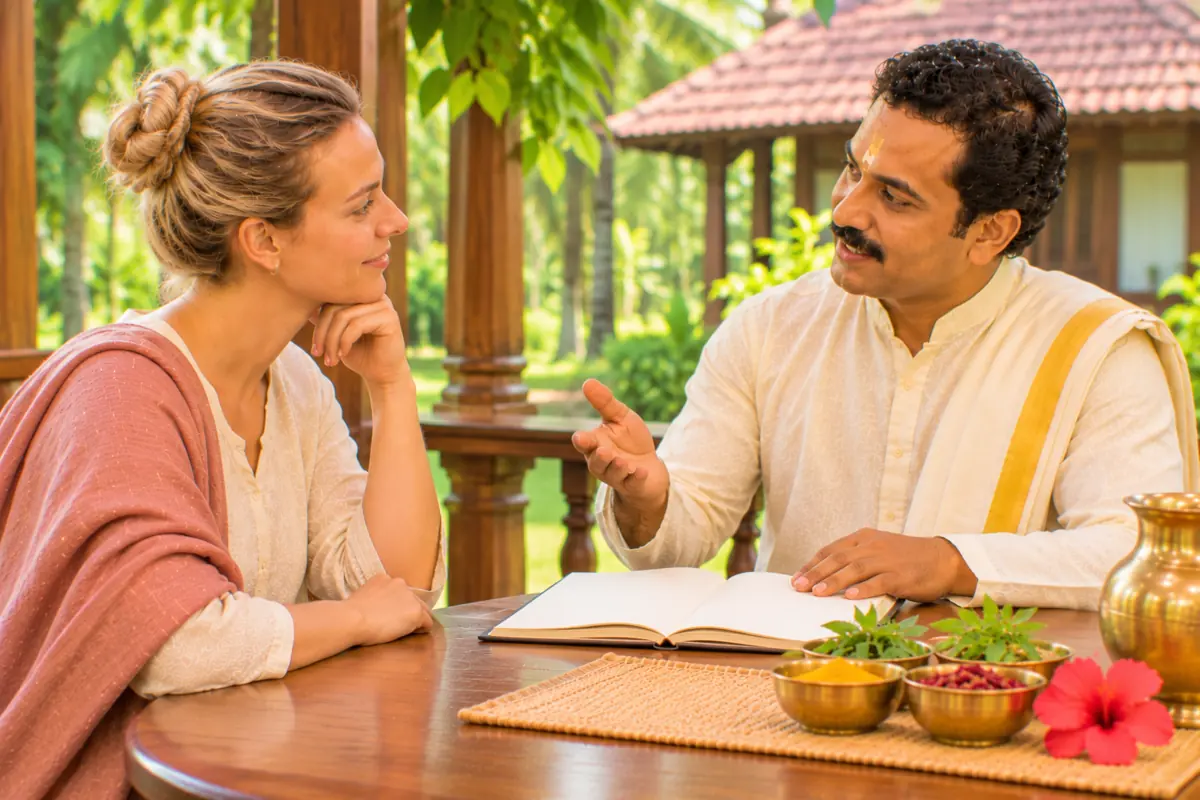
In a good consultation, the pulse is never read alone. The physician also talks with you at length about your health, sleep, digestion and habits, observes your build, skin and tongue, examines you gently and reviews your reports and medicines.
What it can and cannot tell you
Pulse examination can help a physician sense your pattern of balance and guide the choice of therapies, diet and pace. It does not diagnose disease in the modern sense, and it does not replace blood tests, scans or your own doctors' assessments. The two kinds of assessment work well side by side.
Preparing for a pulse examination
A few simple habits help the pulse feel its natural self:
- Arrive rested, and give yourself a few quiet minutes before the consultation.
- Avoid a large meal, strong tea or coffee, and vigorous exercise just beforehand.
- Tell the physician about any medicines you take, particularly those that affect the heart.
- Simply relax and breathe.
When your first consultation is online
Pulse examination needs touch, so it cannot be carried out through a screen. In an online pre-consultation, the physician relies on conversation, observation and your reports to begin shaping a plan. The pulse is then examined in person, when you meet the physician on arrival, and the plan is refined.
Choosing a physician with experience
Skill in pulse examination varies, as it does in any craft. Look for a qualified Ayurvedic doctor (BAMS or MD Ayurveda), registered with the appropriate board, who takes time over your consultation and explains their thinking plainly. Be cautious of anyone who claims to diagnose serious conditions from the pulse alone, or who offers a plan without a proper conversation.
Working alongside your own doctors
Please keep your own doctors informed. Share your medical summary, bring your reports and keep taking whatever you have been prescribed. If you have a heart condition or take medicines for it, please say so at the start. Please do not change medicines without medical advice.
Planning the journey
Apply for your e-Medical visa on India's official portal, usually with a hospital letter, a few weeks before travel. It is valid for 60 days from first arrival, allows three entries and cannot be extended. Book flights after approval, arrange travel insurance and choose an arrival time that gives you a rested first day. Check the portal for current rules before you apply.
Your friend and hand-holder on the way to your consultation: MyVaidyam
Meeting an Ayurvedic physician for the first time is a lovely moment, and that is where MyVaidyam comes in. We walk with you from your very first question to the day you return home, answering every question patiently and making sure that nothing is left to chance.
- An online pre-consultation with an Ayurvedic physician, so that your plan begins before you travel.
- Help preparing your health summary and organising your reports.
- Guidance on choosing a reputable centre with experienced physicians.
- Help knowing what to expect at your first in-person consultation.
- Support with your e-Medical visa documents, flights, airport pickup and accommodation.
- A warm point of contact during your stay, and follow-up after you return home.
You are welcome to reach out at any stage. We would be delighted to help you begin.