The decision is made with care, and sometimes the answer is a fuller programme, sometimes a gentler one, and sometimes a little preparation first.
This guide explains how Ayurvedic doctors make that decision: what they look at, which questions they ask, what the possible outcomes are, why a different recommendation is a sign of good care and how an online pre-consultation can help you know where you stand before you travel. And throughout, it shows how MyVaidyam can walk beside you as your friend and guide.
Ayurveda is offered here as a complementary, supportive approach that works alongside your own doctor's care, never as a replacement for it. The decision about any programme rests with the physician, after assessment.
Quick Facts - How Ayurvedic Doctors Decide Whether Panchakarma Is Appropriate
| Topic | Summary |
|---|---|
| Who decides | A qualified Ayurvedic physician, after assessment |
| What is considered | Goals, strength, digestion, age, medical history, medicines, season |
| Possible outcomes | A tailored Panchakarma, a gentler programme, or preparation first |
| Evidence reviewed | Your own doctors' reports and medicines |
| Where it starts | An online pre-consultation before you travel |
| Not | A guarantee that everyone will have the same programme |
| Visa | e-Medical visa: 60 days from first arrival, triple entry, non-extendable |
| Your companion | MyVaidyam: planning, coordination and support before, during and after |
A question before the answer
Panchakarma is a powerful, individual programme, and Ayurvedic tradition has always held that it should be offered with discernment. Classical teachers describe careful consideration of the person before any procedure is begun. In practice, that means a conversation, an examination and a review of your reports, followed by a recommendation that fits.
It also means that no two physicians' conversations are quite alike, because no two guests are alike.
How the decision unfolds
Your goals, reports, strength, digestion, age, medicines and season
Panchakarma
Suitable and well timed: a full or tailored programme
A gentler programme
Oil therapies, steam, diet and rest, without the main procedures
Prepare first
Some weeks of groundwork at home, then reassess
Every path is a caring one. The right plan is the one that fits you today.
Notice that all three paths are caring ones. The aim is never to fit you into a programme, but to find the programme that fits you.
What the physician looks at
Several things are weighed together, and each one helps to shape the recommendation.
| Factor | Why it matters |
|---|---|
| Your goals | What you hope for, and what is realistic, so the programme has a clear purpose |
| Your strength | How robust you are, which guides how fuller or gentler a plan should be |
| Your digestion | How well you digest food, which shows how ready the body is for the main therapies |
| Your age and stage of life | Young adults, midlife and older guests are supported differently |
| Your medical history and medicines | Your own doctors' diagnoses, reports and treatments |
| The season and your setting | Climate and time of year affect comfort and planning |
| Your time and support | How long you can stay and who will be with you |
What a pre-consultation involves
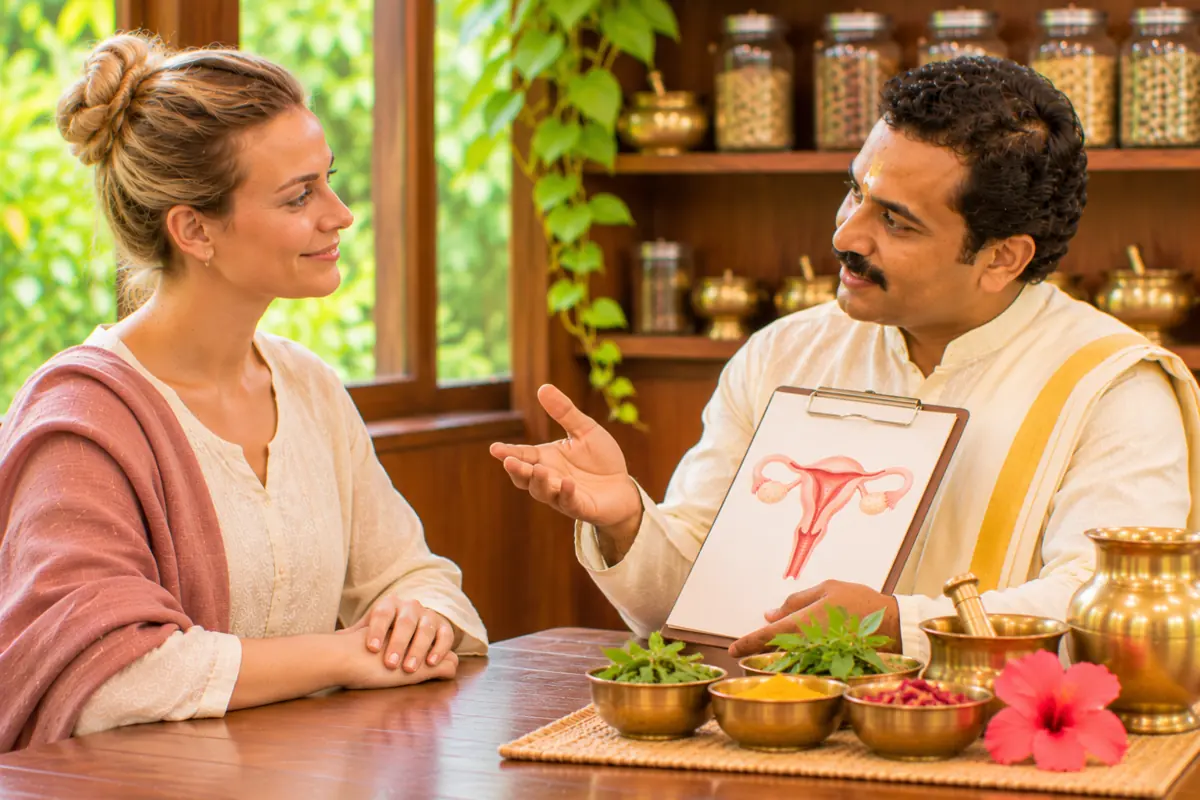
Before you travel, an online pre-consultation lets the physician begin this assessment. You talk about your health and goals, share your reports and medicines and describe your daily life. The physician may ask about your sleep, digestion, energy and habits, and then explain their thinking in plain words. Many guests find this one of the most reassuring parts of the whole journey.
Possible outcomes
There are broadly three, and each is a good outcome.
- A tailored Panchakarma. If you are well suited and the timing is right, the physician designs a programme with the stages and procedures that suit you.
- A gentler programme. Many guests are guided towards oil therapies, steam, diet, yoga and rest, without the main procedures. This is often just what they need.
- Preparation first. Sometimes the best advice is to prepare at home for a few weeks, with diet and routine, and then reassess before travelling.
Why a different recommendation is a sign of care
It is natural to feel a little disappointed if you had your heart set on a particular programme. But a physician who suggests something different is doing exactly what a good physician should: looking at you, not at a menu. A guest who receives a gentler plan is not receiving less. They are receiving the right plan, and many of them go on to enjoy their stay very much.
Your health conditions and medicines
Your own doctors' information is central. If you have a medical condition, are on regular medicines or have had recent surgery, please share the details openly. The physician will take them into account and may suggest that you speak with your own doctor before deciding. Where needed, the two teams can exchange information so that nothing is overlooked. Please keep taking your prescribed medicines, and do not change anything without medical advice.
Special circumstances
Some situations call for particular care and a conversation with both your own doctor and the Ayurvedic physician. These include pregnancy and the period after childbirth, recent surgery, serious or unstable medical conditions, and times of great physical weakness. In these cases, the physician will tell you what is suitable, and often there is a gentle option that fits well.
What you can do to help the decision
A few simple things help your physician help you:
- Share your reports, diagnoses and medicines in full.
- Describe your health honestly, including sleep, digestion and energy.
- Explain your goals and how much time you have.
- Ask questions, and say if something worries you.
- Be open to a recommendation that differs from what you imagined.
The decision continues during your stay
The assessment does not end at the pre-consultation. When you arrive, the physician meets you, reviews how you feel after the journey and confirms or adjusts the plan. Throughout the stay, they check in daily, and the programme can be lightened, paused or extended as you respond. This ongoing attention is one of the great strengths of residential care, and you are always welcome to speak up.
Working alongside your own doctors
Please keep your own doctors informed. Share your Ayurvedic physician's recommendation with them, and bring their advice to your pre-consultation. Keep taking whatever you have been prescribed, and ask your physician to write down any herbal preparations so that you can show them at home. Please do not change medicines without medical advice.
Choosing a physician who assesses properly
Look for a qualified Ayurvedic doctor (BAMS or MD Ayurveda), registered with the appropriate board, who sees you personally, takes time over your history and explains the plan in writing. Be cautious of anyone who promises Panchakarma to everyone, or who offers a programme before asking about you.
Planning the journey
Once your plan is settled, apply for your e-Medical visa on India's official portal, usually with a hospital letter, a few weeks before travel. It is valid for 60 days from first arrival, allows three entries and cannot be extended. Book flights after approval, arrange travel insurance and choose an arrival time that gives you a rested first day. Check the portal for current rules before you apply.
Your friend and hand-holder in choosing the right programme:
MyVaidyam
Not knowing whether a programme suits you can feel unsettling, and that is where MyVaidyam comes in. We walk with you from your very first question to the day you return home, answering every question patiently and making sure that nothing is left to chance.
- An online pre-consultation with an Ayurvedic physician, so your suitability is discussed before you travel.
- Help preparing your health summary and organising your reports and medicines.
- Guidance on choosing a reputable centre, and a programme that fits the physician's advice.
- Help reviewing your written plan, including what is included and what is arranged separately.
- Support with your e-Medical visa documents, flights, airport pickup and accommodation.
- A warm point of contact during your stay, and follow-up after you return home.
You are welcome to reach out at any stage. We would be delighted to help you find the right path.