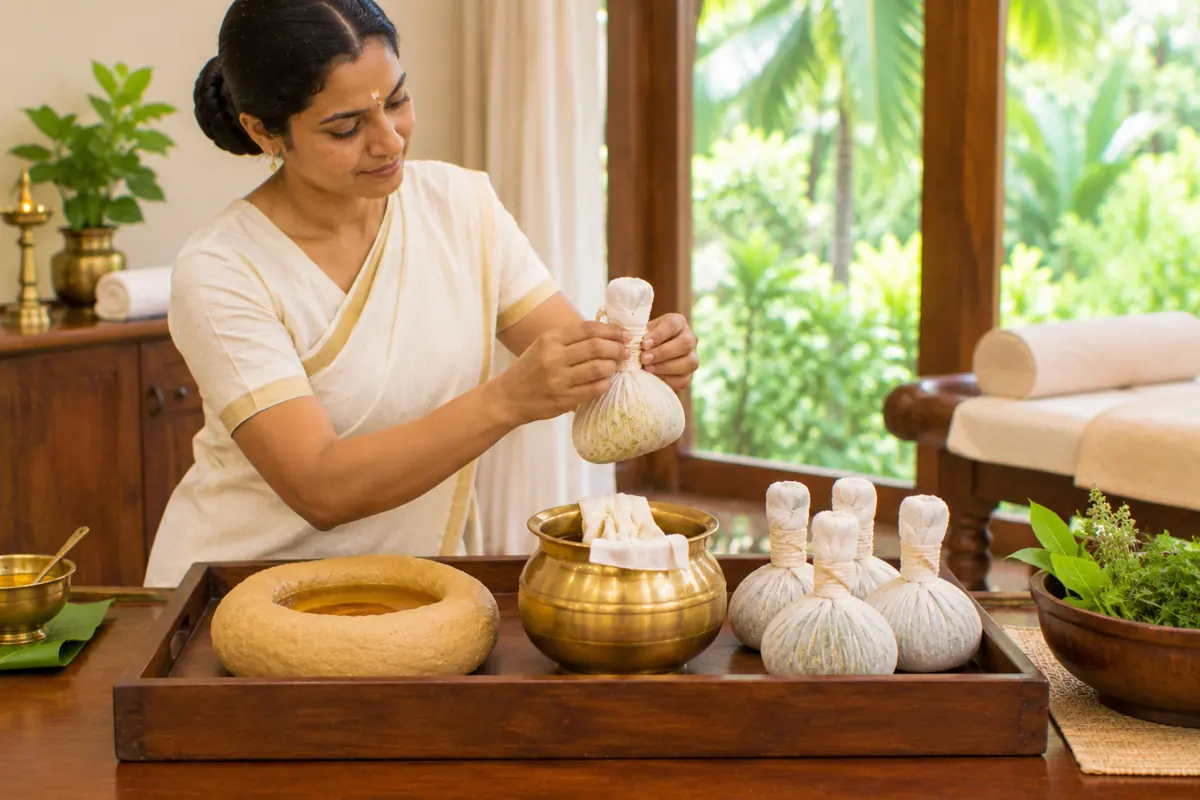
This guide compares the three in plain language: what each involves, how it feels, what it is traditionally used for, how a physician chooses between them, who each may not suit and how they fit with physiotherapy and your doctors' advice. And throughout, it shows how MyVaidyam can walk beside you as your friend and guide.
Ayurveda is offered here as a complementary, supportive approach that works alongside your own doctor's care, never as a replacement for it. None of these therapies is a cure for back pain.
Quick Facts - Kati Basti vs Pizhichil vs Kizhi for Back-Care Programs
| Topic | Summary |
|---|---|
| Kati basti | Warm oil held on the lower back in a dough ring |
| Pizhichil | Warm oil streamed over the body, with massage |
| Kizhi | Warm herbal poultice massage |
| Chosen by | Your Ayurvedic physician |
| First step | Review of your back by your own doctor |
| Not | A cure for back pain |
| Visa | e-Medical visa: 60 days from first arrival, triple entry, non-extendable |
| Your companion | MyVaidyam: planning, coordination and support before, during and after |
Three therapies, one theme
All three therapies use warmth, which Ayurveda associates with easing stiffness, and all three are performed by trained therapists in a calm treatment room. Where they differ is in how the warmth and oil are delivered, how large an area is treated and how intense the experience is. Choosing between them is a matter of fit, not of better or worse.
Three warm back therapies
Kati basti
Warm oil pooled on the lower back
- Ring of dough on the back
- Warm medicated oil held in it
- Local, calm, around 30 to 40 minutes
Pizhichil
Warm oil poured over the body
- Streams of warm oil, by therapists
- Rhythmic, whole-body
- Often with gentle massage
Kizhi
Warm herbal poultice massage
- Bundles of herbs, powders or rice
- Dabbed and pressed over the area
- Aromatic, relaxing
The physician may use one, two or all three at different points in a programme.
Kati basti
In kati basti, a ring of dough is placed on the lower back and filled with warm medicated oil, which is held there for around half an hour and kept warm by replacing it as it cools. It is local, quiet and meditative, and many guests find it deeply soothing for lower back stiffness and tension. It is commonly used after a gentle oil massage.
Pizhichil
Pizhichil is a whole-body therapy in which two or more therapists stream warm medicated oil over the body in rhythm, while gently massaging. It is longer and more enveloping than kati basti, and it is considered nourishing and deeply relaxing. Because it is more involved, and uses a good deal of oil and warmth, it is chosen with care, and not everyone is suited to it.
Kizhi
Kizhi, also called pinda sweda, uses warm bundles of herbs, powders or cooked rice, dipped in warm oil or milk and dabbed and pressed over the body. The warmth, aroma and rhythmic pressure relax tight muscles. It can be directed at the back, shoulders or limbs, and is often described as both comforting and invigorating.
How the physician chooses
| Therapy | Often considered for | Character |
|---|---|---|
| Kati basti | Localised lower back stiffness and tension | Quiet, targeted, low-intensity |
| Pizhichil | Widespread tightness and fatigue, when appropriate | Whole-body, richer, more involved |
| Kizhi | Muscular tightness over a broader area | Active, aromatic, adjustable |
Who may not be suited
Warm therapies may not suit everyone. A fever, skin conditions, open wounds, certain heart or blood-pressure conditions, pregnancy or recent injury may call for changes or for leaving a therapy out. Your physician will ask about these, and may adapt the therapy. Tell the therapist at once if you feel too warm, dizzy or uncomfortable.
See your doctor first
Before planning, have your back assessed by your own doctor. Numbness, weakness, loss of bladder or bowel control, pain after injury, fever or severe night pain need medical attention without delay. Share your doctor's advice and any scans with the centre.
How they fit with movement
These therapies are relaxing, and they work best when followed by gentle, guided movement. A physiotherapist or yoga teacher can teach exercises that build on the relaxed state. A residential programme combines warmth, movement, diet and rest in a rhythm that is easy to follow.
Questions to ask your physician
- Which of these therapies do you recommend for me, and why?
- How many sessions, and over how many days?
- Is any therapy not suitable for me?
- How will movement and physiotherapy be included?
- What should I do afterwards?
Setting honest expectations
These therapies are comforting and traditionally valued, but none can promise to cure back pain. A thoughtful physician will speak of relaxation, comfort and a supportive routine, and will focus on the habits that last.
Working alongside your own doctors
Please keep your own doctors informed. Share your medical summary, bring your reports and keep taking whatever you have been prescribed. Please see your own doctor about back pain before you travel, and keep taking prescribed medicines as advised. Please do not change medicines without medical advice.
Choosing a centre
Look for a qualified Ayurvedic doctor (BAMS or MD Ayurveda), registered with the appropriate board, trained therapists, clean treatment rooms, a physiotherapist on the team and a clear written plan. Be cautious of anyone who promises that a particular therapy will cure back pain.
Planning the journey
Apply for your e-Medical visa on India's official portal, usually with a hospital letter, a few weeks before travel. It is valid for 60 days from first arrival, allows three entries and cannot be extended. Book flights after approval, arrange travel insurance and choose an arrival time that gives you a rested first day. Check the portal for current rules before you apply.
Your friend and hand-holder in understanding your options: MyVaidyam
Unfamiliar names are easier with a trusted friend, and that is where MyVaidyam comes in. We walk with you from your very first question to the day you return home, answering every question patiently and making sure that nothing is left to chance.
- An online consultation with an Ayurvedic physician to discuss your back and plan.
- Help preparing your health summary and reports.
- Guidance on choosing a reputable centre with trained therapists.
- Help understanding the therapies in your written plan.
- Support with your e-Medical visa documents, flights, airport pickup and accommodation.
- A warm point of contact during your stay, and follow-up after you return home.
You are welcome to reach out at any stage. We would be delighted to help you begin.