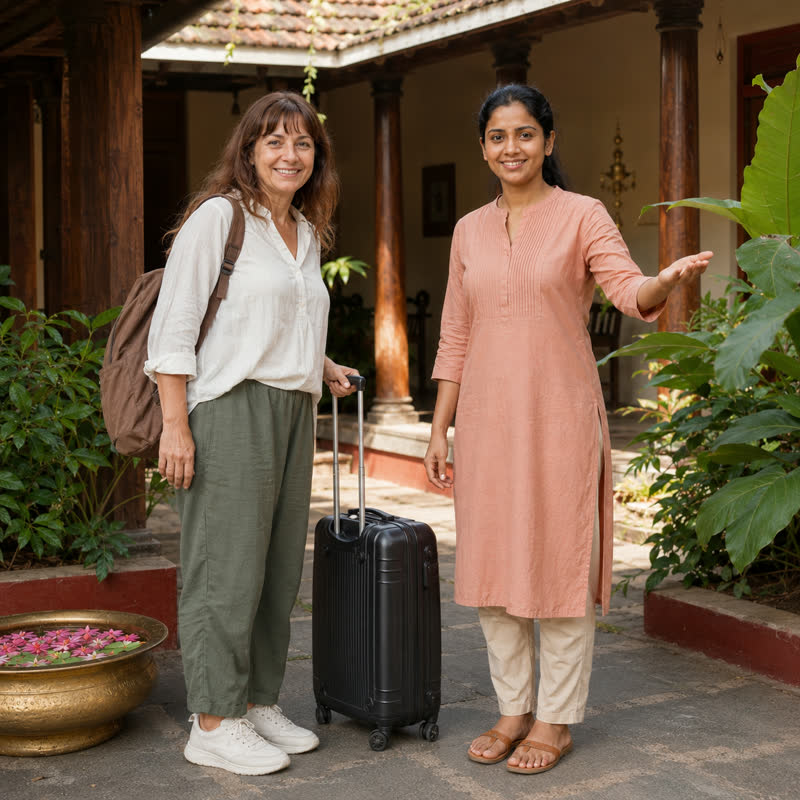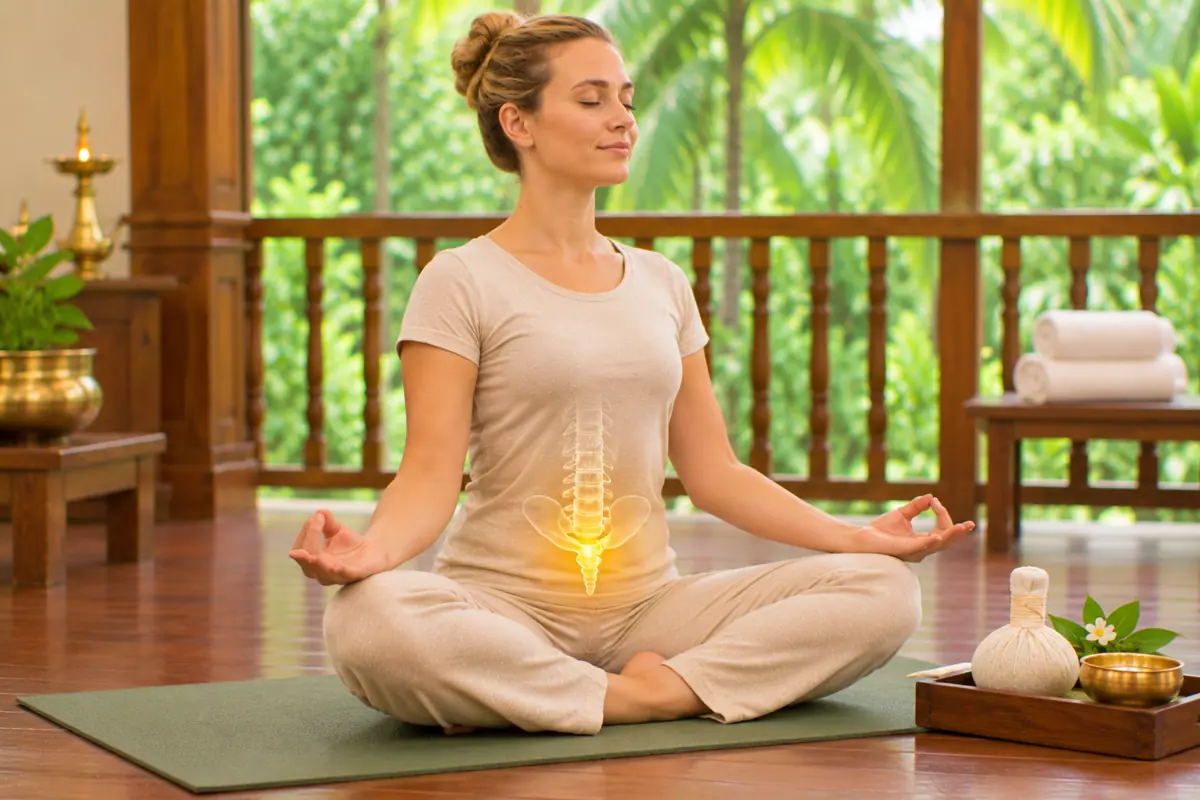
This guide explains how mobility and exercise are managed during an Ayurveda back-care stay: how a plan is made, how the days are structured, which activities are usually included, how pain is used as a guide, how to protect yourself during free time, what to practise at home and when to speak up. And throughout, it shows how MyVaidyam can walk beside you as your friend and guide.
Ayurveda is offered here as a complementary, supportive approach that works alongside your own doctor's care, never as a replacement for it. Your own doctors lead your back care.
Quick Facts - Managing Mobility and Exercise During an Ayurveda Back-Care Stay
| Topic | Summary |
|---|---|
| Principle | Gentle, graded movement with rest in between |
| Led by | Physiotherapist and Ayurvedic doctor, with your own doctors |
| Typical activities | Walking, stretches, core and hip work, breathing, gentle yoga |
| Pain | Used as a guide |
| Free time | Part of the plan |
| Not | Pushing through pain |
| Visa | e-Medical visa: 60 days from first arrival, triple entry, non-extendable |
| Your companion | MyVaidyam: planning, coordination and support before, during and after |
Movement is part of the medicine
Long rest can stiffen the back and weaken the muscles that support it, while overdoing things can aggravate it. The sweet spot lies in between: regular, gentle, well-chosen movement, with rest and care around it. A stay in a good centre makes this easy, because the days are organised for you and a physiotherapist watches over the details.
The rhythm of movement through a back-care stay
- 1
Settle
Rest, orientation, gentle walking
- 2
Mobilise
Gentle stretches and breathing
- 3
Strengthen
Core, hips and posture, step by step
- 4
Consolidate
Daily routine you can take home
Stages overlap, and the pace is set by how you feel and what your doctors advise.
Before you arrive
Ask your own doctor or physiotherapist about movements to avoid and any limits on bending, lifting or twisting. Bring scans, reports and a short summary. If you have leg weakness, numbness or other nerve symptoms, mention them in advance, so that the plan can be chosen with care. Start a little gentle walking beforehand, if your doctor agrees, which makes the first days easier.
The first days: settling in
After a long journey, the back is often stiff. The first days usually bring rest, an evaluation by the physician and physiotherapist, warm therapies to ease muscle tension and short, easy walks. Do not rush to do everything at once. A steady start is the foundation for the rest of the stay.
What exercise typically includes
- Walking, building gradually.
- Gentle stretches for the back, hips and legs.
- Core stability work, such as light abdominal and back-muscle activation.
- Hip and glute strengthening.
- Breathing and relaxation exercises.
- Gentle yoga, adapted to your back, with positions to avoid explained.
Using pain as a guide
Mild stretching sensations or muscle tiredness are usually fine. Sharp, shooting or increasing pain, pain that travels down the leg, new numbness or weakness are signals to stop and tell your therapist. A good team will teach you the difference, and adjust the exercise rather than push you through. Reporting pain early is a sign of good teamwork, not a complaint.
A day at a residential centre
| Time | Typical activity |
|---|---|
| Early morning | Warm water, breathing, gentle mobility |
| Morning | Warm therapy or rest |
| Late morning | Physiotherapy session |
| Midday | Light meal and rest |
| Afternoon | Gentle yoga or walk |
| Evening | Light supper, calm, early sleep |
Free time and the rest of the day
What you do between sessions matters. Walk in the garden, sit with good posture, avoid long periods in one position and take care when getting up from low seats. Avoid lifting luggage or heavy objects, avoid twisting with a load and take the steps slowly. A comfortable chair and cushions can help, and the staff will gladly arrange them.
Travel days and sightseeing
Plan the journey in and out with rest in mind: aisle seats, regular standing and stretching, and light bags. If you plan to see the sights, keep outings short in the early part of the stay, and take someone with you. A rested back enjoys the visits more.
Taking it home
- Ask for a written exercise programme.
- Practise daily, even for ten minutes.
- Keep walking, building up gradually.
- Use good posture and safe lifting.
- Follow up with your doctor and share the centre's summary.
Setting honest expectations
Back pain often improves gradually, and a residential stay can give you structure, supervised movement and habits to continue. No programme can promise a particular result, and a thoughtful team will speak of progress in function and confidence as well as comfort.
Sleep and rest
Good sleep is part of back care. Many centres encourage an early night, a quiet room and a firm, comfortable mattress. Lying on your side with a pillow between the knees, or on your back with a pillow under the knees, eases many backs. Short rests during the day, lying flat for ten minutes, also help, and they let the muscles let go between sessions.
Working alongside your own doctors
Please keep your own doctors informed. Share your medical summary, bring your reports and keep taking whatever you have been prescribed. Please keep taking prescribed medicines, and tell your doctors about the exercises you are doing. Please do not change medicines without medical advice.
Choosing a centre
Look for a qualified Ayurvedic doctor (BAMS or MD Ayurveda), registered with the appropriate board, a qualified physiotherapist on the team, trained yoga teachers and a clear written plan. Be cautious of anyone who promises to cure back pain or who pushes through pain.
Planning the journey
Apply for your e-Medical visa on India's official portal, usually with a hospital letter, a few weeks before travel. It is valid for 60 days from first arrival, allows three entries and cannot be extended. Book flights after approval, arrange travel insurance and choose an arrival time that gives you a rested first day. Check the portal for current rules before you apply.
Your friend and hand-holder in preparing for your stay: MyVaidyam
A well-planned stay makes recovery calmer, and that is where MyVaidyam comes in. We walk with you from your very first question to the day you return home, answering every question patiently and making sure that nothing is left to chance.
- An online consultation with an Ayurvedic physician to discuss your back and goals.
- Help preparing your health summary and reports.
- Guidance on choosing a reputable centre with physiotherapy.
- Help understanding your written plan.
- Support with your e-Medical visa documents, flights, airport pickup and accommodation.
- A warm point of contact during your stay, and follow-up after you return home.
You are welcome to reach out at any stage. We would be delighted to help you begin.