The answer depends on your surgeon's advice, the type of operation, how the wound is healing and where on the body the therapy is applied.
This guide explains in calm, practical terms how to think about massage and oil therapies after surgery: why your surgeon decides first, which situations are usually more suitable and which call for waiting, how areas away from the operated site are treated differently, what questions to ask and how to plan. It is for understanding only, and it does not replace your surgeon's advice. And throughout, it shows how MyVaidyam can walk beside you as your friend and guide.
Ayurveda is offered here as a complementary, supportive approach that works alongside your own doctor's care, never as a replacement for it. Your surgeon decides what is appropriate for you.
Quick Facts - Massage and Oil Therapies After Surgery
| Topic | Summary |
|---|---|
| Decided by | Your surgeon, before any therapy |
| Key factors | Wound healing, area, time since surgery, limits |
| Operated area | Treated only with your surgeon's approval |
| Other areas | Often treated gently, if approved |
| Ask for | Written advice from your surgeon |
| Not | A substitute for your surgical team's care |
| Visa | e-Medical visa: 60 days from first arrival, triple entry, non-extendable |
| Your companion | MyVaidyam: planning, coordination and support before, during and after |
Comfort is not the only question
A therapy can feel pleasant and still be unsuitable at a particular moment. After surgery, tissues are healing, and some operations carry specific cautions, such as avoiding pressure, heat or certain movements. This is why the most important step in considering any massage or oil therapy is to ask the person who performed your operation.
A surgeon's go-ahead comes first
| Is the wound healed? | Stitches out, no discharge, skin closed |
|---|---|
| Which area is involved? | Distance from the operated site matters |
| How long since surgery? | Early, middle and later recovery differ |
| What are my limits? | Positions, loads and movements to avoid |
| Other conditions? | Clotting, skin, heart, medicines |
These questions shape what is appropriate, and the answers come from your surgical team.
Questions your surgeon can answer
Ask your surgeon: Is my wound fully healed? May any oil, massage or heat be used on or near the operated area, and from when? Are there any areas of the body, such as the legs after surgery, where massage should be avoided because of the risk of clots? Are there movements and positions I should avoid? Do my medicines, such as blood thinners, change the advice? Ask for the answers in writing.
Areas away from the operated site
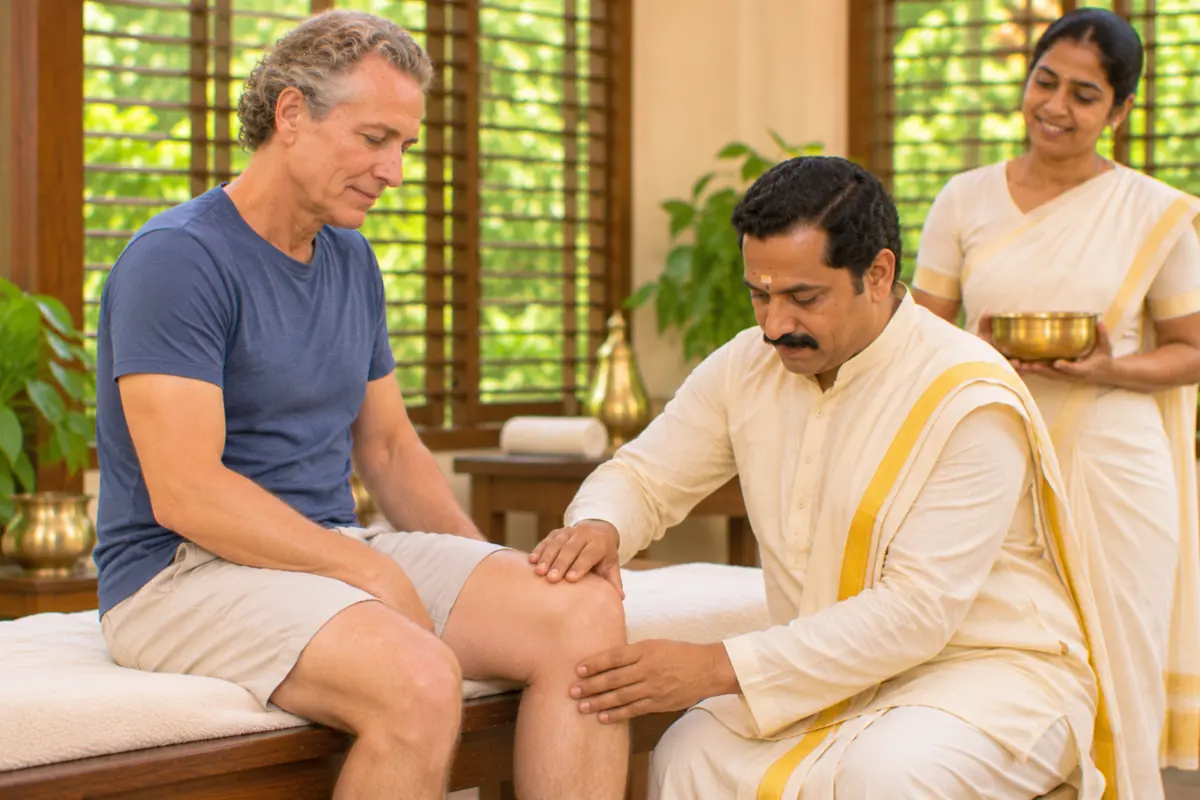
In many situations, gentle massage and warm therapies for areas well away from the operation may be acceptable once your surgeon agrees, such as the upper body after a leg operation, or the head and shoulders after a knee procedure. The decision is always your surgeon's, and the therapist should follow it.
The operated area and its surroundings
The area of the operation, and the tissues around it, call for the most caution. In the early period, no oil, massage, heat, steam or applications should be placed on or near the area unless the surgeon has explicitly approved. Later in recovery, some surgeons are comfortable with gentle, specific therapies, and some are not. Your surgeon's advice, and not the centre's routine, should guide.
Special situations
Some situations call for extra care or for waiting: a wound that is not closed, redness, warmth, swelling or discharge, a recent clot or a risk of clots, skin problems, fever, uncontrolled blood pressure, the presence of implants or hardware, and operations on the spine, heart, chest or abdomen. In each, your medical team's advice is essential, and the Ayurvedic physician should be told everything.
What a careful centre does
- Asks for your operation notes and surgeon's advice.
- Records your limits and shares them with every therapist.
- Chooses the gentlest suitable approach, and starts slowly.
- Avoids pressure, manipulation or heat on the operated area unless approved.
- Stops at once if you feel pain, dizziness or anything unusual.
- Keeps in touch with your surgeon, if you wish.
What you can do
Tell every therapist about your operation and limits, even if the record says it. Speak up if a position or pressure feels wrong. Keep your wound clean and dry as advised. Report any redness, swelling or discharge to your surgeon promptly.
Gentler alternatives
Where massage is not yet appropriate, there are gentler ways to receive care: rest, a calm routine, a warm, nourishing diet, breathing and relaxation practices, gentle walking as your physiotherapist allows and the quiet company of a supportive centre.
Setting honest expectations
Massage and oil therapies can be relaxing and comforting, but no programme can promise to speed healing. A thoughtful physician will say so, and will put your surgical team's advice first.
Working alongside your own doctors
Please keep your own doctors informed. Share your medical summary, bring your reports and keep taking whatever you have been prescribed. Please follow your surgeon's instructions throughout, and tell them about every therapy you plan to have. Please do not change medicines without medical advice.
Choosing a centre with care
Look for a qualified Ayurvedic doctor (BAMS or MD Ayurveda), registered with the appropriate board, experience of post-surgical guests, a physiotherapist on the team, a hospital nearby and a willingness to work within your surgeon's advice.
Planning the journey
Apply for your e-Medical visa on India's official portal, usually with a hospital letter, a few weeks before travel. It is valid for 60 days from first arrival, allows three entries and cannot be extended. Book flights after approval, arrange travel insurance and choose an arrival time that gives you a rested first day. Check the portal for current rules before you apply.
Your friend and hand-holder through your recovery: MyVaidyam
Knowing what is right for you is easier with a friend beside you, and that is where MyVaidyam comes in. We walk with you from your very first question to the day you return home, answering every question patiently and making sure that nothing is left to chance.
- An online consultation with an Ayurvedic physician to discuss your situation, with your surgeon's advice in hand.
- Help preparing your operation notes, reports and a list of questions for your surgeon.
- Guidance on choosing a reputable centre that works within your surgeon's advice.
- Help planning comfortable, well-timed travel for you and a companion.
- Support with your e-Medical visa documents, flights, airport pickup and accommodation.
- A warm point of contact during your stay, and follow-up after you return home.
You are welcome to reach out at any stage. We would be delighted to help you begin.