This guide explains the Ayurvedic view, what a stay typically includes and how to plan with confidence. Ayurveda is offered as a complementary, supportive approach alongside your own doctor's care, never a replacement for it.
Quick Facts - Shirodhara
| Topic | Summary |
|---|---|
| What it is | Warm oil or other liquid poured in a steady stream over the forehead |
| Research (INAHTA 2016) | Seven small studies, short follow-up; suitable as a complementary therapy by trained staff |
| Sessions | Varies by centre and plan; no evidence-based number |
| Reported effects | Some subjects reported headache or chills |
| Given by | Trained, supervised staff |
| Cost | Compare itemised, dated quotes |
Understanding what shirodhara feels like
Guests often describe shirodhara as a stillness: the sound and warmth of the oil, the dimmed room and the slow rhythm bring the day to a pause. INAHTA's 2016 brief found the research very limited, so we present shirodhara as a complementary therapy for relaxation, chosen and supervised by your physician, rather than as treatment for any condition.
What shirodhara is
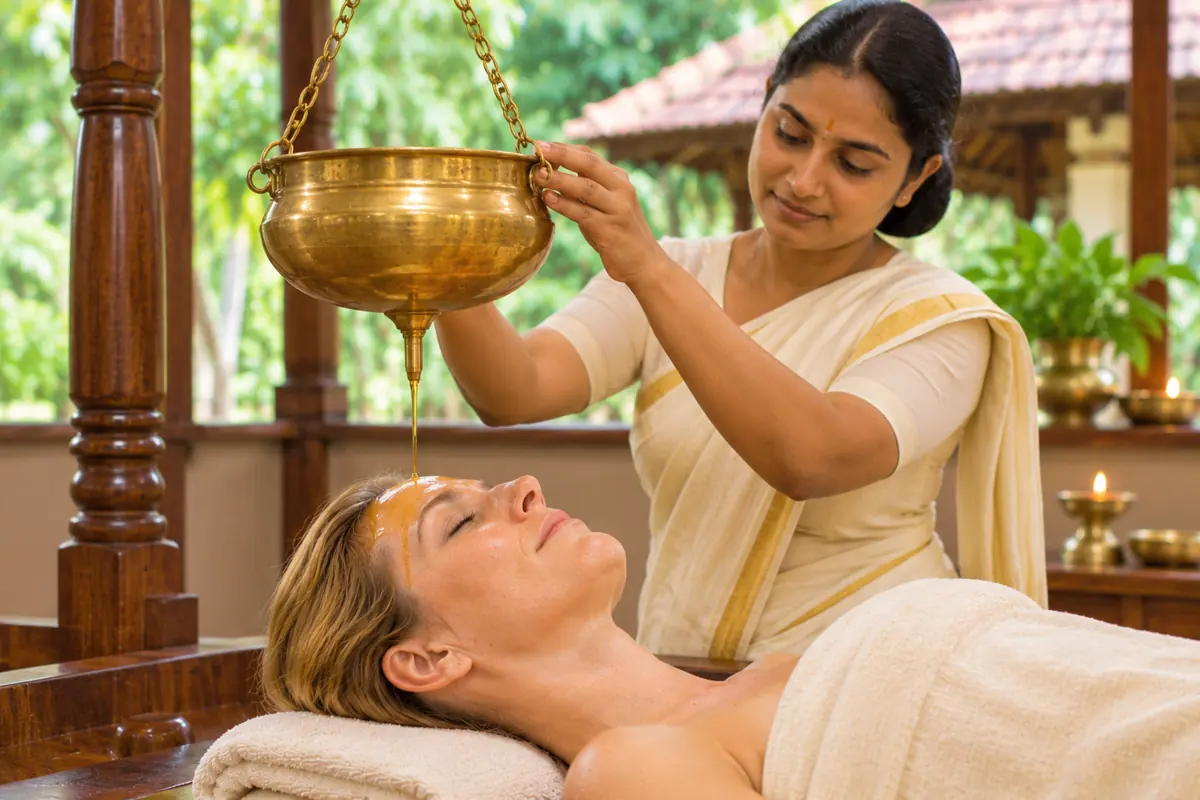
Shirodhara involves a gentle, continuous flow of warm oil or another liquid over the forehead, usually after a head and body massage. Sessions are unhurried and quiet, and the physician chooses the liquid and the number of sessions.
What the research shows
INAHTA's 2016 brief reviewed seven small studies and described the evidence as very limited, with short follow-up, and concluded that shirodhara may be used in a research environment as a complementary therapy by trained personnel. No cost-effectiveness evidence was found. Some subjects reported headache or chills. We therefore describe it as a relaxing complementary therapy rather than a treatment.
A session, step by step
- A gentle head and body massage to begin.
- You lie comfortably while a therapist adjusts the oil flow.
- The oil flows steadily over the forehead for a set time.
- You rest quietly, then the oil is wiped from the hair.
- A warm drink follows and you rest.
Types of liquid
- Warm medicated oil: the most common choice.
- Buttermilk or milk-based preparations: used in some programmes.
- Herbal decoctions: chosen by the physician.
- Your physician: decides which suits you.
A sample programme rhythm
Every programme is individual, and this outline is only an illustration of how a stay can unfold.
- Days 1 to 3, preparing: arrival rest, a full consultation and a gentle start with massage.
- Days 4 to 10, shirodhara course: a session on chosen days, with rest, warm meals and a physician review.
- Days 11 to 14, consolidating: a lighter schedule, a review and a written plan for home.
Many guests extend their stay, and the physician will advise after the first review. Ask the centre for its own day-by-day plan.
How many sessions?
INAHTA found no evidence-based number of sessions, so the plan depends on the centre and your physician. Ask why a particular number is proposed, whether sessions are daily or alternate days, and what happens if you prefer fewer. A sensible centre explains its reasoning and does not pressure you to buy a larger package.
What it costs
Prices vary by centre, oil and location, and we give no figures here. Ask for an itemised written quote that states the price per session, the oil used, the number of sessions and what is included, and compare quotes for the same dates and inclusions.
Aftercare
After a session you rest, keep your head warm and avoid cold drinks and draughts. Many centres offer a warm wash or leave the oil on for a short time as your physician advises. Plan a quiet hour afterwards, because the calm is part of the experience.
Kerala, climate and the best season
Many Ayurveda centres are in Kerala, where the warm, humid climate is traditionally considered kind to the body and the monsoon months are popular for oil therapies. The drier months from October to March are comfortable for travel and sightseeing. For shirodhara, ask each centre which season it recommends, and whether rooms are air-conditioned or well ventilated. Ask about the season, treatment rooms and the calm of the surroundings. Our guide to the best time to travel compares the seasons.
Keeping a simple diary
A small notebook is one of the most useful things to bring. Each evening, jot down how you feel before and after each session, your sleep and your mood. After a week or two the pattern often becomes clear, and you and the physician can fine-tune the plan. A few notes each evening help your physician adapt the plan. The same notes give your own doctor a helpful picture when you return.
Travelling comfortably
A little planning makes the journey smoother. Book an aisle seat so you can stand and stretch, keep your medicines and reports in your hand luggage, and choose a flight that arrives at a comfortable hour. Plan a restful journey, arrive a day early and keep your medicines in your hand luggage. Ask the centre to arrange the transfer and a restful first day. Our guide to the attendant visa explains how a family member can travel with you.
Conversations to have before you travel
A short chat with your own doctor makes the stay smoother. Many guests ask:
- Are my medicines and plans up to date for the programme?
- How should I continue in the weeks after I return?
- Is there anything you would like the Ayurveda team to know?
- When would you like to see me after I return?
Sharing the answers with the Ayurveda physician helps the two teams work in step, and leaves you feeling confident and well supported.
Who tends to enjoy a stay
Guests who enjoy this therapy are often people who would like a calm, supervised treatment, those who value an unhurried pace and anyone who would like practical routines to take home. If you are unsure whether a stay suits you, a free online consultation is a good first step, before you book anything.
Questions to ask before you book
These questions help you compare centres and plan with confidence.
- Who will be my physician, and what are their qualifications?
- Can the plan work around my usual medicines and appointments?
- Which oil or liquid will be used, and why?
- What does the quote include, and what is extra?
Preparing for your stay
Wear comfortable clothes, avoid heavy meals before a session and bring a towel or hair covering if you wish. Tell the team about skin or scalp sensitivities and allergies.
Planning your budget
Cost depends on room, length, therapies, physician time and medicines. Ask each centre for an itemised, dated quote for the same dates and inclusions, and add visa, flights, insurance and transfers. See the cost guide and verifying a doctor.
Travelling with confidence, and how MyVaidyam can help
- Share your reports and current medicines with the Ayurveda physician before you travel.
- Continue your prescribed medicines, and let your own doctor know your plans.
- Ask for ingredient lists for any herbal medicine, and choose labelled preparations.
- Plan rest after the flight so you can begin your stay comfortably.
- Shirodhara is given by trained staff, with the liquid and duration chosen by your physician.
MyVaidyam can arrange a free online pre-consultation, have your reports reviewed by an Ayurvedic physician and request day-by-day plans and itemised quotes from centres so you can compare them calmly. Contact MyVaidyam to book your free online consultation.