This guide explains the Ayurvedic view, what a stay typically includes and how to plan with confidence. Ayurveda is offered as a complementary, supportive approach alongside your own doctor's care, never a replacement for it.
Quick Facts - Panchakarma Treatment for International Patients in India
| Topic | Summary |
|---|---|
| Three stages | Purvakarma (preparation), pradhanakarma (main procedures), paschatkarma (recovery) |
| Main procedures | Often vamana, virechana, basti and nasya; the choice is individual |
| Typical length | Often one to three weeks; your physician advises |
| Standards | Ministry of Health and Family Welfare minimum standards for Ayush therapy centres |
| Kerala classification | Ayur Silver, Gold and Diamond |
| Cost | Compare itemised, dated quotes for the same dates |
Who enjoys a Panchakarma stay
Guests come for many reasons: to rest after a demanding year, to continue care for a long-standing condition alongside their doctor, to recover from illness, or simply to experience Ayurveda where it was born. Programmes are adapted to age, fitness and health, and your physician decides whether Panchakarma suits you.
What Panchakarma is
Panchakarma means five actions, and the National Institute of Ayurveda (Ministry of Ayush) teaches it as a sequence of procedures supported by preparation and recovery. It is a supervised programme in which oil massage, warmth, simple food and rest play as large a part as any single therapy. Your physician decides which procedures, if any, suit you.
The three stages in brief
Preparation (purvakarma) typically uses oil-based treatments and sweating together with diet guidance. The main procedures (pradhanakarma) are often described as vamana, virechana, basti and nasya. Recovery (paschatkarma) is a graded return to normal food and routine. Our guide to Panchakarma step by step explains each in detail.
The main procedures in plain words
- Vamana: a therapeutic procedure planned only for selected guests after careful preparation.
- Virechana: a supervised therapeutic purgation with a day of rest.
- Basti: a medicated enema, usually in a planned series.
- Nasya: medicated drops through the nose after a gentle facial massage.
- Supporting therapies: abhyanga, shirodhara, swedana and other soothing treatments.
What a stay feels like
Days are calm and predictable: a morning consultation, therapies, warm simple meals, rest and early evenings. Many guests describe the programme as a reset of routine rather than a medical ordeal, and value the unhurried attention of the team.
Choosing a centre
Look for a registered doctor, a written plan, clear hygiene and a transparent quote. The Ministry of Health and Family Welfare's minimum standards describe a registered practitioner, qualified therapists, records, consent and a discharge summary. Kerala Tourism also classifies centres as Ayur Silver, Gold or Diamond.
The setting: Kerala and beyond
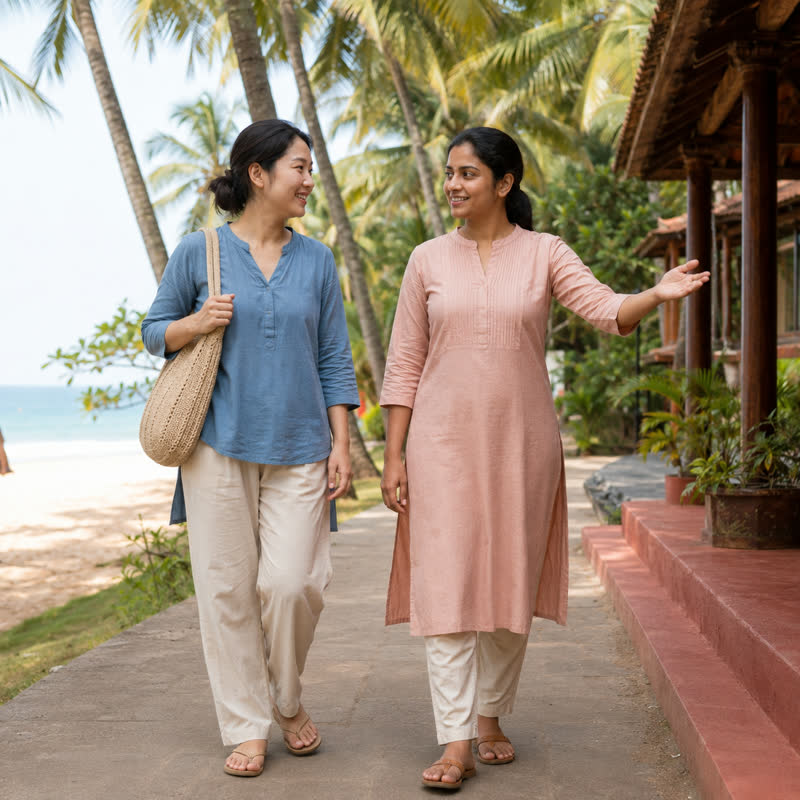
Kerala is famous for Ayurveda, with its green landscape, coastal air and long traditions, and many centres there hold Kerala Tourism classifications. Other regions, from the Himalayan foothills to Karnataka and Goa, offer programmes in their own settings. Choose by the quality of the doctor and centre first, and the scenery second.
What is in the day-by-day plan
Ask the centre for a written plan listing each stage, the therapies by day, the meals, the physician reviews and the free time. A clear plan lets you compare centres fairly and gives you something to review with your own doctor.
How long to stay
Programmes often run from about one to three weeks. Shorter stays focus on preparation and gentle therapy, longer ones allow the main procedures and a proper recovery. Your physician advises after a consultation, and a good centre explains why rather than pushing a fixed package.
What the cost covers
Costs depend on room type, length, therapies, physician time and medicines. Ask each centre for an itemised, dated quote for the same dates and inclusions, and add visa, flights, insurance and any extras. Compare like with like.
Visas and paperwork
Most international guests travel on an Indian e-visa suited to medical or wellness purposes, with a companion able to travel on an attendant visa. Check current rules on the official portal, carry your invitation letter from the centre and keep copies of your documents. Our guides on the e-medical visa and the attendant visa explain the steps.
Standards and registration
The Ministry of Health and Family Welfare's minimum standards for Ayush therapy centres describe a registered practitioner, qualified therapists, records, consent and a discharge summary, with minimum space and basic utilities. Look for the doctor's registration number and the centre's certificate on display, and ask to see them.
Bringing the benefits home
The weeks after a stay matter. Ask for written guidance on meals, rest, movement and any herbal medicines, and arrange a follow-up with your own doctor. Many centres offer an online review after you return, which helps you stay on course.
Kerala, climate and the best season
Many Ayurveda centres are in Kerala, where the warm, humid climate is traditionally considered kind to the body and the monsoon months are popular for oil therapies. The drier months from October to March are comfortable for travel and sightseeing. For Panchakarma, ask each centre which season it recommends, and whether rooms are air-conditioned or well ventilated. Ask about the season, treatment rooms and the calm of the surroundings. Our guide to the best time to travel compares the seasons.
Keeping a simple diary
A small notebook is one of the most useful things to bring. Each evening, jot down how you feel before and after each session, your sleep and your mood. After a week or two the pattern often becomes clear, and you and the physician can fine-tune the plan. A few notes each evening help your physician adapt the plan. The same notes give your own doctor a helpful picture when you return.
Travelling comfortably
A little planning makes the journey smoother. Book an aisle seat so you can stand and stretch, keep your medicines and reports in your hand luggage, and choose a flight that arrives at a comfortable hour. Plan a restful journey, arrive a day early and keep your medicines in your hand luggage. Ask the centre to arrange the transfer and a restful first day. Our guide to the attendant visa explains how a family member can travel with you.
Conversations to have before you travel
A short chat with your own doctor makes the stay smoother. Many guests ask:
- Are my medicines and plans up to date for the programme?
- How should I continue in the weeks after I return?
- Is there anything you would like the Ayurveda team to know?
- When would you like to see me after I return?
Sharing the answers with the Ayurveda physician helps the two teams work in step, and leaves you feeling confident and well supported.
Who tends to enjoy a stay
Guests who enjoy this therapy are often people who would like a calm, supervised treatment, those who value an unhurried pace and anyone who would like practical routines to take home. If you are unsure whether a stay suits you, a free online consultation is a good first step, before you book anything.
Your first day
Most centres keep the first day deliberately quiet. After a warm welcome and a light meal, you rest, meet your physician for a full consultation and receive a written plan for the days ahead. Bring your reports and medicine list to that conversation, ask any questions and tell the team how you are feeling after the journey. Bring your reports and medicine list to this first meeting. Our guide to your first day at an Ayurveda centre explains what to expect.
Travelling with family or a companion
Many guests travel with a spouse, a friend or an adult child, and a companion can make the whole experience easier. Ask each centre whether companions can share your room or stay nearby, whether they can join meals, yoga and walks, and whether there is a pleasant place for them to relax while you have therapies. A companion can share the quiet days, and many centres welcome them. Our guide to the attendant visa explains the paperwork.
Making the most of your free time
Between therapies there is time to enjoy the setting: strolls in the garden, reading in the shade, listening to music, gentle conversation with other guests or a visit to a nearby temple or backwater. The team can suggest easy outings that fit your energy. Garden walks, reading and quiet time are popular. Many guests find that this unhurried time is part of what helps them relax and recover.
After you return
Many guests keep up a simple diet, an earlier bedtime and gentle daily movement for several weeks, and review their health with their own doctor. Ask the centre for a written summary of your programme, your diet and your exercises, and share it with your own doctor at your next visit. A follow-up video call with the physician a few weeks later is a good way to review how you are feeling. Our guide to continuing Ayurveda at home explains how to keep the benefits going.
Common questions
Do I keep my medicines? Yes, unless your doctor advises otherwise. Can I ask for a written plan? Yes. Can a companion join me? Many centres allow it. How long should I stay? Your physician advises after a consultation.
Choosing a centre
Rather than looking for a ranking, compare what matters to you: a qualified Ayurveda physician, a clear assessment, a written day-by-day plan, hygiene standards, accessible rooms and good access to a hospital. Ask each centre the same questions:
- Who will be my physician, and what are their qualifications?
- Which therapies and oils are planned for me, and why?
- How do you protect my comfort and privacy?
- How are herbal medicines sourced, and can I see the ingredient list?
- What does the quote include, and what is extra?
A sample programme rhythm
Every programme is individual, and this outline is only an illustration of how a stay can unfold.
- Days 1 to 3, preparing: arrival rest, a full consultation, oil massage and gentle steam.
- Days 4 to 10, main procedures: the procedures chosen for you, with rest, warm food and daily review.
- Days 11 to 14, recovery: a graded return to normal food, gentle yoga and a written plan for home.
Many guests extend their stay, and the physician will advise after the first review. Ask the centre for its own day-by-day plan.
A guide to the supporting therapies
- Abhyanga: a rhythmic warm-oil massage, usually given by two therapists, that is the signature of preparation.
- Swedana: a comfortable herbal steam or sweating therapy that follows the massage.
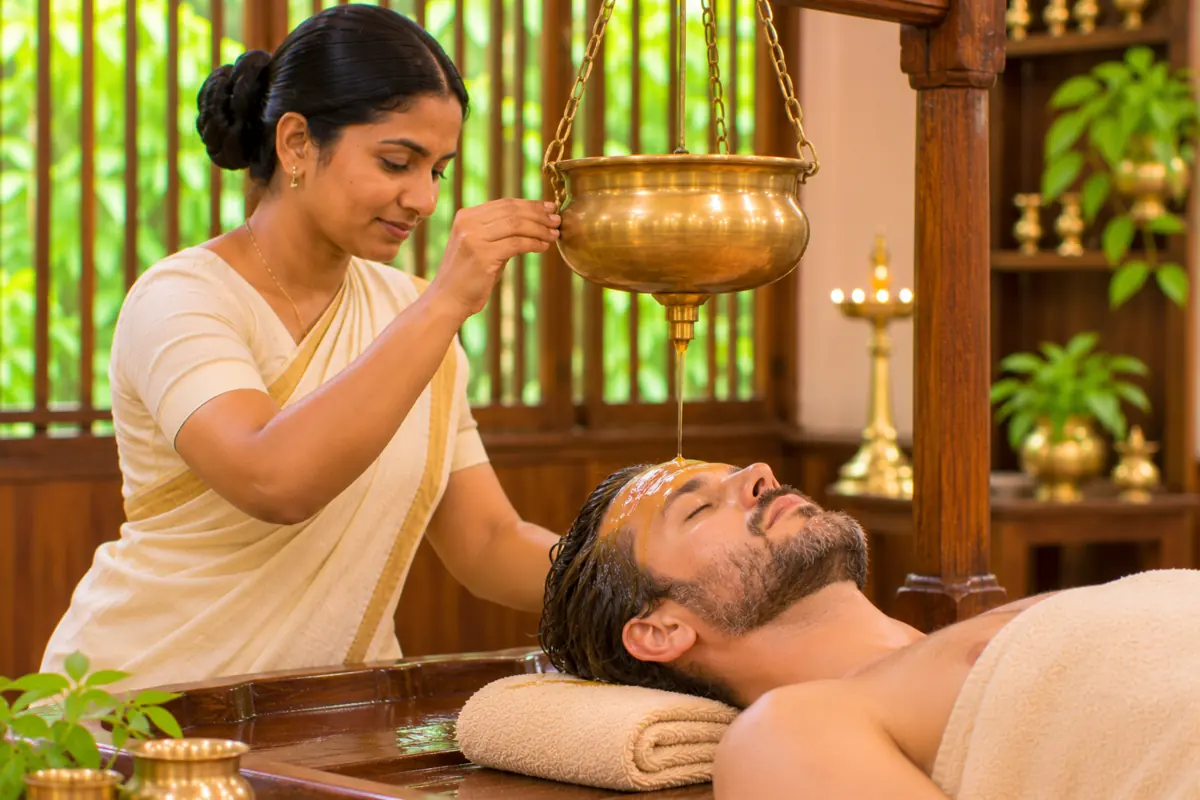
- Shirodhara: a calming stream of warm oil over the forehead, loved for its stillness.
- Pizhichil and njavarakizhi: Kerala's warm oil and rice-bolus therapies, given for relaxation and comfort.
- Kati and janu basti: warm oil held over the lower back or knee.
- Yoga and breathing: gentle daily practices that complement the therapies.
Food, rhythm and rest
Food is part of the treatment. Meals are warm, simple and freshly cooked, with regular timings, and the kitchen adjusts them to each stage of the programme. Mornings begin early with a consultation, afternoons are for rest, and evenings are quiet. Alcohol, late nights and heavy meals are set aside for the duration, and most guests find the calm rhythm one of the most appealing parts of the stay.
A note on herbal medicines
Your physician may prescribe herbal medicines for the stay and for afterwards. Ask for the name, manufacturer, ingredients and dose of each in writing, share the list with your own doctor, and continue your usual prescriptions unless your doctor advises otherwise. Reputable centres are glad to explain their sourcing.
Travelling with a companion
Many guests travel with a partner, relative or friend. Ask whether the centre offers shared rooms, companion meals and optional yoga or sightseeing for those not undergoing treatment. A companion can share the quiet days, help with logistics and make the journey home easier.
Staying in touch with your own doctor
Tell your own doctor about your plans before you travel, bring a short summary of your conditions and medicines, and arrange a review after you return. Share the centre's discharge summary and your diary, so that your care at home continues smoothly.
Common questions from international guests
Do I need to speak Hindi or Malayalam? Doctors and staff generally speak English. Is vegetarian food the norm? Meals are vegetarian at many centres, so ask about your preferences. Can I use my phone? Yes, though many guests choose quiet stretches. Is the water safe? Centres provide treated drinking water. Can I explore afterwards? Many guests add a few days of gentle sightseeing.
Making a booking you feel good about
Shortlist two or three centres, request the same information from each, and compare doctors, plans, standards, quotes and communication. Choose the one that answers clearly, welcomes your questions and makes you feel looked after before you have even arrived.
Seasons and timing
Kerala's monsoon months, roughly June to September, are traditionally favoured for oil therapies, and the cooler, drier months from October to March are comfortable for travel and sightseeing. Other regions have their own best seasons. Ask the centre which months it recommends for your needs, and book early for popular periods.
Arriving and settling in
Most centres arrange an airport pickup and a restful first day. Expect a welcome, a room briefing, a light meal and an early consultation. Pack loose cotton clothing, a light wrap for evenings, sandals, a notebook and any personal comforts. Many centres provide towels, loincloths and herbal toiletries.
What guests often take home
Guests often mention a more regular daily rhythm, simpler meals, an earlier bedtime, a short breathing or yoga routine and a clearer sense of how their body responds to rest. A good centre helps you write these down before you leave, so they travel with you.
Planning your budget with confidence
Set aside funds for the programme, flights, visa, insurance, transfers and personal spending. Ask each centre what the quote includes, such as meals, medicines, consultations and airport transfers, and what is extra. A clear itemised quote, dated and signed, is the foundation of a stress-free booking.
Comfort, privacy and dignity
A good centre explains each therapy beforehand, asks for your consent, offers gowns or draping, and provides a same-gender therapist where you prefer one. Ask about these at booking. You may pause or adjust any session whenever you wish, and your comfort guides the pace of the programme.
Sightseeing before or after
Many guests combine their stay with a few days of gentle sightseeing in Kerala or elsewhere in India, such as backwater cruises, temples, tea hills or beaches. It is usually best to explore before the programme or after recovery, keeping the treatment days quiet. Ask the centre for suggestions and local drivers.
Preparing for your stay
Bring your medicines, reports and a list of questions, and tell the team about all health conditions. Arrange travel for a comfortable arrival.
Planning your budget
Cost depends on room, length, therapies, physician time and medicines. Ask each centre for an itemised, dated quote for the same dates and inclusions, and add visa, flights, insurance and transfers. See the cost guide and verifying a doctor.
Travelling with confidence, and how MyVaidyam can help
- Share your reports and current medicines with the Ayurveda physician before you travel.
- Continue your prescribed medicines, and let your own doctor know your plans.
- Ask for ingredient lists for any herbal medicine, and choose labelled preparations.
- Plan rest after the flight so you can begin your stay comfortably.
- Panchakarma is complementary, offered alongside your own doctor's care.
MyVaidyam can arrange a free online pre-consultation, have your reports reviewed by an Ayurvedic physician and request day-by-day plans and itemised quotes from centres so you can compare them calmly. Contact MyVaidyam to book your free online consultation.
Frequently Asked Questions on Panchakarma Treatment for International Patients in India
References
- National Institute of Ayurveda, Jaipur (Ministry of Ayush). Panchakarma theory course outline
- Ministry of Health and Family Welfare, Government of India. Ayush minimum standards: therapy centre or day care centre
- Kerala Tourism. Classification of Kerala Tourism Ayurveda centres
- NCCIH, US National Institutes of Health. Ayurvedic medicine: in depth
- Ministry of Ayush, Government of India. Official website