This guide walks through the phases of virechana so you know what a well-run programme looks like and what to ask. Ayurveda is offered as a complementary, supportive approach alongside your own doctor's care, never a replacement for it.
Quick Facts - Virechana in Panchakarma
| Topic | Summary |
|---|---|
| What it is | Therapeutic purgation, one of the main Panchakarma procedures |
| Phase 1 | Preparation: light diet, oleation, sweating |
| Phase 2 | Rest and oil massage before the main day |
| Phase 3 | The purgation day, with staff observing |
| Phase 4 | Recovery with a graded diet and rest |
| Who decides | A qualified Ayurveda physician after assessment |
What virechana is
Virechana is described as therapeutic purgation, aimed in Ayurvedic theory at clearing the digestive tract after the body has been prepared. It is listed alongside vamana, basti and nasya among the main procedures of Panchakarma, and the National Institute of Ayurveda's course outline lists it as a topic. The outline names topics rather than schedules, so a physician always sets the plan. See Panchakarma step by step.
A medical procedure, guided by your physician
Virechana is a supervised procedure, which is why the preparation beforehand and the observation afterwards matter so much. It is best experienced in a centre where the physician and staff look after every step. The programme is yours to enjoy in safe hands.
Before it begins: assessment
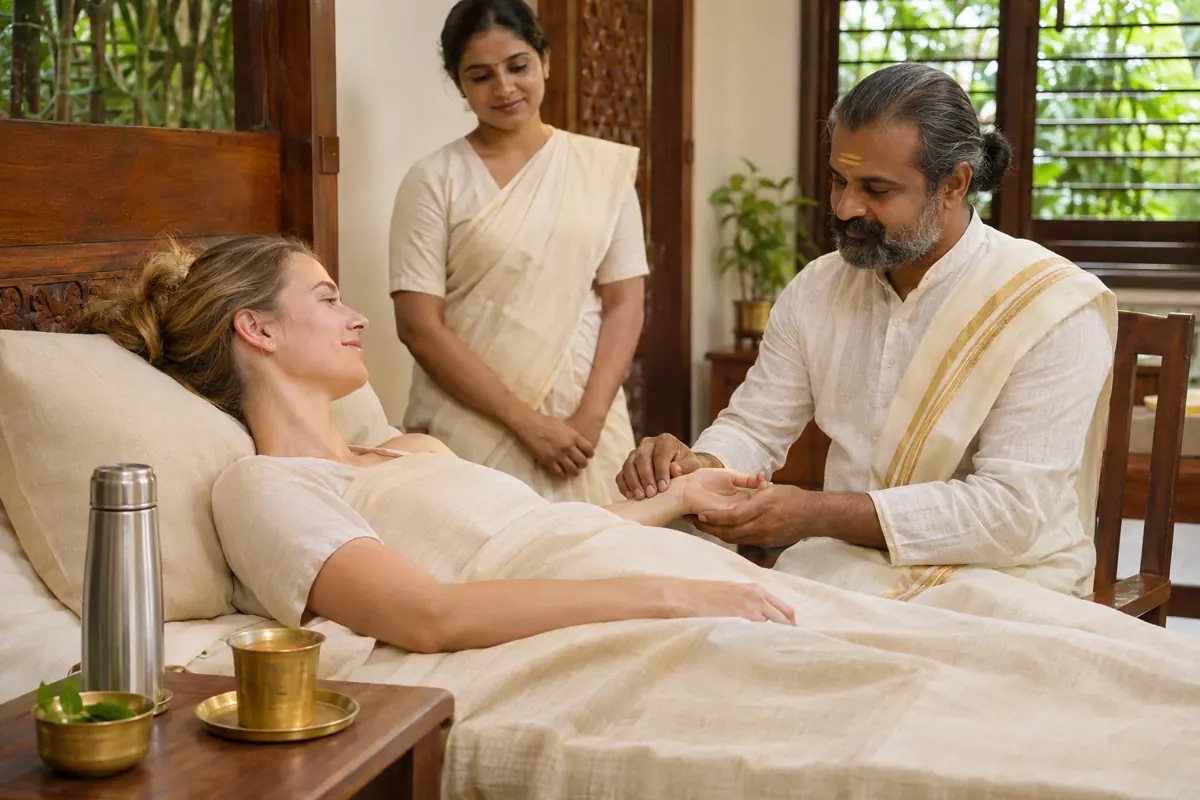
A good centre begins with a conversation. The doctor asks about your history, digestion, medicines and conditions, checks your general health and decides whether virechana is the right choice for you. Tell them about every medicine you take. See Ayurveda and your current medications and your first day at an Ayurveda hospital.
Phase 1: preparation days
Preparation usually spans several days and is often the most relaxing part of the programme:
- Digestive preparation: light, simple food and sometimes herbal medicines.
- Oleation (snehana): oil massage and, in many programmes, medicated ghee or oil in measured amounts.
- Sweating (swedana): steam or gentle heat after massage.
Experiences differ from person to person, so tell staff how you feel each day. The physician decides the number of preparation days.
Phase 2: the day before
Many programmes include a short period of rest with oil massage and sweating and a light diet immediately before the main day. You will be told what will happen the next morning and what to bring.
Phase 3: the purgation day
On the day itself you receive the preparation, usually in the morning, and rest comfortably near the bathroom, drinking warm water as advised. Staff stay close, check how you are feeling and may check blood pressure and pulse. The process takes several hours, and you may feel tired or hungry afterwards, which is why the day is kept quiet. Let staff know how you feel at any time. See care during treatment.
Phase 4: recovery
Recovery is an important part of the experience. A graded diet begins with light, easily digested food and gradually returns to normal meals over a few days, with rest and gentle activity. The physician reviews you daily and advises on the rest of your programme.
A sample timeline
Every programme is individual, and this outline simply shows how the phases can fit together.
- Days 1 to 2: arrival, rest, consultation and review of your reports.
- Days 3 to 6: preparation, with light food, medicated ghee or oil in measured amounts, daily oil massage and gentle steam.
- Day 7: a quieter day with massage, sweating and a light diet.
- Day 8: the main day, with staff close by and a calm, restful atmosphere.
- Days 9 to 12: a graded return to normal meals, rest and the physician's daily review.
The number of preparation days varies, so ask the centre for its own written plan.
What it feels like
Guests often describe the preparation days as deeply relaxing, thanks to the warm oil massage, steam and early nights. The main day is quiet and unhurried, with rest, warm water and attentive staff. Afterwards many people feel light and notice their appetite returning gently as the diet is reintroduced. Sensations differ from person to person, so tell the team how you feel at each step, and they will adjust the pace.
Food after virechana
The recovery diet is part of the therapy. It usually starts with thin, warm, easily digested food such as rice water or a light gruel, then moves gradually to soft rice with lightly spiced soup, and then to regular simple meals over a few days. Your physician tells you which foods to favour and which to leave for later. Ask for a written plan, because it also works well as a model for meals at home.
Who a centre may consider it for
Virechana is one option within Panchakarma, and the physician chooses it only when it suits the person. A good centre explains why it is, or is not, part of your plan and offers alternative therapies if it is not. Ask about the reasons for the recommendation, and remember that many guests enjoy excellent programmes built from oil massage, warm applications, herbal medicines, diet and yoga alone.
After your programme
Ask the centre for a written summary of what you took, what you ate and any advice for the weeks ahead. Many guests keep a lighter diet for a few days, return to activity gradually and enjoy a follow-up video call with the physician. Share the summary with your own doctor at your next visit, so that everyone is working from the same picture.
Choosing a centre
Compare what matters to you: a qualified physician, a clear assessment, a written day-by-day plan, hygiene standards, comfortable rooms near bathrooms and good access to a hospital. Ask each centre the same questions:
- Which physician will plan and supervise my programme?
- What does the preparation phase look like, day by day?
- How are meals and rest organised after the therapy?
- What does the quote include, and what is extra?
Preparing for your stay
Bring your medicine list, recent reports and a short note about your digestion. Pack loose, comfortable clothing, warm socks and a book or music for the quiet days. Share your food preferences in advance, plan an easy first day after the flight and choose dates that leave a few relaxed days after the programme before you travel home.
Travelling with confidence, and how MyVaidyam can help
- Share your full medical history and medicine list with the physician before you start.
- Continue your prescribed medicines unless your own doctor advises otherwise.
- Choose a centre where staff observe you throughout and a physician reviews you daily.
- Plan a quiet day for the main procedure, and follow the recovery diet.
MyVaidyam can arrange a free online pre-consultation to discuss whether virechana suits you, then request day-by-day plans and itemised quotes from centres. Contact MyVaidyam to book your free online consultation.
Frequently Asked Questions on Virechana in Panchakarma
References
- National Institute of Ayurveda, Jaipur (Ministry of Ayush). Panchakarma theory course outline
- NCCIH, US National Institutes of Health. Ayurvedic medicine: in depth
- NCCIH, US National Institutes of Health. Are you considering a complementary health approach?
- Ministry of Ayush, Government of India. Official website