This guide explains how yoga therapy and Ayurveda may be combined for chronic back pain, what each offers, what a gentle yoga therapy session looks like, which practices are approached with care, why your doctor should assess your back first and how to continue at home. And throughout, it shows how MyVaidyam can walk beside you as your friend and guide.
Ayurveda is offered here as a complementary, supportive approach that works alongside your own doctor's care, never as a replacement for it. It does not promise to remove pain.
Quick Facts - Yoga Therapy and Ayurveda for Chronic Back Pain
| Topic | Summary |
|---|---|
| Yoga therapy | Adapted movement, breath, relaxation |
| Ayurveda | Warm therapies, diet, routine |
| Led by | A trained yoga therapist and an Ayurvedic physician |
| Style | Gentle, individual, no forcing |
| First step | Review by your own doctor |
| Not | A promise of pain relief |
| Visa | e-Medical visa: 60 days from first arrival, triple entry, non-extendable |
| Your companion | MyVaidyam: planning, coordination and support before, during and after |
Two traditions, one back
Chronic back pain is influenced by strength, flexibility, posture, tension, sleep and mood. Yoga therapy works mainly with movement, breath and attention, and Ayurveda works with warmth, nourishment and rhythm. Together they address more of the picture than either does alone, and the combination suits the unhurried pace of a residential stay.
Yoga and Ayurveda, side by side
| Yoga: movement | Yoga: breath | Ayurveda: warmth | Ayurveda: rhythm |
|---|---|---|---|
| Gentle postures that build strength and ease | Slow breathing that calms tension | Oil therapies that relax tight muscles | Diet, sleep and routine |
The overlap is in the shared aim: a body that is relaxed, supported and moving with confidence.
See your doctor first
Before beginning, have your back assessed by your own doctor. Ask what is causing the pain, whether any movements should be avoided, such as deep forward bends or twists, and whether you are fit to travel. Share the answers with the yoga therapist and physician. Numbness, weakness, loss of bladder or bowel control or pain after injury need medical attention without delay.
What yoga therapy offers the back
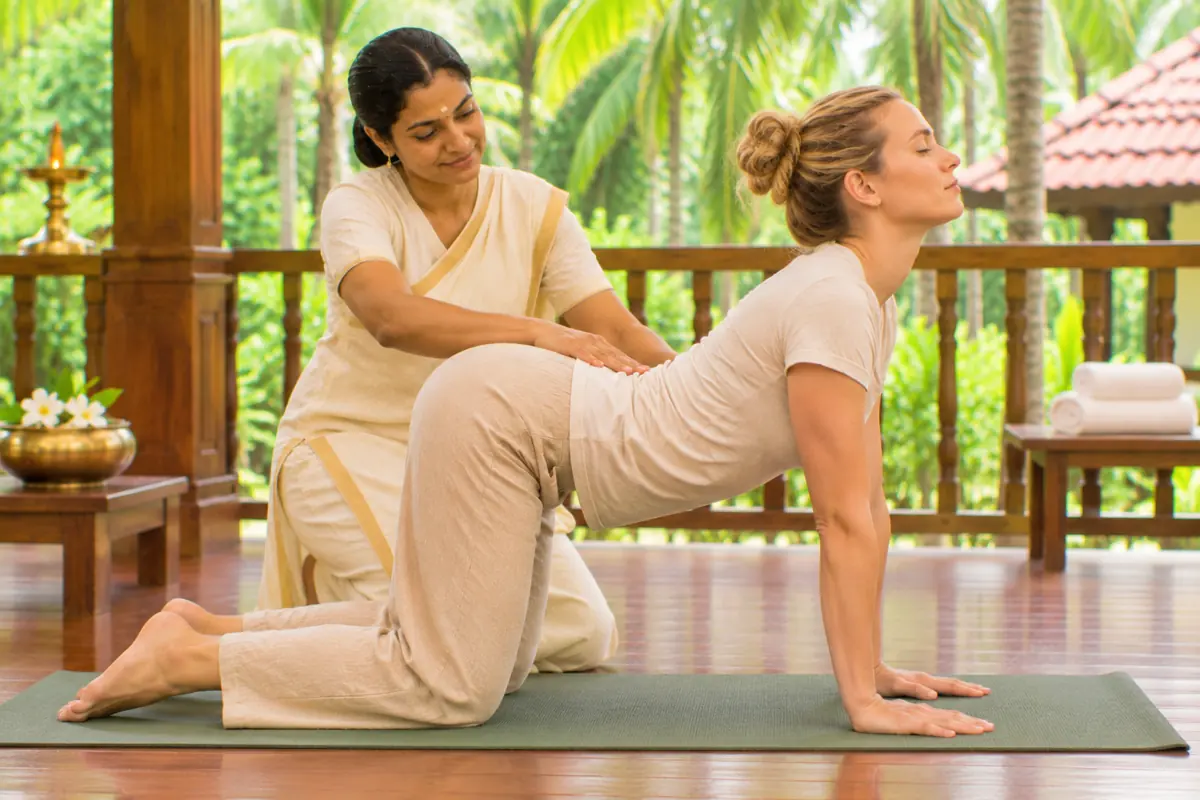
A yoga therapist begins by understanding your pain, your history and your abilities. Practices typically include gentle mobility for the spine and hips, strengthening of the core and back muscles, stretches for tight hips and hamstrings, supported relaxation postures and slow, easy breathing. Props, such as blocks, bolsters and chairs, make positions comfortable, and the focus is on awareness rather than achievement.
What Ayurveda adds
An Ayurvedic physician may offer warm herbal oil massage and steam to relax tight muscles before practice, a warm, simple diet, regular rest and a calming evening routine. Many guests find that warmth first, followed by gentle yoga, is a pleasing rhythm: the body is soft and ready to move.
Practices approached with care
Not everything in a typical yoga class suits a painful back. Deep forward bends, strong backbends, deep twists, full inversions, forceful breathing and long holds can aggravate pain, and a responsible therapist avoids them or adapts them. Tell the therapist about your pain at once, and never push through it. If a teacher suggests otherwise, take it as a reason for caution.
A typical gentle session
| Stage | What happens |
|---|---|
| Arrival | Settle, check how you feel |
| Warm-up | Gentle spinal and hip mobility |
| Supported practice | A few simple postures, with props |
| Strength | Core and back muscle activation |
| Breath and relaxation | Slow breathing and guided rest |
Building a home practice
The greatest value of yoga therapy is a short, personal routine you can keep. A good therapist will write it down or demonstrate it, so that you can practise for ten to fifteen minutes at home. Consistency matters more than length, and a few minutes on a hard day is better than none.
Taking it home
- Keep to your short yoga routine, a little each day.
- Move often and avoid long sitting.
- Use breathing and relaxation when pain flares.
- Eat simple, regular meals and sleep well.
- Follow up with your own doctor and share the centre's summary.
Setting honest expectations
People respond differently, and no programme can promise freedom from pain. A thoughtful team speaks of comfort, movement and confidence. Many guests value most the routine they learn, and the sense that they can do something helpful for their own backs.
Breath: the quiet link
Breathing is where yoga and Ayurveda most clearly meet. Slow, even breathing relaxes the muscles of the back and ribs, and eases the tension that accompanies pain. Practices are gentle, such as breathing into the sides of the ribs while lying on a supported mat. Forceful or rapid techniques are not used for back pain.
Planning around your visa
Most programmes for chronic back pain run for two to three weeks, within the e-Medical visa, which is valid for 60 days from first arrival, with triple entry and no extension. Choose dates with your physician, and leave a few spare days at the end.
Working alongside your own doctors
Please keep your own doctors informed. Share your medical summary, bring your reports and keep taking whatever you have been prescribed. Please see your own doctor about back pain before you travel, and keep taking prescribed medicines as advised. Please do not change medicines without medical advice.
Choosing a centre
Look for a trained yoga therapist, a qualified Ayurvedic doctor (BAMS or MD Ayurveda), registered with the appropriate board, a team that communicates and a clear written plan. Be cautious of anyone who promises to cure back pain, pushes you beyond comfort or treats everyone the same.
Planning the journey
Apply for your e-Medical visa on India's official portal, usually with a hospital letter, a few weeks before travel. It is valid for 60 days from first arrival, allows three entries and cannot be extended. Book flights after approval, arrange travel insurance and choose an arrival time that gives you a rested first day. Check the portal for current rules before you apply.
Your friend and hand-holder in finding a gentle, balanced programme:
MyVaidyam
A good practice starts with a good guide, and that is where MyVaidyam comes in. We walk with you from your very first question to the day you return home, answering every question patiently and making sure that nothing is left to chance.
- An online consultation with an Ayurvedic physician to discuss your back and goals.
- Help preparing your health summary and reports.
- Guidance on choosing a reputable centre with trained yoga therapy.
- Help understanding how yoga and Ayurveda fit into your plan.
- Support with your e-Medical visa documents, flights, airport pickup and accommodation.
- A warm point of contact during your stay, and follow-up after you return home.
You are welcome to reach out at any stage. We would be delighted to help you begin.