This guide explains why balance and mobility change with age, why your doctors should review them first, how supportive Ayurvedic care may sit alongside physiotherapy, what a gentle programme can offer, how falls prevention is built in, how to travel comfortably and what to keep doing at home. And throughout, it shows how MyVaidyam can walk beside you as your friend and guide.
Ayurveda is offered here as a complementary, supportive approach that works alongside your own doctor's care, never as a replacement for it. It does not promise to prevent falls.
Quick Facts - Ayurveda Support for Balance and Mobility Problems in Older Adults for International Patients
| Topic | Summary |
|---|---|
| Common contributors | Muscle weakness, joint stiffness, medicines, vision, inner ear |
| First step | Review by your own doctors |
| Central | Physiotherapy: strength and balance exercise |
| Ayurvedic support | Warm therapies, diet, calm routine |
| Safety | Falls prevention is built into the day |
| Not | A promise of preventing falls |
| Visa | e-Medical visa: 60 days from first arrival, triple entry, non-extendable |
| Your companion | MyVaidyam: planning, coordination and support before, during and after |
Why balance changes
Balance depends on several systems working together: the eyes, the inner ear, the sensation in muscles and joints, the strength of the legs and the brain, which combines everything in a split second. With age, each of these may change a little, medicines can cause dizziness, and long periods of inactivity add to the problem. The good news is that balance and strength can be trained at almost any age.
Three systems that keep us steady
Eyes
Sight tells us where we are in space
Inner ear
Senses head movement and position
Muscles and joints
Feel the ground and carry us
Brain
Brings them together, quickly
Because several systems are involved, a careful review helps find what needs attention.
Medical review first
Ask your doctors about unsteadiness, dizziness, falls or near-falls. They may check blood pressure sitting and standing, vision, hearing, the effect of medicines, nerve function and signs of conditions such as Parkinson's disease or other neurological conditions. Ask whether you are fit to travel, and what precautions to take. Share the answers with the centre.
Physiotherapy: the heart of the programme
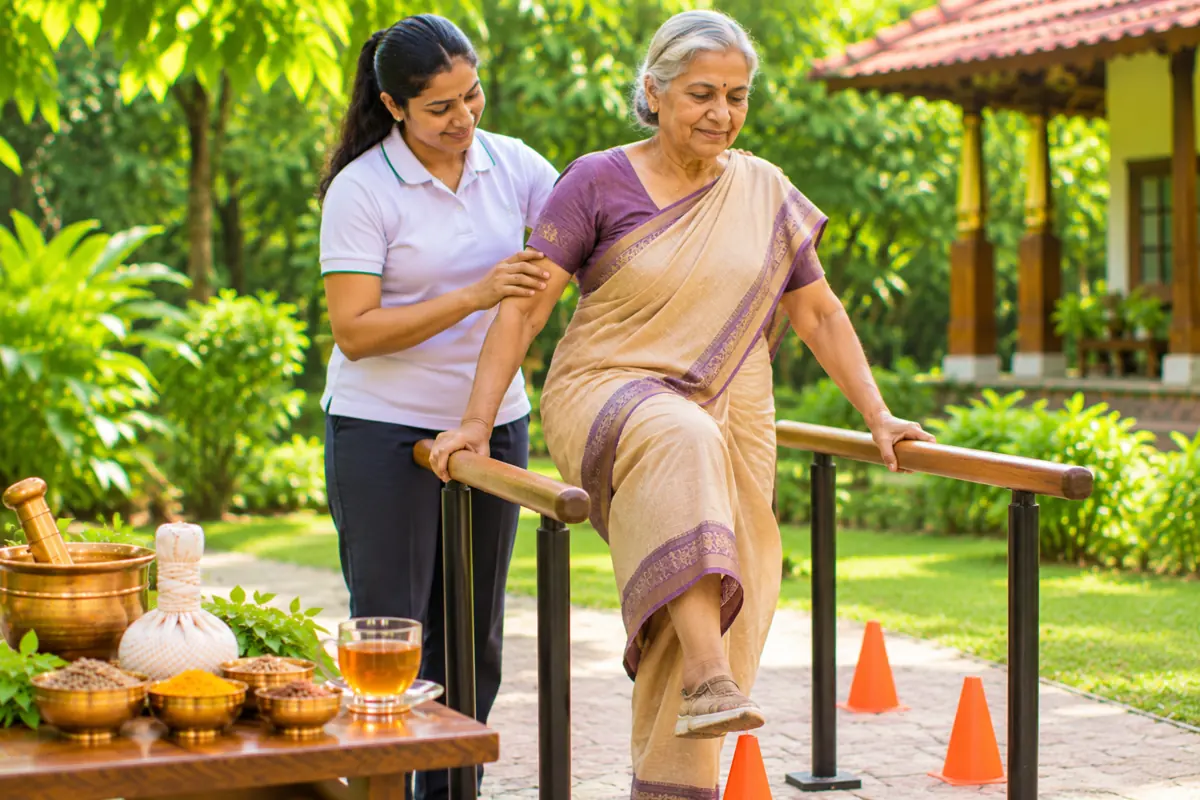
A physiotherapist can assess your balance, strength and walking, then teach exercises such as sit-to-stand practice, leg strengthening, heel-to-toe walking, standing on one leg near support and gentle tai chi-style weight shifting. These are done safely, progressing slowly. Regular practice is what improves balance, and a residential programme provides daily, supervised practice.
How Ayurveda may support
Ayurveda associates the later years with dryness and stiffness, and its traditional response is warmth, nourishment and regularity. Supportive programmes may offer warm herbal oil massage for the legs and back, gentle steam, a simple, warm, nourishing diet, good sleep and a calm daily routine. These are traditionally described as soothing, and many guests feel more relaxed and flexible afterwards. They are supportive, and they sit alongside physiotherapy.
Falls prevention in daily life
A good centre builds falls prevention into everything. Floors are non-slip, bathrooms have rails and seats, lighting is good at night and help is available for bathing and walking. Ask about these things before you book. Wear sturdy, well-fitting shoes, take your time rising from bed or chair and keep a clear path.
Medicines and dizziness
Some medicines, including those for blood pressure, sleep, mood or pain, can cause dizziness or unsteadiness. Please keep taking them as prescribed, and ask your doctors to review them if you feel dizzy, rather than stopping on your own. Share the full list, including supplements, with the Ayurvedic physician.
Travelling comfortably
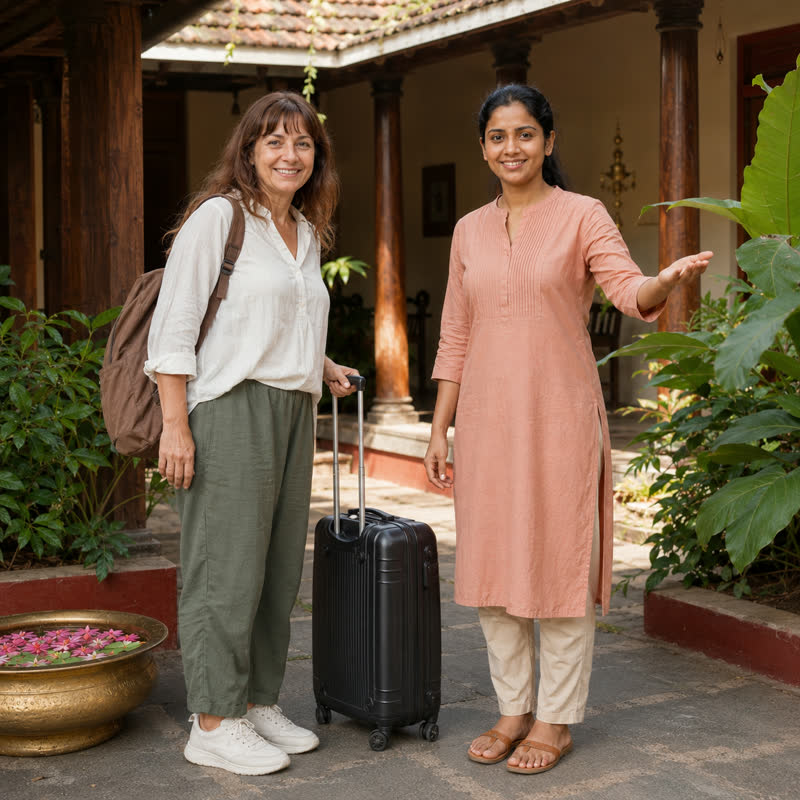
Plan the journey with ease in mind: sensible flight times, an aisle seat, regular movement on board and airport assistance. Carry medicines in hand luggage with a doctor's letter, and allow a rest day on arrival. A companion can give practical help and reassurance, and many centres welcome one.
A day at a residential centre
| Time | Typical activity |
|---|---|
| Early morning | Warm water, gentle seated stretches, breathing |
| Morning | Warm therapy and review |
| Late morning | Physiotherapy: strength and balance |
| Midday | Light meal and rest |
| Afternoon | Short walk, gentle yoga or relaxation |
| Evening | Light supper, calm, early sleep |
Taking it home
- Keep up your strength and balance exercises daily.
- Walk regularly, on safe, even ground.
- Make your home safe, with rails and good lighting.
- Review medicines with your own doctor.
- Share the centre's summary with your own team.
Setting honest expectations
Balance responds well to practice, though results vary, and no programme can promise to prevent falls. A thoughtful team speaks of strength, confidence and safer habits. Many guests value most the exercises and the sense of confidence they take home.
Strength and confidence
Confidence matters as much as strength. Fear of falling leads people to move less, which weakens muscles and makes falls more likely. A structured programme with supervised, successful practice helps rebuild trust in your own body. Many guests describe feeling taller and steadier by the end of their stay.
Working alongside your own doctors
Please keep your own doctors informed. Share your medical summary, bring your reports and keep taking whatever you have been prescribed. Please keep taking prescribed medicines, and discuss any new therapy with your own doctors first. Please do not change medicines without medical advice.
Choosing a centre
Look for a qualified Ayurvedic doctor (BAMS or MD Ayurveda), registered with the appropriate board, a qualified physiotherapist on the team, accessible, non-slip facilities, a hospital nearby and a clear written plan. Be cautious of anyone who promises to prevent falls or ignores your own doctors' advice.
Planning the journey
Apply for your e-Medical visa on India's official portal, usually with a hospital letter, a few weeks before travel. It is valid for 60 days from first arrival, allows three entries and cannot be extended. Book flights after approval, arrange travel insurance and choose an arrival time that gives you a rested first day. Check the portal for current rules before you apply.
Your friend and hand-holder in finding a safe, supportive programme:
MyVaidyam
Steadiness is easier to find with a friend beside you, and that is where MyVaidyam comes in. We walk with you from your very first question to the day you return home, answering every question patiently and making sure that nothing is left to chance.
- An online consultation with an Ayurvedic physician to discuss your balance and goals.
- Help preparing your health summary and reports.
- Guidance on choosing a reputable, accessible centre with physiotherapy.
- Help planning comfortable travel, with a companion if you wish.
- Support with your e-Medical visa documents, flights, airport pickup and accommodation.
- A warm point of contact during your stay, and follow-up after you return home.
You are welcome to reach out at any stage. We would be delighted to help you begin.