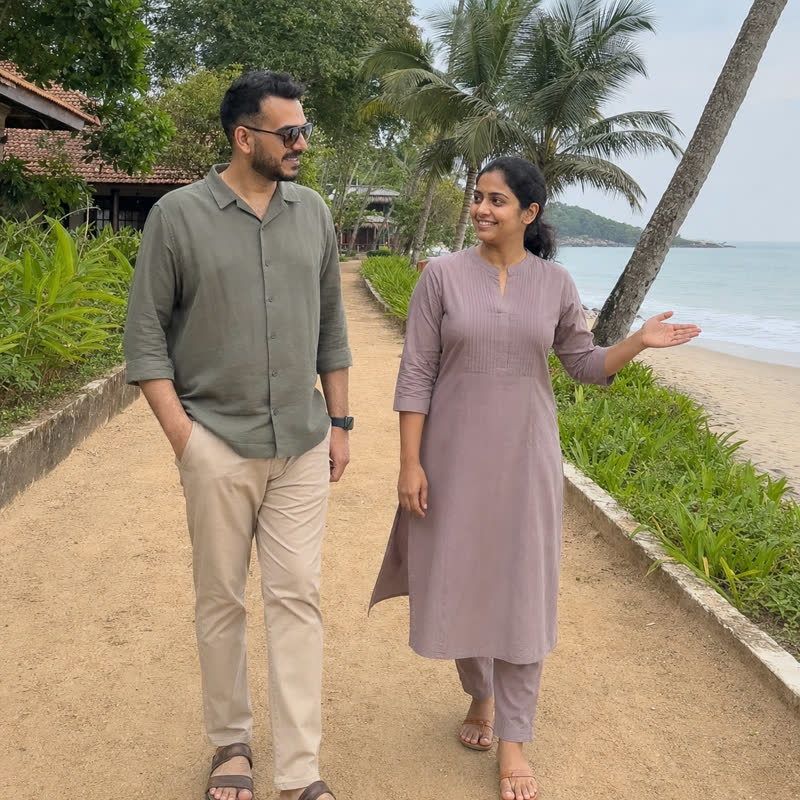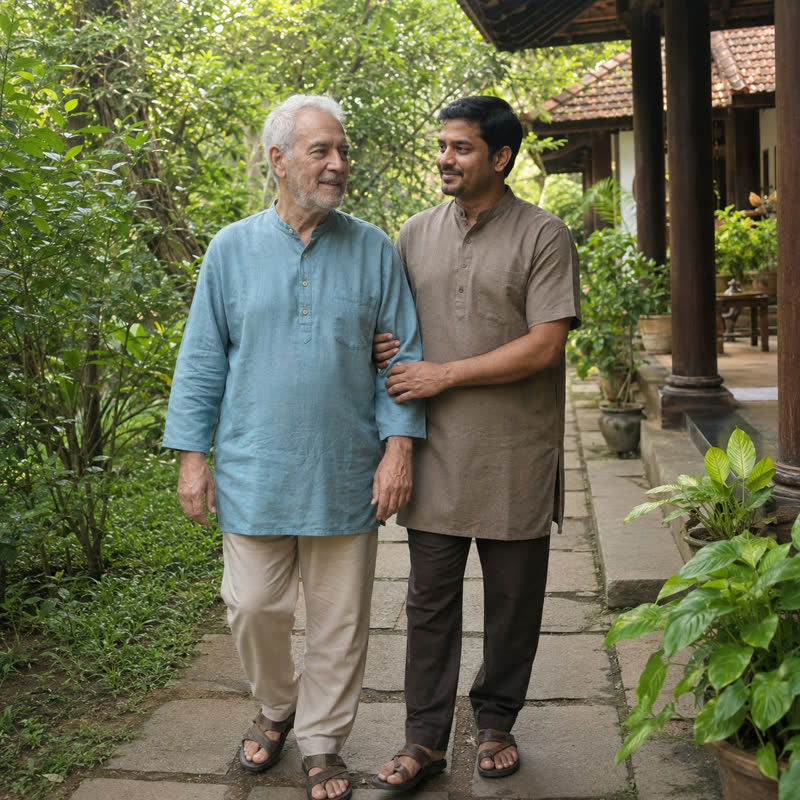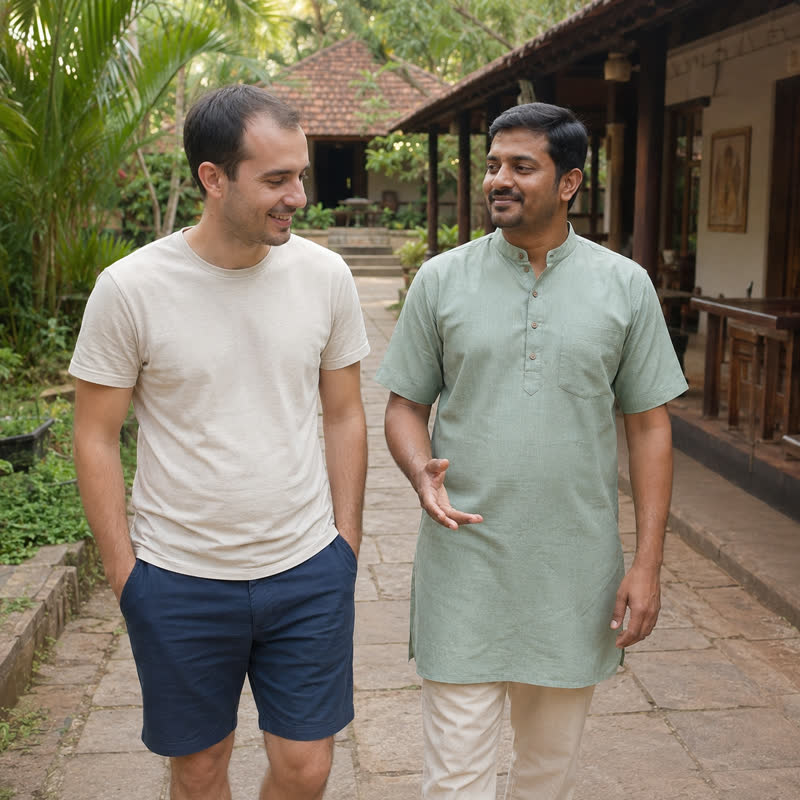
It can make ordinary things, like pouring tea or turning a door handle, uncomfortable.
This guide explains in plain language what chronic elbow pain may mean, why your doctor should assess it first, how supportive Ayurvedic care may sit alongside, what gentle exercise and activity changes involve, how to protect the elbow in daily life and what to keep doing at home. And throughout, it shows how MyVaidyam can walk beside you as your friend and guide.
Ayurveda is offered here as a complementary, supportive approach that works alongside your own doctor's care, never as a replacement for it. It does not promise to remove elbow pain.
Quick Facts - Ayurveda Support for Chronic Elbow Pain for International Patients
| Topic | Summary |
|---|---|
| Common causes | Tendon strain (tennis or golfer's elbow), bursitis, arthritis, nerve irritation |
| First step | Assessment by your doctor or physiotherapist |
| Central | Load management, stretching, strengthening |
| Ayurvedic support | Warm therapies, relaxation, diet, routine |
| Helpful | Adjusting grip, tools, workstation |
| Not | A promise of pain relief |
| Visa | e-Medical visa: 60 days from first arrival, triple entry, non-extendable |
| Your companion | MyVaidyam: planning, coordination and support before, during and after |
Why elbows ache
The elbow is a hinge joint with powerful tendons attached around it, which control the wrist and fingers. Repeated gripping, lifting, typing, using tools or racquet sports can irritate those tendons, causing what is often called tennis elbow on the outer side and golfer's elbow on the inner side. The back of the elbow can be affected by leaning on hard surfaces, and the joint itself may be affected by arthritis or old injury.
Elbow pain by location
Outer
Often tendon strain from gripping and lifting
Inner
Often tendon strain from wrist flexing and swinging
Back
Often point of the elbow, bursa or triceps
Deep
Joint conditions, arthritis, nerve irritation
These are general patterns, and your doctor or physiotherapist will examine you to say what applies to you.
Assess first
Please have persistent elbow pain assessed. Ask what is causing it, whether scans or tests are needed, which activities to adjust and whether you are fit to travel. Sudden severe pain, swelling, a deformity after injury, numbness or tingling in the hand, fever, or a hot, red elbow should be seen promptly. Share your assessment with the centre.
Load management
Most tendon-related elbow pain settles when the load on the tendon is managed. That does not always mean complete rest. It means finding the right balance: reducing the movements that provoke pain, such as heavy gripping or repetitive wrist action, while keeping the arm gently active. A physiotherapist can help you decide which activities to change and for how long.
Stretching and strengthening
Gradual stretches for the forearm muscles, followed by slow strengthening exercises, often form the backbone of recovery. Exercises start gently and increase step by step, as the elbow tolerates. A physiotherapist may also suggest changes to grip, handle size, keyboard and mouse use or racquet technique. A residential stay provides regular supervised practice, which can make steady progress easier.
How Ayurveda may support
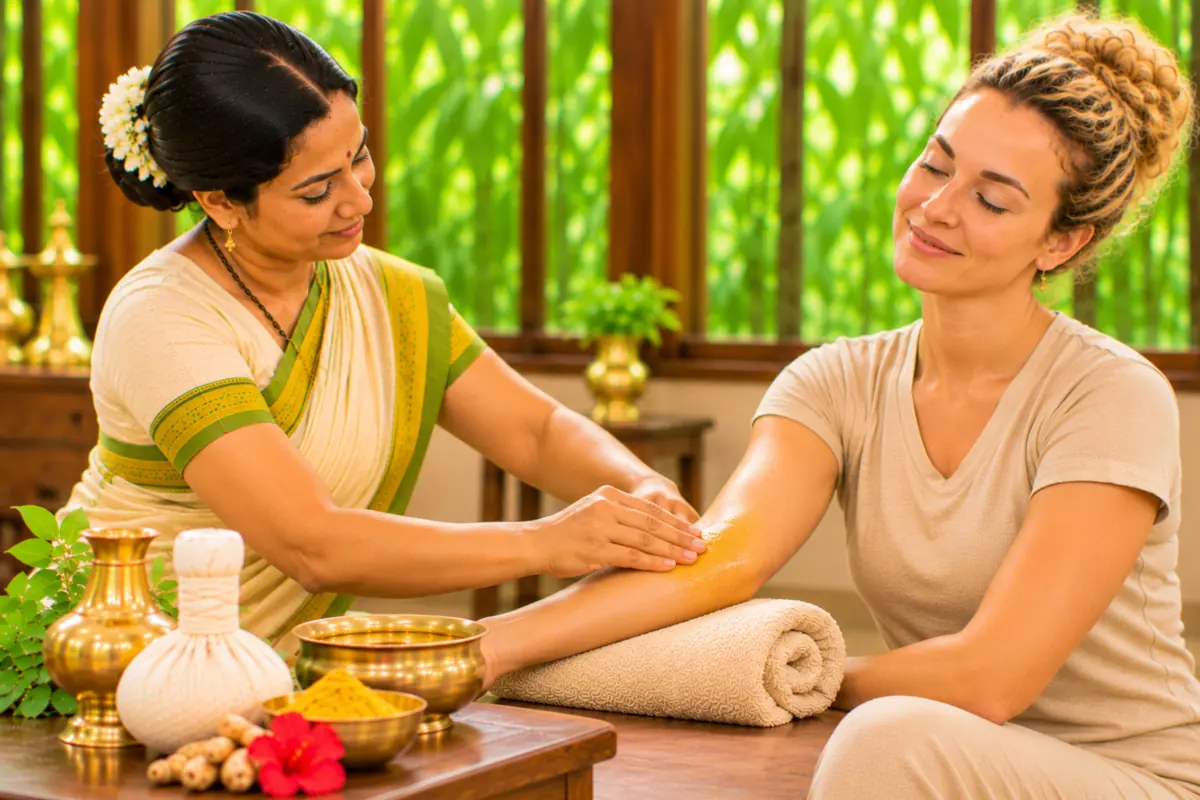
Ayurveda associates joint and tendon discomfort with dryness and overuse, and its traditional response is warmth, oil, rest and regularity. Supportive programmes may include warm herbal oil massage of the arm and shoulder, warm herbal poultices around the elbow, relaxation therapies and a warm, nourishing diet. Many guests find these soothing, and relaxed muscles move more easily. Strong pressure directly on an irritated tendon is avoided.
Everyday habits that help
- Use both hands for heavy objects.
- Take breaks from repetitive tasks.
- Keep your wrist straight when typing and gripping.
- Avoid leaning on the elbow on hard surfaces.
- Warm up before sport or heavy tasks.
- Check tools, handles and workstation setup.
A day at a residential centre
| Time | Typical activity |
|---|---|
| Early morning | Warm water, gentle mobility |
| Morning | Warm therapy for arm and elbow |
| Late morning | Physiotherapy: stretching, strengthening |
| Midday | Light meal and rest |
| Afternoon | Gentle yoga or walk, relaxation |
| Evening | Light supper, calm, early sleep |
Taking it home
- Continue your exercises as prescribed.
- Increase activity gradually.
- Keep good habits at work and play.
- Keep a calm routine and sleep well.
- Follow up with your doctor and share the centre's summary.
Setting honest expectations
Elbow tendon pain often takes weeks to months to settle, and it can return if the load returns. No programme can promise to remove it. A residential stay can offer rest, supervised exercise, soothing therapies and advice about habits, which many guests value most.
When the pain is in both elbows, or keeps returning
Pain in both elbows, or pain that returns again and again despite rest, deserves a closer look. Your doctor may wish to check for joint conditions, nerve irritation at the elbow or neck, or the way the whole arm and shoulder are being used. A physiotherapist can often find a link, such as a weak shoulder or tight forearm, that explains why the elbow keeps complaining. Treating the whole arm often helps the elbow.
Working alongside your own doctors
Please keep your own doctors informed. Share your medical summary, bring your reports and keep taking whatever you have been prescribed. Please keep taking prescribed medicines, and discuss any new therapy with your own doctors first. Please do not change medicines without medical advice.
Choosing a centre
Look for a qualified Ayurvedic doctor (BAMS or MD Ayurveda), registered with the appropriate board, a physiotherapist on the team, trained therapists and a clear written plan. Be cautious of anyone who promises to cure elbow pain quickly or who uses strong pressure over a sore tendon.
Planning the journey
Apply for your e-Medical visa on India's official portal, usually with a hospital letter, a few weeks before travel. It is valid for 60 days from first arrival, allows three entries and cannot be extended. Book flights after approval, arrange travel insurance and choose an arrival time that gives you a rested first day. Check the portal for current rules before you apply.
Your friend and hand-holder in finding the right programme: MyVaidyam
A good plan starts with a good conversation, and that is where MyVaidyam comes in. We walk with you from your very first question to the day you return home, answering every question patiently and making sure that nothing is left to chance.
- An online consultation with an Ayurvedic physician to discuss your elbow and goals.
- Help preparing your health summary and reports.
- Guidance on choosing a reputable centre with physiotherapy.
- Help understanding your written plan.
- Support with your e-Medical visa documents, flights, airport pickup and accommodation.
- A warm point of contact during your stay, and follow-up after you return home.
You are welcome to reach out at any stage. We would be delighted to help you begin.