It can be stubborn, and it responds best to patient attention to footwear, load, stretching and rest.
This guide explains in plain language what chronic heel and foot pain may mean, why your doctor should assess it first, how supportive Ayurvedic care may sit alongside, what warm therapies, stretching and footwear advice involve, how to protect your feet in daily life and what to keep doing at home. And throughout, it shows how MyVaidyam can walk beside you as your friend and guide.
Ayurveda is offered here as a complementary, supportive approach that works alongside your own doctor's care, never as a replacement for it. It does not promise to remove foot pain.
Quick Facts - Ayurveda Support for Chronic Heel and Foot Pain for International Patients
| Topic | Summary |
|---|---|
| Common causes | Plantar fascia strain, Achilles tendon pain, footwear, joint conditions |
| First step | Assessment by your doctor or podiatrist |
| Central | Stretching, footwear, load management |
| Ayurvedic support | Warm therapies, relaxation, diet, routine |
| Extra care | If you have diabetes or poor circulation |
| Not | A promise of pain relief |
| Visa | e-Medical visa: 60 days from first arrival, triple entry, non-extendable |
| Your companion | MyVaidyam: planning, coordination and support before, during and after |
Why heels and feet hurt
The foot is a remarkable structure of 26 bones, many joints, tendons and a strong band of tissue along the sole called the plantar fascia, and it takes our full weight with every step. Pain commonly arises from strain of that band, inflammation of the Achilles tendon, tight calf muscles, changes in footwear, weight, long hours of standing, flat or high arches or joint conditions. The location of the pain often hints at the cause.
Where the foot may hurt
| Heel, under | Often worst with the first steps of the morning |
|---|---|
| Back of heel | Often the Achilles tendon, worse with activity |
| Arch | Strain of the supporting tissues |
| Ball of foot | Often footwear and pressure |
| Big toe and ankle | Joints, sometimes inflammatory |
Your doctor or podiatrist will examine your feet and walking, and may suggest scans.
Assess first
Please have persistent foot pain assessed. Ask what is causing it, whether any scans or tests are needed, whether footwear inserts are advised and whether you are fit to travel. If you have diabetes, poor circulation, numbness, a sore that is slow to heal, redness, swelling or fever, see your doctor promptly. Share the assessment with the centre.
Diabetes and foot care
People with diabetes need special care of their feet, because reduced sensation and circulation can hide problems. If you have diabetes, tell the centre, check your feet daily, avoid walking barefoot, test the temperature of baths and any warm applications by hand and follow your doctors' advice. Warm therapies are used cautiously, and your physician will adapt the plan.
Stretching and strengthening
A physiotherapist can teach calf and plantar fascia stretches, strengthening for the small muscles of the foot and the calf, and balance and walking advice. Many people find a gentle stretch before getting out of bed particularly useful. Exercises are done slowly and regularly, and increased only as pain allows.
How Ayurveda may support
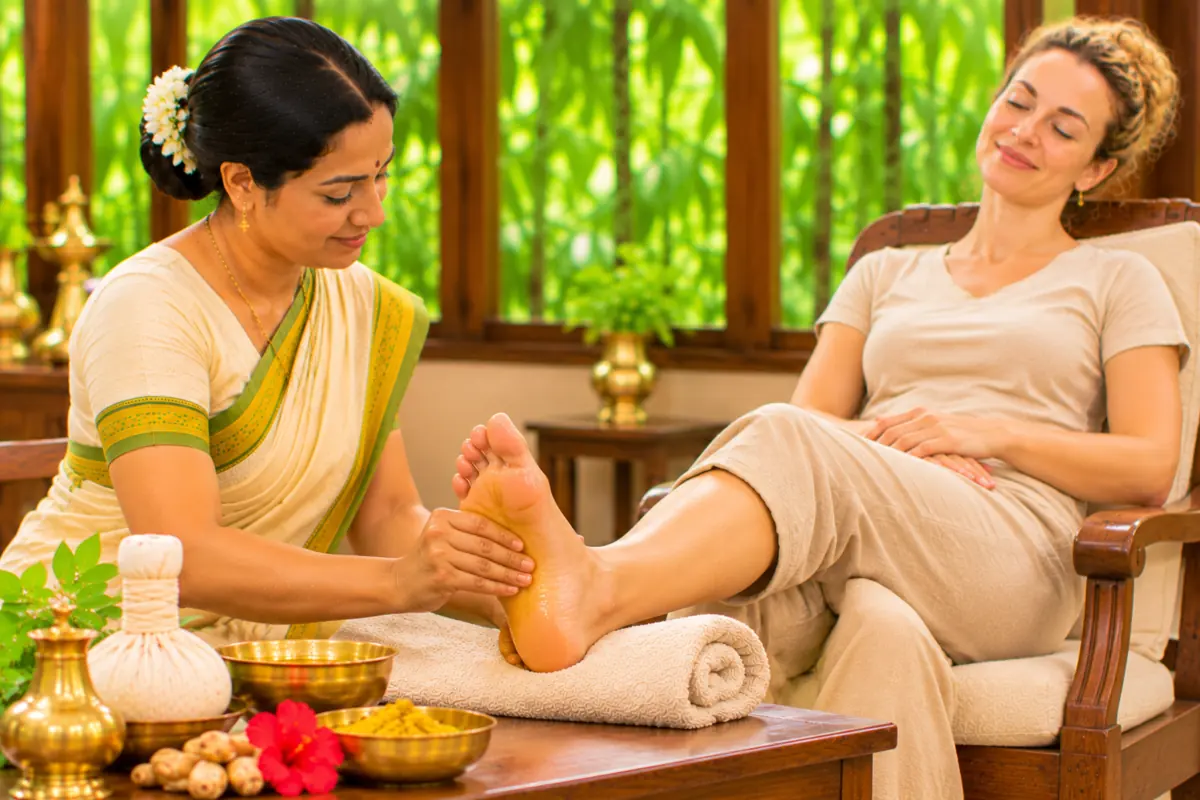
Ayurveda associates foot pain with dryness, overuse and imbalance, and the traditional response is warmth, oil, rest and regularity. Supportive programmes may include warm herbal oil massage of the feet and legs, gentle warm foot baths or soaks, warm herbal poultices and relaxation. Many guests find foot care particularly soothing, and the gentle attention to the feet is often the part they remember best.
Footwear and everyday habits
- Choose supportive, cushioned shoes that fit well.
- Avoid walking barefoot on hard floors.
- Ask about inserts or heel cups.
- Warm up and stretch before activity.
- Increase walking and standing gradually.
- Alternate activity with rest, and take weight off the feet through the day.
A day at a residential centre
| Time | Typical activity |
|---|---|
| Early morning | Warm water, gentle foot and calf stretches |
| Morning | Warm therapy for feet and legs |
| Late morning | Physiotherapy: stretching and strengthening |
| Midday | Light meal and rest |
| Afternoon | Gentle walk on even ground, relaxation |
| Evening | Light supper, calm, early sleep |
Taking it home
- Keep up your stretching every day.
- Wear supportive shoes.
- Manage your weight and activity gradually.
- Keep a calm routine and sleep well.
- Follow up with your doctor and share the centre's summary.
Setting honest expectations
Heel and foot pain often takes weeks to months to settle, and no programme can promise to remove it. A residential stay can offer rest, supervised stretching, soothing therapies and advice about footwear and habits. Many guests value most the daily routine they bring home.
Small things that help at home
Many people find relief in simple routines: rolling the sole over a cool water bottle, a warm foot soak in the evening, a few minutes of calf stretching after sitting for long, and resting the feet when they ache. Keep an eye on your feet, and note which activities bring the pain on. These small observations help your physiotherapist and physician fine-tune your plan and show you what is working.
Working alongside your own doctors
Please keep your own doctors informed. Share your medical summary, bring your reports and keep taking whatever you have been prescribed. Please keep taking prescribed medicines, and discuss any new therapy with your own doctors first. Please do not change medicines without medical advice.
Choosing a centre
Look for a qualified Ayurvedic doctor (BAMS or MD Ayurveda), registered with the appropriate board, a physiotherapist on the team, trained therapists and a clear written plan. Be cautious of anyone who promises to cure heel pain or who ignores diabetes and circulation problems.
Planning the journey
Apply for your e-Medical visa on India's official portal, usually with a hospital letter, a few weeks before travel. It is valid for 60 days from first arrival, allows three entries and cannot be extended. Book flights after approval, arrange travel insurance and choose an arrival time that gives you a rested first day. Check the portal for current rules before you apply.
Your friend and hand-holder in finding the right programme: MyVaidyam
A good plan starts with a good conversation, and that is where MyVaidyam comes in. We walk with you from your very first question to the day you return home, answering every question patiently and making sure that nothing is left to chance.
- An online consultation with an Ayurvedic physician to discuss your feet and goals.
- Help preparing your health summary and reports.
- Guidance on choosing a reputable centre with physiotherapy.
- Help understanding your written plan.
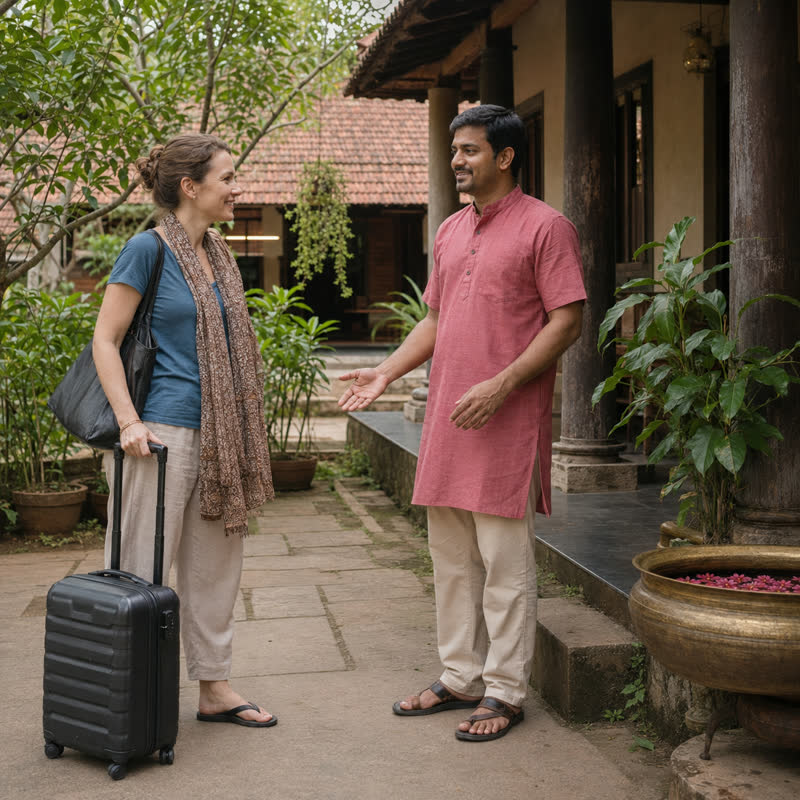
- Support with your e-Medical visa documents, flights, airport pickup and accommodation.
- A warm point of contact during your stay, and follow-up after you return home.
You are welcome to reach out at any stage. We would be delighted to help you begin.