It is often worse on standing up from a chair, climbing stairs or turning in bed, and it can be tiresome to live with.
This guide explains in plain language what sacroiliac joint pain is, why your doctor should assess it first, how it differs from other back problems, how gentle movement and posture help, how supportive Ayurvedic care may sit alongside, what a residential stay involves and what to keep doing at home. It also covers sacroiliac dysfunction, since the terms are often used interchangeably. And throughout, it shows how MyVaidyam can walk beside you as your friend and guide.
Ayurveda is offered here as a complementary, supportive approach that works alongside your own doctor's care, never as a replacement for it. It does not promise to remove sacroiliac pain.
Quick Facts - Ayurveda Support for Sacroiliac Joint Pain for International Patients
| Topic | Summary |
|---|---|
| What it is | Irritation of the joints where spine meets pelvis |
| Typical feel | Low, one-sided ache, sometimes into buttock or thigh |
| First step | Assessment by your doctor or physiotherapist |
| Central | Gentle movement, posture, core strength |
| Ayurvedic support | Warm therapies, relaxation, diet, routine |
| Not | A promise of pain relief |
| Visa | e-Medical visa: 60 days from first arrival, triple entry, non-extendable |
| Your companion | MyVaidyam: planning, coordination and support before, during and after |
Where the pain lives
The sacroiliac joints connect the base of the spine, the sacrum, to the two wings of the pelvis. They move only a little, but they carry the weight of the upper body into the legs and absorb the shocks of walking. Strain, uneven movement, pregnancy in the past, long hours of sitting, arthritis or an injury can leave one or both joints irritated. The condition is sometimes called sacroiliac dysfunction.
What helps the sacroiliac joint, in a typical programme
Gentle movement and stretching posture, hips, core
Warm therapies soothing the surrounding muscles
Rest and sleep routine comfortable positions
Diet and weight guidance lighter load on the joints
Relaxation and breathing easing muscle tension
The bars are an illustration of emphasis, and your own plan will be tailored to you.
Assess first
Pain in this region can come from the joint, the lower spine, the hip or the nerves, and the treatments differ. Please have your pain assessed by a doctor or physiotherapist. Ask what is causing it, whether any scans or tests are needed, which movements to avoid and whether you are fit to travel. Fever, severe night pain, leg weakness, numbness, or loss of bladder or bowel control need prompt medical attention.
Posture and movement
A physiotherapist can look at how you stand, sit, walk and turn, and can teach exercises for the hips, buttocks and deep abdominal muscles, which support the pelvis. Gentle stretches and strengthening, done regularly, are the keystone of recovery. Small habits make a real difference, and they are easy to begin: sit evenly on both hips, avoid crossing the legs for long periods, keep a cushion at the back of the chair, and change position often.
How Ayurveda may support
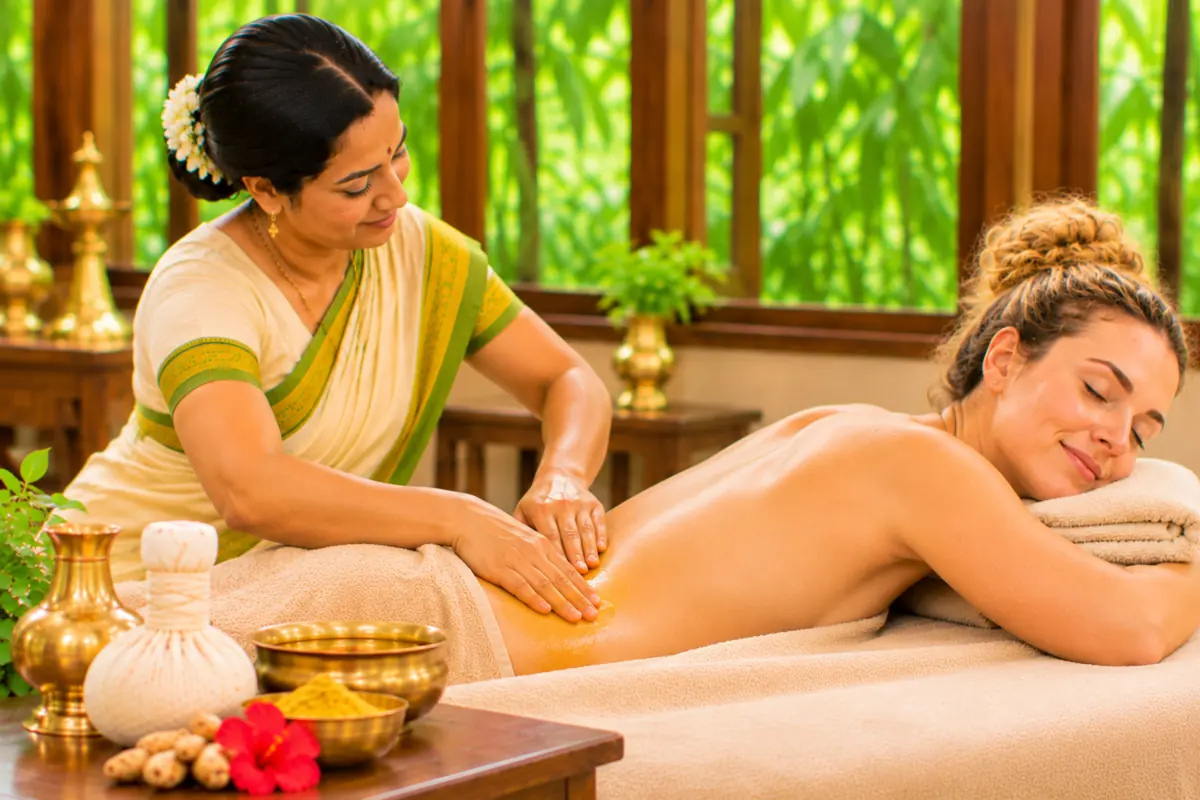
Ayurveda associates low back and pelvic pain with stiffness, dryness and the strain of daily life, and its traditional response is warmth, nourishment and a calm rhythm. Supportive programmes may include warm herbal oil massage of the back, hips and legs, gentle warm applications over the lower back, relaxation and breathing practices, a light, nourishing diet and good sleep. Many guests find these soothing, and relaxed muscles around the pelvis allow easier movement.
Yoga: gentle and chosen with care
Gentle yoga can help with hip mobility and core control, and slow breathing eases tension. A teacher should avoid deep twists, extreme forward bends and positions that force the joint, and should adapt each pose to your comfort. If a movement pinches or increases pain, it is stopped. Your physiotherapist and yoga teacher should work together where possible.
A day at a residential centre
| Time | Typical activity |
|---|---|
| Early morning | Warm water, gentle breathing, mobility |
| Morning | Warm therapy for back and hips |
| Late morning | Physiotherapy: posture and core |
| Midday | Light meal and rest |
| Afternoon | Gentle yoga or short walk |
| Evening | Light supper, calm, early sleep |
Everyday habits that help
- Sit evenly, and change position often.
- Sleep on your side with a pillow between the knees if it is comfortable.
- Avoid carrying loads on one side.
- Take short walks through the day.
- Keep your weight healthy, to lighten the load on the pelvis.
- Use supportive footwear.
Taking it home
- Continue your exercises every day.
- Keep good posture, and move often.
- Keep a regular, calm routine.
- Increase activity gradually.
- Follow up with your doctor and share the centre's summary.
Setting honest expectations
Sacroiliac pain often improves over weeks to months, though it can return. No programme can promise to remove it. A residential stay can offer structure, supervised exercise, soothing therapies and habits to take home, which many guests value most.
Working alongside your own doctors
Please keep your own doctors informed. Share your medical summary, bring your reports and keep taking whatever you have been prescribed. Please keep taking prescribed medicines, and discuss any new therapy with your own doctors first. Please do not change medicines without medical advice.
Choosing a centre
Look for a qualified Ayurvedic doctor (BAMS or MD Ayurveda), registered with the appropriate board, a physiotherapist on the team, trained therapists and a clear written plan. Be cautious of anyone who promises to cure sacroiliac pain, or who uses strong manipulation of the pelvis.
Planning the journey
Apply for your e-Medical visa on India's official portal, usually with a hospital letter, a few weeks before travel. It is valid for 60 days from first arrival, allows three entries and cannot be extended. Book flights after approval, arrange travel insurance and choose an arrival time that gives you a rested first day. Check the portal for current rules before you apply.
Your friend and hand-holder in finding the right programme: MyVaidyam
A good plan starts with a good conversation, and that is where MyVaidyam comes in. We walk with you from your very first question to the day you return home, answering every question patiently and making sure that nothing is left to chance.
- An online consultation with an Ayurvedic physician to discuss your pain and goals.
- Help preparing your health summary and reports.
- Guidance on choosing a reputable centre with physiotherapy.
- Help understanding your written plan.
- Support with your e-Medical visa documents, flights, airport pickup and accommodation.
- A warm point of contact during your stay, and follow-up after you return home.
You are welcome to reach out at any stage. We would be delighted to help you begin.