Alongside medical care, occupational therapy and practical adaptations make everyday life easier, and some people also value the calm that supportive care can bring.
This guide explains in plain language how supportive Ayurvedic care may sit alongside medical and occupational therapy for tremor-related difficulties, why your neurologist must lead, what practical adaptations help, how stress and rest affect tremor, what a calm programme can offer and how to plan. And throughout, it shows how MyVaidyam can walk beside you as your friend and guide.
Ayurveda is offered here as a complementary, supportive approach that works alongside your own doctor's care, never as a replacement for it. It does not promise to reduce tremor.
Quick Facts - Ayurveda Support for Tremor-Related Functional Difficulties for International Patients
| Topic | Summary |
|---|---|
| Common causes | Essential tremor, Parkinson's disease, others |
| First step | Diagnosis and care by your neurologist |
| Practical help | Occupational therapy and adaptations |
| Ayurvedic support | Warmth, relaxation, diet, routine |
| Typical length | Two to three weeks |
| Not | A promise of reduced tremor |
| Visa | e-Medical visa: 60 days from first arrival, triple entry, non-extendable |
| Your companion | MyVaidyam: planning, coordination and support before, during and after |
Understanding tremor
A tremor is a rhythmic shaking, most often of the hands, though it can involve the head, voice or legs. Essential tremor typically appears when the hands are used, such as when holding a cup. Parkinson's tremor is often most noticeable at rest. Other causes include medicines, an overactive thyroid and anxiety. Because treatment differs, a proper diagnosis from a neurologist is the essential first step.
Everyday tasks, made easier
Eating
Heavier cutlery, weighted cup, lidded mug
Writing
Thick pens, grip aids, lined guides
Dressing
Velcro, larger buttons, elastic laces
Drinking
Straw, two-handed cup, steady rest
Phones and keys
Voice use, larger keys, stands
Calm
Breathing, rest, avoiding rush
Occupational therapists are skilled at finding simple, practical adaptations for each person.
Your neurologist leads
Ask your neurologist what is causing your tremor, what treatments are appropriate, how your medicines should be taken and whether you are fit to travel. If you take medicines for Parkinson's disease, timing is important, and the centre should be told. Please do not stop or change any medicine without medical advice. Share the diagnosis and medicine list with the Ayurvedic physician.
Occupational therapy and adaptations
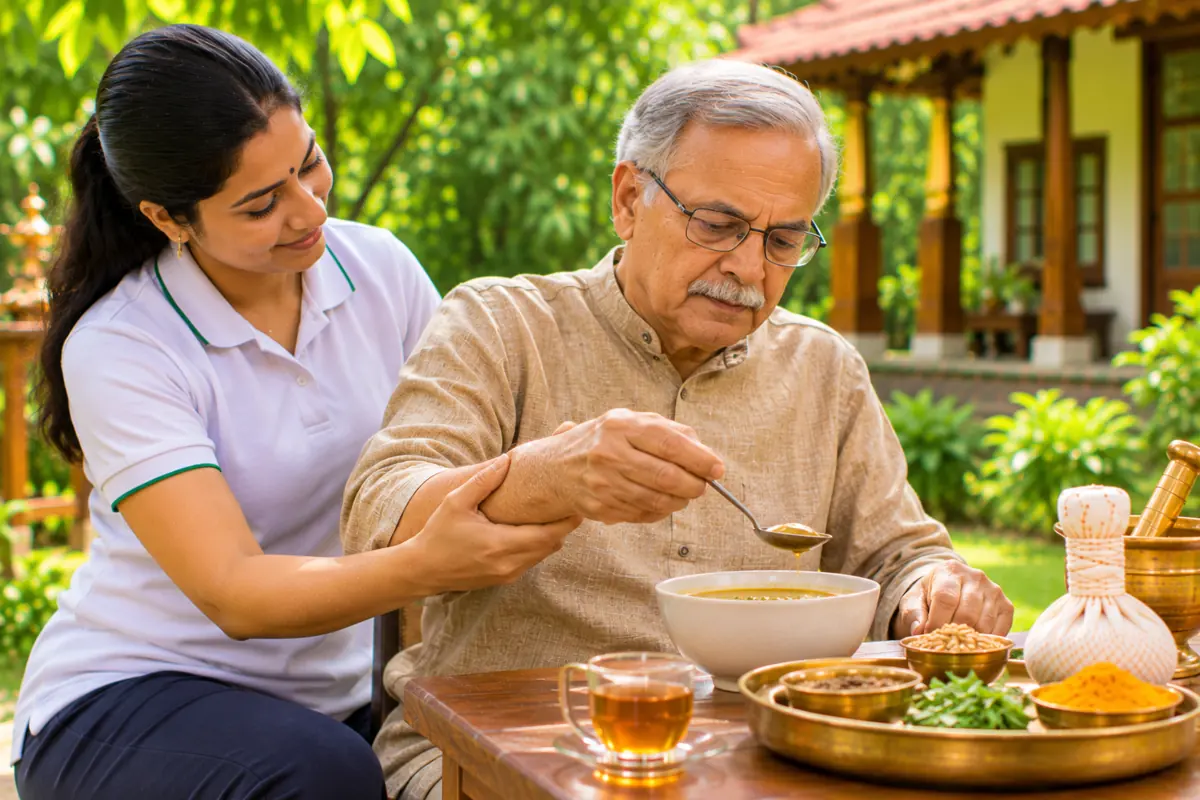
An occupational therapist can assess your daily tasks and suggest practical solutions: weighted or heavier cutlery and cups, thick-handled pens, non-slip mats, lidded mugs, Velcro and larger buttons for dressing and tips for using a phone or keys. They may also teach stabilising techniques, such as resting the elbow on a table when eating or writing. These changes are often simple, and they can restore a great deal of independence.
What makes tremor worse
Many people notice that tremor becomes more obvious with tiredness, stress, strong emotion, too much caffeine and certain medicines. Cold, hunger and rushing can have the same effect. Understanding your own pattern lets you pace the day, schedule important tasks for your best times and build in rest.
How Ayurveda may support
Ayurveda associates trembling with an unsettled, dry and restless quality, and its traditional response is warmth, oil, calm, nourishment and regularity. Supportive programmes may offer warm herbal oil massage, gentle steam, a warm, simple diet, a calm daily routine, relaxation and breathing practices. These are traditionally described as soothing, and many guests value the sense of calm. They are supportive only, and they sit alongside your neurologist's care.
Calm, breath and routine
Because stress and tiredness tend to aggravate tremor, calming practices are the part many guests value most. Slow, easy breathing, guided relaxation, gentle yoga adapted to your abilities and a steady daily rhythm may help you feel more settled. These are skills you can use anywhere, at home or at work.
A day at a residential centre
| Time | Typical activity |
|---|---|
| Early morning | Warm water, gentle stretches, breathing |
| Morning | Warm therapy and review |
| Late morning | Occupational or physiotherapy practice |
| Midday | Light meal and rest |
| Afternoon | Gentle yoga or relaxation, short walk |
| Evening | Light supper, calm, early sleep |
Taking it home
- Continue your neurologist's treatment and medicine timings.
- Use the adaptations your therapist suggested.
- Pace your day, and rest before you are tired.
- Limit caffeine and avoid rushing.
- Keep a calm routine and share the centre's summary with your own team.
Setting honest expectations
Tremor responds differently from person to person, and no programme can promise to reduce it. A thoughtful physician will speak of comfort, calm, practical help and confidence. Many guests value most the adaptations and routines they take home.
Planning around your visa
Most programmes run for two to three weeks, within the e-Medical visa, which is valid for 60 days from first arrival, with triple entry and no extension. Plan dates with your neurologist and physician, so that medicines are taken on time during travel, and leave a few spare days at the end.
The role of a companion
A companion can help with practical tasks, remind you of medicine times and share in the calm of the stay. A medical attendant visa is typically used for the companion alongside the patient's e-Medical visa.
Working alongside your own doctors
Please keep your own doctors informed. Share your medical summary, bring your reports and keep taking whatever you have been prescribed. Please keep taking all prescribed medicines on time, and continue your neurologist's and therapists' advice. Please do not change medicines without medical advice.
Choosing a centre
Look for a qualified Ayurvedic doctor (BAMS or MD Ayurveda), registered with the appropriate board, experience with neurological conditions, occupational therapy or physiotherapy support, a hospital nearby and a clear written plan. Be cautious of anyone who promises to stop tremor or suggests stopping medical treatment.
Planning the journey
Apply for your e-Medical visa on India's official portal, usually with a hospital letter, a few weeks before travel. It is valid for 60 days from first arrival, allows three entries and cannot be extended. Book flights after approval, arrange travel insurance and choose an arrival time that gives you a rested first day. Check the portal for current rules before you apply.
Your friend and hand-holder in finding a calm, supportive programme:
MyVaidyam
Steadiness is easier to find with a friend beside you, and that is where MyVaidyam comes in. We walk with you from your very first question to the day you return home, answering every question patiently and making sure that nothing is left to chance.
- An online consultation with an Ayurvedic physician to discuss your needs and goals.
- Help preparing your health summary, diagnosis and medicine schedule.
- Guidance on choosing a reputable centre with therapy support.
- Help planning comfortable travel, with a companion if you wish.
- Support with your e-Medical visa documents, flights, airport pickup and accommodation.
- A warm point of contact during your stay, and follow-up after you return home.
You are welcome to reach out at any stage. We would be delighted to help you begin.