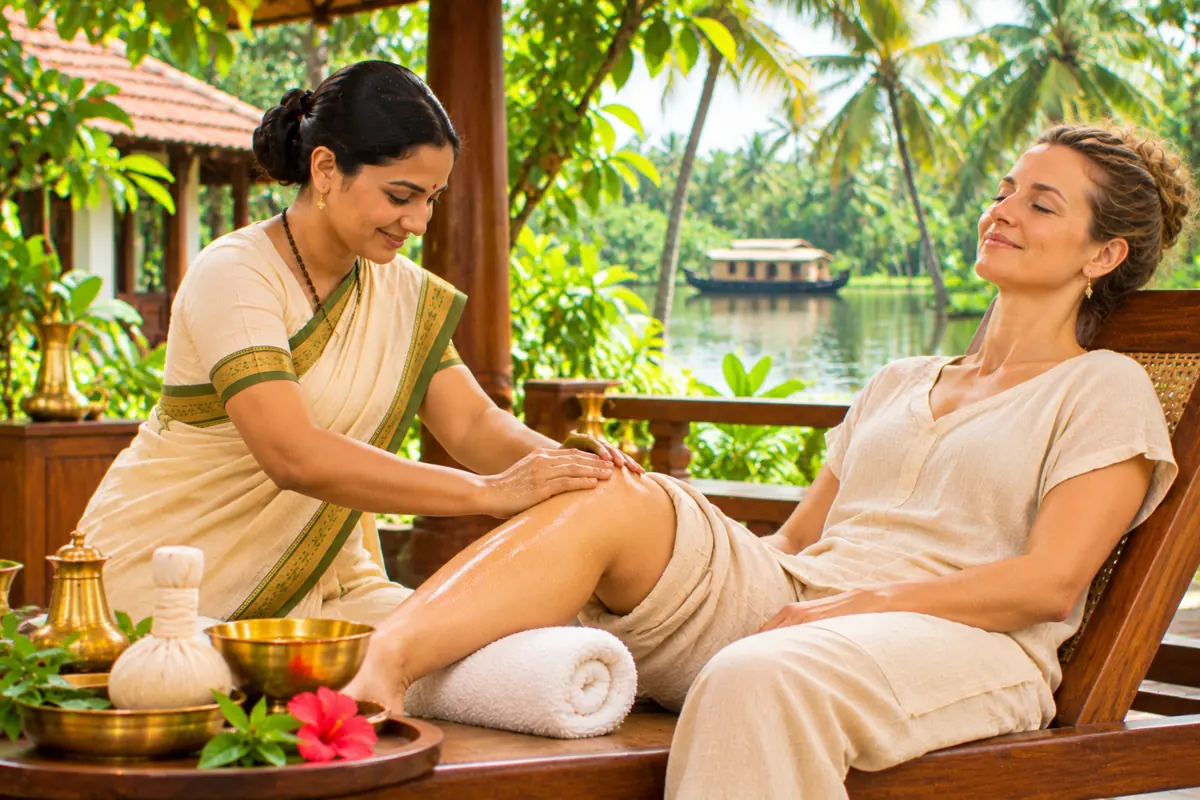
This guide explains how Ayurveda views joint concerns, what a Kerala programme for arthritis usually involves, which therapies you may meet, how diet, movement and rest fit in, how to work alongside your own doctors, how to choose a centre and how to plan the journey. And throughout, it shows how MyVaidyam can walk beside you as your friend and guide.
Ayurveda is offered here as a complementary, supportive approach that works alongside your own doctor's care, never as a replacement for it. It does not claim to cure arthritis.
Quick Facts - Ayurveda Treatment for Arthritis in Kerala for International Patients
| Topic | Summary |
|---|---|
| Approach | Complementary and supportive, alongside your own doctor's care |
| Typical elements | Oil therapies, herbal steam, diet, gentle movement, herbal medicines, rest |
| Common aims | Comfort, ease of movement, routine and wellbeing |
| Types of joint concern | Osteoarthritis, inflammatory arthritis such as rheumatoid arthritis, and others |
| Typical lengths | 14 to 28 days are common for joint programmes; your physician advises |
| Share beforehand | Rheumatologist or specialist letters, scans, blood reports and a full medicines list |
| Visa | e-Medical visa: 60 days from first arrival, triple entry, non-extendable |
| Your companion | MyVaidyam: planning, coordination and support before, during and after |
How Ayurveda looks at joint concerns
Ayurveda does not treat a joint in isolation. A physician considers the whole person: your constitution, digestion, strength, sleep, daily habits and the pattern of your symptoms. In classical language, degenerative joint concerns of the kind often called osteoarthritis are linked with the term sandhivata, and inflammatory, stiffening conditions with a term such as amavata. You do not need to learn these words. What matters is that the plan is shaped around you.
The aim of an Ayurvedic programme is supportive: to ease stiffness, support comfort and mobility, strengthen the body's resilience and help you build routines that you can keep at home. It is a gentle companion to modern rheumatology and orthopaedics, not an alternative to them.
Different kinds of arthritis, different plans
Arthritis is a family of conditions, and the right approach differs among them.
| Type | How a programme usually approaches it |
|---|---|
| Osteoarthritis | Wear-related joint changes, often in the knees, hips, hands and spine. Programmes focus on comfort, movement, weight-sensitive diet and gentle strengthening. |
| Inflammatory arthritis, such as rheumatoid arthritis | Immune-related joint inflammation. Programmes are planned carefully alongside your rheumatologist, with attention to your current medicines. |
| Gout and crystal arthritis | Joint pain linked with uric acid. Diet and routine are central, and your own doctor's plan continues. |
| Back and neck stiffness | Spondylosis and similar concerns. Therapies for the back and neck may be included. |
Please tell the physician exactly which type you have, and share your specialist's letters. A good centre will adapt the plan accordingly, and will say honestly what Ayurveda can support.
What a Kerala arthritis programme usually involves
Most programmes follow a gentle rhythm of consultation, preparation, therapies, diet and rest, planned for you.
- Consultation. The physician reviews your history, reports and goals, and confirms your plan.
- Oil therapies and steam. Warm herbal oil massage and herbal steam, to ease stiffness and help the body relax.
- Local therapies. Treatments for particular areas, such as the knees, lower back or neck, when suited.
- Herbal medicines. Preparations chosen by your physician, with names you can share with your own doctor.
- Diet. Warm, freshly cooked, easily digested meals planned for your constitution.
- Movement and breath. Gentle yoga, stretching and breathing within your comfort.
- Rest and routine. Early nights, unhurried days and a plan for home.
Gentle joint-care therapies, by area
| Whole body | Abhyanga | Warm herbal oil massage to ease stiffness and relax the body. |
|---|---|---|
| Whole body | Pizhichil | Warm medicated oil squeezed over the body in a flowing rhythm. |
| Muscles and limbs | Njavarakizhi | Warm rice-and-herb poultice massage, often used for joints and muscles. |
| Knees | Janu basti | Warm medicated oil held in a small well of dough around the knee. |
| Lower back | Kati basti | Warm oil held in a well of dough on the lower back. |
| Neck | Greeva basti | Warm oil held in a well of dough at the base of the neck. |
MyVaidyam helps you talk through your plan with a physician before you decide.
Your physician decides which therapies suit you. Not everyone needs every one of these, and a longer list does not mean a better programme. In some programmes, medicated enema therapies (basti) are also used for joint concerns when suitable and under supervision, and your physician will explain whether this is appropriate for you.
Diet, movement and rest
Food is part of the care. Meals in Kerala centres are typically warm, simple and freshly cooked, with rice, lentils, vegetables and gentle spices, and they are planned for your constitution and stage of programme. Many guests find that the regular mealtimes and lighter food are among the most useful things they take home.
Movement is gentle and personal. Yoga, stretching and walking are offered within your comfort, never forced. If you have limited mobility, tell the centre so that sessions can be adapted, for example on a chair. Rest matters too, and a quiet afternoon is part of the treatment.
Working alongside your own doctors
The best results come when everyone is on the same page. Share your rheumatologist's or specialist's letters, recent scans and blood reports, and a complete list of your medicines and supplements with the Ayurvedic physician beforehand, and let your own doctor see the plan. Please keep taking your prescribed medicines and talk to your own doctor before any change. Many centres can arrange basic tests if needed. After your stay, share your written summary with your doctors so that your care stays coordinated.
What a stay is like
Most guests find the days gentle and comforting. You meet your physician, settle into your room and follow a quiet rhythm of therapies, meals and rest. Warm oil, steam and the unhurried pace are a welcome change from the effort of managing daily life with sore joints. Many guests describe their stiffness easing and their sleep deepening, and some are pleasantly surprised at how much lighter they feel in the mornings. Everyone responds differently, and gains continue best when the routine continues at home.
How long should a programme be?
A week can be a restful introduction. For joint concerns, many programmes run for two to four weeks, which allows time for preparation, therapies and a gentle recovery. Your physician will recommend the length that suits your type of arthritis, your strength and your calendar. Some guests return for a second stay later in the year. Remember that the e-Medical visa is valid for 60 days from first arrival and cannot be extended, so choose your dates with a comfortable margin.
Choosing a centre for joint care
Look at these, roughly in order of importance:
- The physician. A qualified Ayurvedic doctor (BAMS or MD Ayurveda), registered with the appropriate board, with experience of guests with joint concerns.
- The written plan. A clear plan with the therapies, rhythm, inclusions and follow-up.
- Accessibility. Ground-floor rooms, handrails, a bathroom with a shower stool and easy paths, if mobility is limited.
- Medical backup. Who is on duty at night, and which hospital is nearby.
- Standards. Kerala's classification (Ayur Silver, Gold and Diamond, among others) and NABH accreditation are useful signs, though not guarantees.
- Honesty. Be wary of promises of cure, advice to stop prescribed medicines or pressure to decide quickly.
Questions to ask before you decide
A short, friendly message with your questions, and a request for written replies, works beautifully. A few to begin with:
- Who will be my treating doctor, and what is their experience with my type of arthritis?
- How will the plan take account of my current medicines?
- What access and support are there for limited mobility?
- Who is on duty at night, and which hospital is nearby?
- What follow-up will I have after I return home?
Travelling comfortably with sore joints
A comfortable journey is part of a good stay. Ask your airline about aisle seats and assistance, break up long journeys with rests and carry your regular medicines in your hand luggage with a letter from your doctor. Arrange an airport pickup with your centre so that you travel directly and comfortably. Many guests fly into Thiruvananthapuram or Kochi. Apply for your e-Medical visa on India's official portal, usually with a hospital letter, a few weeks before travel, and arrange travel insurance. Check the portal for current rules before you apply.
The best time to go
Kerala welcomes guests all year. Many travellers favour the cooler, drier months for comfortable walks and outings, while others choose the monsoon, from about June, enjoying the rain-washed air and slower pace. Ask your physician which season they recommend for your plan.
Taking the benefits home
Before you leave, ask for a written summary, a simple daily routine, diet notes and a follow-up plan, and share them with your own doctors. Even two or three habits, such as warm morning water, a regular dinner time and a short daily walk or gentle stretching, can carry the benefits of your stay into everyday life.
Your friend and hand-holder on the way to Kerala: MyVaidyam
Planning a journey to a faraway place while living with joint pain deserves a little extra care, and that is where MyVaidyam comes in. We walk with you from your very first question to the day you return home, answering your questions patiently and making sure that nothing is left to chance.
- An online consultation with an Ayurvedic physician to discuss your goals and your type of arthritis.
- Help preparing your health summary, specialist letters and medicines list, and a written plan after your consultation.
- Guidance on choosing an accredited Kerala centre with suitable access and care.
- Support with your e-Medical visa documents and the hospital letter.
- Advice on flights, airport assistance, pickup and accommodation, including arrangements for a companion.
- A warm point of contact during your stay, and follow-up after you return home.
You are welcome to reach out at any stage. We would be delighted to help you plan a gentle, well-supported stay in Kerala.