Many international guests choose a residential Ayurveda stay in India as a calm, supportive break: warm oil therapies, gentle movement, nourishing meals and unhurried days with an Ayurveda physician who takes time to understand your story, your joints and your daily life.
This guide explains the Ayurvedic view, what a stay typically includes and how to plan with confidence. Ayurveda is offered as a complementary, supportive approach alongside your own doctor's care, never a replacement for it.
Quick Facts - Ayurveda Programmes for Rheumatoid Arthritis for International Patients in India
| Topic | Summary |
|---|---|
| Ayurvedic view | Described as Amavata, linked to digestion and vata balance |
| What a stay offers | Consultation, oil and heat therapies, diet, gentle movement, rest |
| Usual care (NIAMS) | Treatment guided by a rheumatologist, aiming at remission or near remission |
| Research | Small studies; a blinded pilot showed such trials are feasible |
| Typical stay | Often two to four weeks, set by the physician |
| Aim of a supportive stay | Comfort, mobility and day-to-day wellbeing |
| Cost | Compare itemised, dated quotes for the same dates |
Understanding rheumatoid arthritis
The US National Institute of Arthritis and Musculoskeletal and Skin Diseases (NIAMS) describes rheumatoid arthritis as a chronic autoimmune disease, in which the immune system attacks the lining of the joints, the synovium. Over time this can affect cartilage and bone. Typical features include joint pain, tenderness, swelling and warmth, morning stiffness lasting more than half an hour, and a pattern that affects both sides of the body, most often the wrists, hands and feet. Many people also feel tired, and some notice a mild fever or a reduced appetite.
NIAMS notes that the condition is more common in women, that risk rises with age, family history, long-term smoking and obesity, and that flares can be linked with stress, infections, smoke and overactivity. The encouraging message in the same guidance is that current treatment can help people lead productive lives, with remission or near remission as the goal. That is why this guide treats Ayurveda as a companion to good medical care, not a substitute for it.
How Ayurveda looks at joint conditions
Classical Ayurvedic texts describe a condition called Amavata, usually explained as a combination of ama and aggravated vata. Ama is understood as poorly processed material that arises when digestion, or agni, is weak. Vata is the principle of movement. When the two meet in the joints, the classical picture includes pain, stiffness, heaviness, tiredness and a poor appetite. Many Ayurvedic doctors compare rheumatoid arthritis with this description, while recognising that the traditional and modern frameworks are not identical.
From this viewpoint, care begins with digestion. A physician asks about your appetite, bowel habits, sleep, energy and the pattern of your joint symptoms through the day and the seasons. The programme that follows usually combines light, warm, freshly cooked food, herbal medicines, oil and heat therapies for the joints, and a steady daily routine. The aim of a supportive stay is comfort, mobility and wellbeing, and the plan is individual, so two guests on the same corridor may follow quite different programmes.
Working alongside your rheumatologist
A residential Ayurveda stay fits comfortably beside medical care. Your rheumatologist continues to guide your core treatment, and your Ayurveda physician plans your stay around it once they have your full history, recent blood tests and medicine list. NIAMS highlights how much everyday habits matter: avoiding smoke, keeping a healthy weight, managing stress and pacing activity. A calm residential routine makes each of these easier to practise.
Many guests ask their rheumatologist for a short letter summarising their diagnosis and treatment before they travel. It helps the Ayurveda team plan sensibly, and it gives you a clear record to bring home. Keeping your usual medicines steady during the stay is part of staying well, and your own doctor remains the right person to advise on any change.
What the research shows
Research on Ayurvedic care in rheumatoid arthritis is still growing. A small, randomised, double-blind pilot published in the Annals of the Rheumatic Diseases compared methotrexate, an individualised Ayurvedic regimen and the two combined. Its main contribution was to demonstrate that rigorous blinded trials of classical Ayurvedic treatment are feasible, which is an important step for future, larger studies.
NCCIH notes that research on Ayurvedic medicine overall is limited, and the World Health Organization has published benchmarks to support safe practice. Many guests choose a stay for reasons that are easy to appreciate without a trial: the comfort of warm therapies, the structure of the day, the food and the chance to rest away from everyday pressures.
What a residential programme may include
| Element | What it generally involves |
|---|---|
| Assessment | Detailed history, examination, review of reports and a medicine check |
| Diet | Warm, freshly cooked meals planned around your digestion |
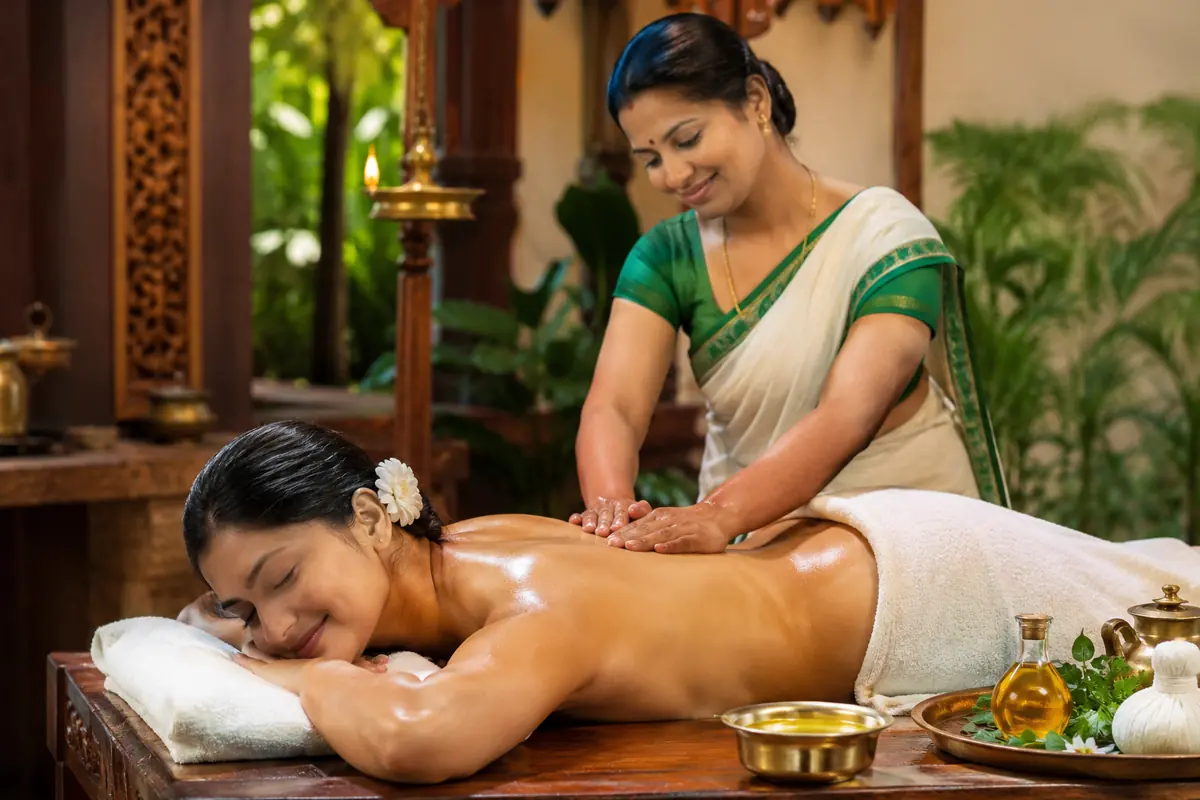
| Oil and heat therapies | Gentle massage and warm applications for the joints, chosen to suit you |
| Herbal medicines | Preparations chosen by the doctor and checked against your current medicines |
| Gentle movement | Yoga and walking at your own pace, with rest between |
| Rest and sleep | A regular, unhurried routine with early evenings |
| Home plan | Written guidance on diet, routine and exercises to continue |
The therapies you may meet
The names can sound unfamiliar, so here is what the most common ones involve. Your physician chooses which are suited to you.
- Abhyanga: a warm herbal-oil massage, often given by two therapists, the foundation of many programmes.
- Swedana: gentle sweating with steam or warm applications, usually after massage.
- Njavarakizhi and Patra Pinda Sweda: warm boluses of medicated rice or herbal leaves applied to the joints and muscles.
- Kati Basti and Janu Basti: warm medicated oil held over the lower back or knee in a small reservoir.
- Pizhichil: a continuous stream of warm oil poured over the body while the therapists massage.
- Basti and virechana: cleansing procedures from Panchakarma, offered only where the physician considers them suitable.
You can read more in our guides to Njavarakizhi, Kati Basti and Janu Basti and Pizhichil.
A sample two-week rhythm
Every programme is individual, and this outline is only an illustration of how a stay can unfold.
- Days 1 to 3, settling in: arrival rest, a full consultation, review of reports and a gentle start with light meals and mild massage.
- Days 4 to 10, the main therapies: a daily rhythm of oil therapies, warm applications, herbal medicines, yoga and rest, with the physician reviewing you each day and adjusting the plan.
- Days 11 to 14, consolidating: a lighter schedule, a review of how your joints feel, and a written plan for diet, routine and exercises to continue at home.
Many guests extend to three or four weeks, and the physician will advise after the first review. Ask the centre for its own day-by-day plan.
A typical day
Days are calm and predictable, which many guests find restful in itself.
- Early morning: gentle stretching or yoga, then a warm breakfast.
- Mid-morning: a physician review and the day's oil or heat therapy.
- Afternoon: a freshly cooked lunch, then rest or a short walk in the garden.
- Evening: breathing practice or meditation, an early light dinner and sleep.
Food, movement and sleep
Food in an Ayurvedic programme is simple and warm: soups, lightly spiced vegetables and grains, and plenty of warm water, with timing that keeps digestion steady. Your physician may suggest foods to favour or reduce, and a good centre will explain why in plain language so you can carry the habits home.
Movement is gentle and regular. Yoga postures are adapted to painful joints, and walking is paced to your energy. NIAMS notes that overactivity can trigger flares, so rest between activities is built into the day.
Sleep follows the rhythm of the centre, with quiet evenings and an early night, and many guests notice how much better they feel when the day has this steady shape.
Kerala, climate and the best season
Many Ayurveda centres are in Kerala, where the warm, humid climate is traditionally considered kind to stiff joints. The monsoon months are popular for therapies because the cooler, damper weather is regarded as well suited to oil treatments, while the drier months from October to March are comfortable for travel and sightseeing. Ask each centre which season it recommends for your programme, and whether rooms are air-conditioned or well ventilated. Our guide to the best time to travel compares the seasons.
Yoga and breathing for tender joints
Yoga in an Ayurvedic setting is gentle and adapted to your joints. Teachers often begin with slow joint-mobilising movements of the fingers, wrists, shoulders, hips and knees, move on to supported stretches, and finish with breathing practice and rest. You can stop or modify any movement, and comfort is the guide. Breathing exercises and short meditations are popular with guests who find that stress and poor sleep make their joints feel worse, and they are easy to continue at home.
Keeping a joint diary
A small notebook is one of the most useful things to bring. Each evening, jot down how stiff you felt on waking, how long it took to ease, your energy, your sleep and which therapies you had that day. After a week or two the pattern often becomes clear, and you and the physician can adjust the plan. The same notes give your rheumatologist a helpful picture when you return.
Travelling comfortably
A little planning makes the journey smoother. Book an aisle seat so you can stand and stretch, request assistance at the airport if long walks are tiring, and keep your medicines and reports in your hand luggage. Choose flights that arrive at a comfortable hour, and ask the centre to arrange the transfer and a restful first day. Our guide to the attendant visa explains how a family member can travel with you.
Conversations to have before you travel
A short chat with your own doctor makes the stay smoother. Many guests ask the following:
- Are my blood tests and medicines stable enough for me to travel comfortably?
- Which activities and exercises would you like me to continue?
- Is there anything you would like the Ayurveda team to know?
- When would you like to see me after I return?
Sharing the answers with the Ayurveda physician helps the two teams work in step, and it leaves you feeling confident and well supported throughout.
Choosing a centre
Rather than looking for a ranking, compare what matters to you. A qualified Ayurveda physician, a clear assessment, a written day-by-day plan, hygiene standards, accessible rooms and good access to a hospital are the foundations. Ask each centre the same questions and compare the answers:
- Who will be my physician, and what are their qualifications?
- Can the plan be adapted around my usual medicines and appointments?
- What does a typical day look like, and how much is therapy versus rest?
- How are herbal medicines sourced, and can I see the ingredient list?
- What does the quote include, and what is extra?
Preparing for your stay
Ask your rheumatologist for a brief summary letter and bring recent blood test results, scan reports and your medicines in their original packaging. Pack loose, comfortable clothing, supportive footwear and anything that eases your joints, such as a favourite cushion. Share your food preferences in advance, plan an easy first day after the flight, and consider travelling with a companion who can share the journey and the stay.
After you return
Ask the centre for a written summary of your programme, your diet and your exercises, and share it with your rheumatologist at your next visit. Many guests keep up a short morning stretch, warm simple meals and an earlier bedtime, and note how their joints feel over the following weeks. Our guide to continuing Ayurveda at home explains how to keep the benefits going. A follow-up video call with the Ayurveda physician a few weeks later is also a good way to review how you are feeling and to fine-tune your routine, and many centres are happy to arrange one.
Planning your budget
Cost depends on room, length, therapies, physician time and medicines. Ask each centre for an itemised, dated quote for the same dates and inclusions, and add visa, flights, insurance and transfers. See the cost guide and verifying a doctor.
Travelling with confidence, and how MyVaidyam can help
- Share your reports and current medicines with the Ayurveda physician before you travel.
- Continue your prescribed medicines, and let your own doctor know your plans.
- Ask for ingredient lists for any herbal medicine, and choose labelled preparations.
- Plan rest after the flight so you can begin your stay comfortably.
MyVaidyam can arrange a free online pre-consultation, have your reports reviewed by an Ayurvedic physician and request day-by-day plans and itemised quotes from centres so you can compare them calmly. Contact MyVaidyam to book your free online consultation.
Frequently Asked Questions on Ayurveda Programmes for Rheumatoid Arthritis for International Patients in India
References
- NIAMS, US National Institutes of Health. Rheumatoid arthritis: health topic overview
- Furst DE et al.. Well controlled, double-blind, placebo-controlled trials of classical Ayurvedic treatment are possible in rheumatoid arthritis (Annals of the Rheumatic Diseases)
- NCCIH, US National Institutes of Health. Ayurvedic medicine: in depth
- World Health Organization. WHO benchmarks for the practice of Ayurveda