This guide explains the Ayurvedic view, what a stay typically includes and how to plan with confidence. Ayurveda is offered as a complementary, supportive approach alongside your own doctor's care, never a replacement for it.
Quick Facts - Ayurveda Programmes for Frozen Shoulder for International Patients in India
| Topic | Summary |
|---|---|
| What it is (NHS Inform) | Pain and stiffness of the shoulder joint (adhesive capsulitis) |
| Stages | Freezing, frozen and thawing; they overlap and vary |
| Usual care | Painkillers, heat, targeted exercise; injection if needed |
| Ayurvedic view | Avabahuka, a vata-related stiffness of the shoulder |
| Aim | Comfort and a steadier range of movement |
| Cost | Compare itemised, dated quotes |
Understanding frozen shoulder
NHS Inform describes frozen shoulder (adhesive capsulitis) as pain and stiffness of the shoulder joint, with a cause that is not fully understood. It typically moves through three overlapping stages: a freezing stage with increasing pain, a frozen stage in which stiffness is the main feature, and a thawing stage in which movement gradually returns. Each stage can last from several months to a year or more, and most cases improve over time. Previous shoulder injury or surgery, diabetes and thyroid problems are among the factors linked with it.
Standard care combines pain relief, heat, targeted exercise and, where needed, an injection, planned with your own doctor. A residential Ayurveda stay offers warmth, gentle movement and rest in a calm setting.
How Ayurveda looks at a stiff shoulder
Ayurveda describes shoulder stiffness as Avabahuka, associated with vata. The physician reviews your history and any reports, then plans warm oil therapies, local heat, herbal medicines, diet and gentle exercise to suit the stage you are in.
Building on your usual care
NHS Inform describes frozen shoulder as a condition that moves through freezing, frozen and thawing stages, with most cases improving over time. Standard care combines painkillers, heat and targeted exercise, with an injection if needed. A residential stay fits well, because warmth, rest and light daily exercise are easy to practise.
What the research shows
Published reports on Ayurvedic care for frozen shoulder are mainly case studies and small clinical reports, and NCCIH notes that research on Ayurvedic medicine overall is limited. Many guests value the comfort of warm therapies and the unhurried routine.
What a residential programme may include
| Element | What it generally involves |
|---|---|
| Assessment | History, examination and review of reports |
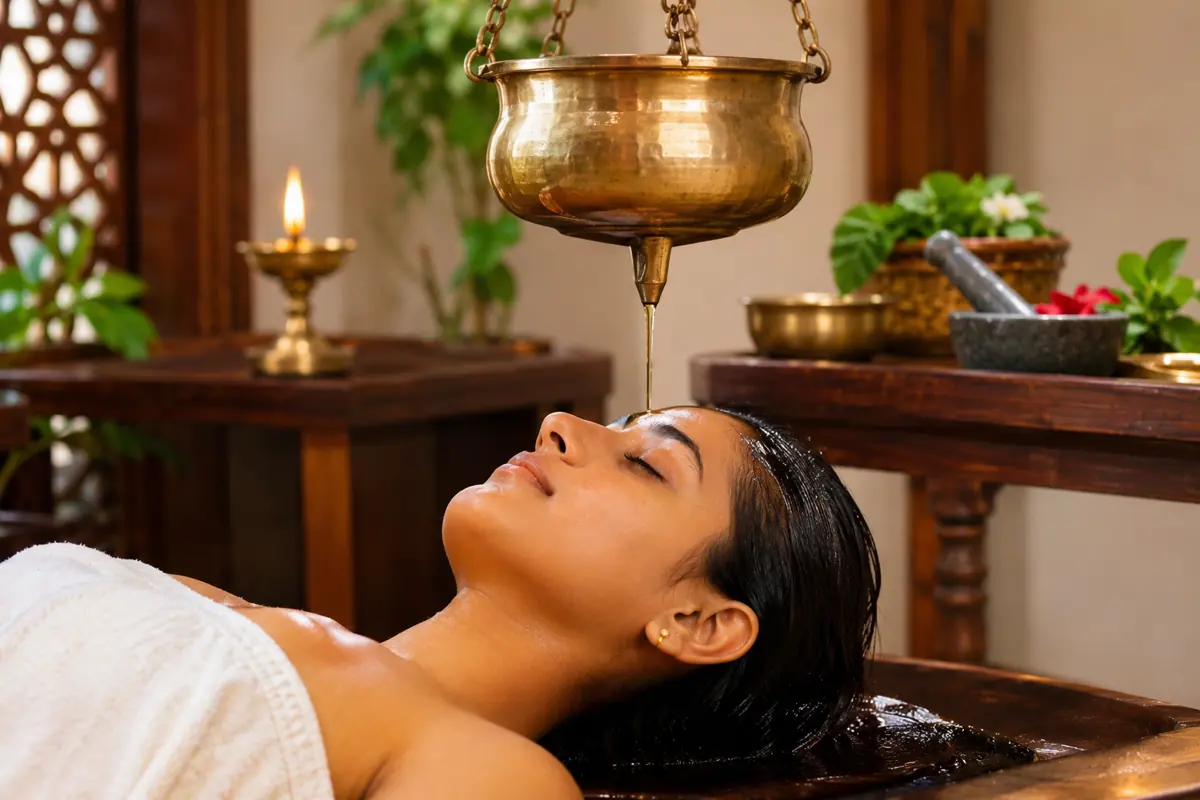
| Oil massage | Warm medicated oil for the shoulder and upper back |
| Local heat | Warm applications to ease stiffness |
| Herbal medicines | Preparations chosen by the doctor and checked against your medicines |
| Exercise | Gentle, supervised shoulder movement within comfort |
| Home plan | Exercises to continue |
A typical day on a shoulder-care programme
- Early morning: gentle pendulum and stretching exercises, then a warm breakfast.
- Mid-morning: a physician review and warm oil therapy.
- Afternoon: rest, a light lunch and a short walk.
- Evening: relaxation, an early dinner and sleep.
A stay in Kerala
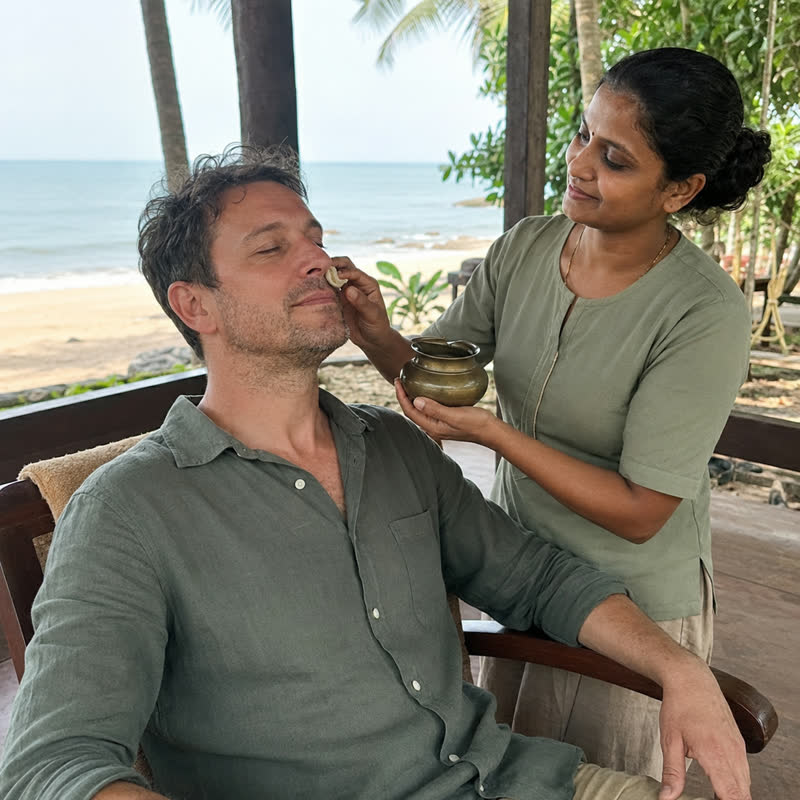
Kerala's warm climate suits the easing of stiff joints. Ask about room layout, comfortable seating and help with dressing if needed, and let the team know about other conditions such as diabetes so meals and therapies are planned for you.
Why a calm setting helps
A frozen shoulder often eases when the day becomes simpler. At a residential centre meals are prepared, distances are short, and warm therapies, rest and light exercise follow a gentle rhythm. Guests often leave with a short daily exercise routine and a better understanding of which movements feel comfortable. Noting the time of day when the shoulder feels best helps you plan your exercises at home.
The Ayurvedic view of the shoulder
Ayurveda describes shoulder stiffness as Avabahuka and related patterns, associated with vata and with strain, cold and long-held positions. The tradition emphasises warm oil, gentle heat, nourishing food, movement within comfort and rest. Physicians compare these descriptions with modern diagnoses while recognising that the frameworks are not identical.
A careful physician reads your history and any reports alongside the traditional picture and plans a gentle programme suited to the stage you are in.
The therapies you may meet
Here is what the most common shoulder-care therapies involve. Your physician chooses which are suited to you.
- Abhyanga: a warm herbal-oil massage of the arm, shoulder and upper back.
- Swedana: gentle steam or warm applications to ease stiffness.
- Patra Pinda Sweda: warm herbal-leaf boluses pressed over the shoulder.
- Lepa: soothing herbal pastes applied to the shoulder for a short time.
- Herbal medicines: preparations chosen to suit you and checked against your medicines.
- Gentle exercise: supervised range-of-movement work within your comfort.
A sample programme rhythm
Every programme is individual, and this outline is only an illustration of how a stay can unfold.
- Days 1 to 3, settling in: arrival rest, a full consultation and a gentle start with mild massage and light meals.
- Days 4 to 10, the main programme: a daily rhythm of oil massage, warm applications, herbal medicines, gentle exercise and rest, with the physician reviewing you each day.
- Days 11 to 14, consolidating: a lighter schedule, a review of how your shoulder feels and a written plan for home exercises.
Many guests extend their stay, and the physician will advise after the first review. Ask the centre for its own day-by-day plan.
Gentle exercise for each stage
The best exercises depend on the stage. In the early, painful stage, the focus is on comfort and gentle movement within pain-free ranges. As stiffness takes over, gradual stretching and pendulum exercises help maintain movement. In the thawing stage, strengthening and everyday tasks come back into the routine. Teachers adapt every exercise to your stage, and you can always skip a movement. Ask for a written exercise sheet to continue at home.
Sleep, positioning and daily tasks
Shoulder discomfort often disturbs sleep. Pillows placed to support the arm, a slightly raised head and sleeping on the unaffected side can help, and a residential stay lets you experiment. Teachers also show easier ways to dress, wash and reach, such as putting the affected arm into a sleeve first. These small techniques make daily life more comfortable while the shoulder recovers.
Food, warmth and rest
Meals are warm, simple and freshly cooked, at regular times. Warmth is a recurring theme, from warm food and drinks to warm oil and heat applications. Rest is part of the day too, with quiet time in the afternoon and an early night. Many guests find that the combination of warmth, rest and gentle movement is exactly what the shoulder appreciates.
Kerala, climate and the best season
Many Ayurveda centres are in Kerala, where the warm, humid climate is traditionally considered kind to the body and the monsoon months are popular for oil therapies. The drier months from October to March are comfortable for travel and sightseeing. For a frozen shoulder, ask each centre which season it recommends, and whether rooms are air-conditioned or well ventilated. Ask for a room with a comfortable bed and pillows for arm support. Our guide to the best time to travel compares the seasons.
Keeping a simple diary
A small notebook is one of the most useful things to bring. Each evening, jot down how far you can move the arm, pain at rest and with movement, sleep and the exercises you did. After a week or two the pattern often becomes clear, and you and the physician can fine-tune the plan. A one-to-ten score for pain and for movement makes progress easy to see. The same notes give your own doctor a helpful picture when you return.
Travelling comfortably
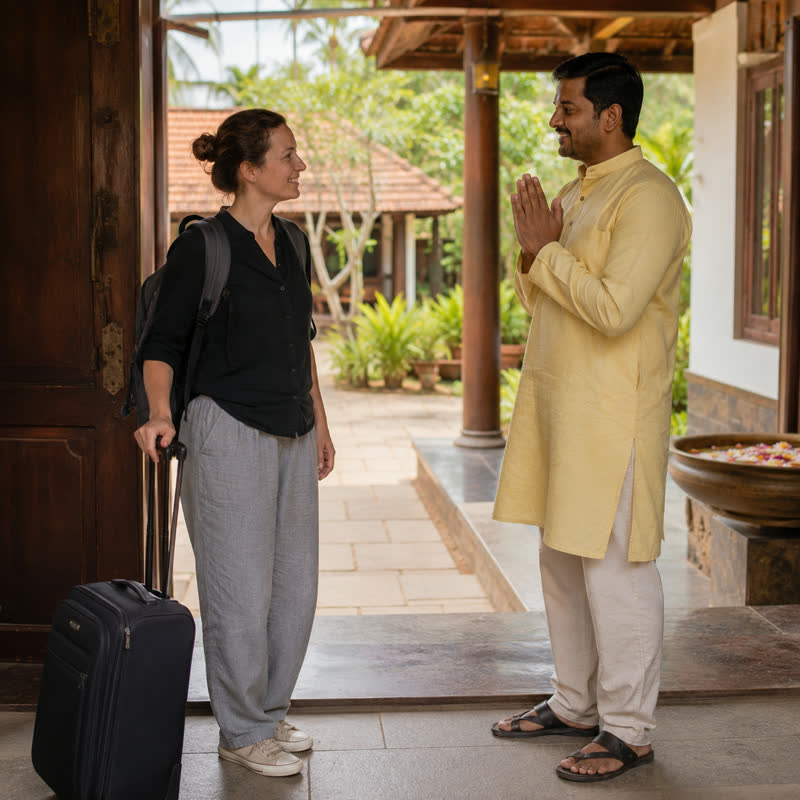
A little planning makes the journey smoother. Book an aisle seat so you can stand and stretch, keep your medicines and reports in your hand luggage, and choose a flight that arrives at a comfortable hour. Keep your bag light, ask for help with luggage and choose a seat that allows you to rest the arm. Ask the centre to arrange the transfer and a restful first day. Our guide to the attendant visa explains how a family member can travel with you.
Conversations to have before you travel
A short chat with your own doctor makes the stay smoother. Many guests ask:
- Are my reports and medicines up to date for travel?
- Which exercises would you like me to continue?
- Is there anything you would like the Ayurveda team to know?
- When would you like to see me after I return?
Sharing the answers with the Ayurveda physician helps the two teams work in step, and leaves you feeling confident and well supported.
Who tends to enjoy a stay
Guests who enjoy these programmes are often people with a stiff, painful shoulder who would like a calm place to rest, move gently and learn practical habits, and anyone who would like to start a healthy routine. If you are unsure whether a stay suits you, a free online consultation is a good first step, before you book anything.
Questions guests often ask
Will the massage be strong? No, it is gentle and adapted to you. Can I bring my own pillow? Yes. Will exercises hurt? They are paced to your comfort and you can skip any movement. Can I swim? Ask the centre. How long should I stay? The physician advises after reviewing your reports.
Questions to ask before you book
These questions help you compare centres and plan with confidence.
- Who will be my physician, and what are their qualifications?
- Can the plan work around my usual exercises and appointments?
- How is shoulder movement adapted to my comfort?
- What does the quote include, and what is extra?
Planning your budget
Cost depends on room, length, therapies, physician time and medicines. Ask each centre for an itemised, dated quote for the same dates and inclusions, and add visa, flights, insurance and transfers. See the cost guide and verifying a doctor.
Travelling with confidence, and how MyVaidyam can help
- Share your reports and current medicines with the Ayurveda physician before you travel.
- Continue your prescribed medicines, and let your own doctor know your plans.
- Ask for ingredient lists for any herbal medicine, and choose labelled preparations.
- Plan rest after the flight so you can begin your stay comfortably.
- Bring any recent scan reports, and note which positions of the shoulder feel most comfortable.
MyVaidyam can arrange a free online pre-consultation, have your reports reviewed by an Ayurvedic physician and request day-by-day plans and itemised quotes from centres so you can compare them calmly. Contact MyVaidyam to book your free online consultation.