This guide explains the Ayurvedic view, what a stay typically includes and how to plan with confidence. Ayurveda is offered as a complementary, supportive approach alongside your own doctor's care, never a replacement for it.
Quick Facts - Ayurvedic Medicines Explained
| Topic | Summary |
|---|---|
| Kashayam | A herbal decoction (water extract); forms vary |
| Ghritam | Medicated ghee prepared with herbs |
| Bhasma | A prepared mineral ash, the category that receives the most scrutiny |
| Asava-arishta | Fermented herbal preparations |
| Regulation (PIB, 2022) | State authorities license; manufacturers follow GMP (Schedule T) |
| Good practice | Ask for ingredients, manufacturer and batch; tell your doctors |
Understanding why forms differ
Different forms suit different purposes: decoctions are fresh and light, ghees carry herbs gently, ashes are concentrated and fermented preparations are traditional tonics. A physician chooses among them according to your condition, digestion and preferences. Ask why a particular form was chosen for you.
Ayurvedic medicines in general
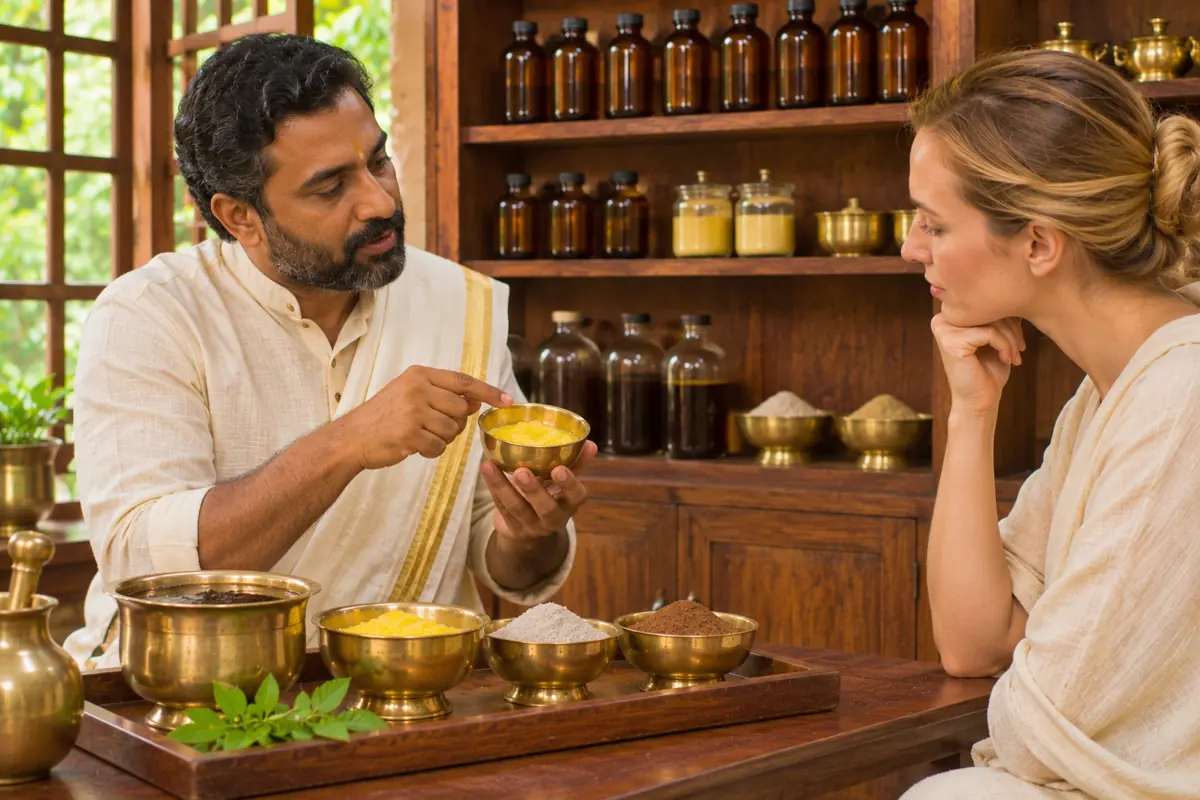
Ayurvedic medicines are prepared from herbs, and in some classical formulations minerals, using traditional methods. A physician selects them after assessing you, and a good centre explains what each is, why it was chosen and how to take it. Ask for the prescription in writing.
Kashayam
A kashayam is usually described as a herbal decoction, a water extract of one or more herbs, taken warm and often before meals. Forms vary, from fresh decoctions to concentrated liquids or tablets made from them.
Ghritam
A ghritam is medicated ghee prepared with herbs, taken in measured doses, and also used in some programmes as part of oleation. Your physician decides the dose and the timing, and explains how it fits with your meals.
Bhasma
A bhasma is usually described as a prepared mineral or metal ash, made by repeated traditional processing. It is the category that receives the most scrutiny, so the manufacturer, batch and testing matter most. NCCIH notes that the FDA considers metals in some Ayurvedic products potentially harmful, so choose reputable makers and tell your doctors what you take.
Asava and arishta
Asavas and arishtas are fermented herbal preparations that contain a small amount of self-generated alcohol. Tell your physician if you avoid alcohol for any reason, so that alternatives can be chosen.
How manufacture is regulated in India
A 2022 Press Information Bureau release explains that state licensing authorities license Ayush drug manufacture and that manufacturers must follow Good Manufacturing Practice under Schedule T. Ask which licence and which facility produced your medicines.
How you will take them
| Form | Usual way of taking it |
|---|---|
| Kashayam | Taken warm, often before meals |
| Ghritam | Measured doses, often with warm water |
| Bhasma | Tiny doses, only under your physician's guidance |
| Asava-arishta | Measured doses, usually after meals |
Reading a label
A good label shows the manufacturer, licence number, batch, manufacture and expiry dates and the ingredient list. Ask the centre to show you the packaging of each medicine, take photographs and keep them with your records.
Taking medicines home
Ask the centre for a written prescription with names, doses and duration. Check airline and customs rules for carrying medicines, and keep them in labelled original packaging. Share the list with your own doctor and pharmacist on your return.
Kerala, climate and the best season
Many Ayurveda centres are in Kerala, where the warm, humid climate is traditionally considered kind to the body and the monsoon months are popular for oil therapies. The drier months from October to March are comfortable for travel and sightseeing. For Ayurvedic medicines, ask each centre which season it recommends, and whether rooms are air-conditioned or well ventilated. Ask about the season, treatment rooms and the calm of the surroundings. Our guide to the best time to travel compares the seasons.
Keeping a simple diary
A small notebook is one of the most useful things to bring. Each evening, jot down how you feel before and after each session, your sleep and your mood. After a week or two the pattern often becomes clear, and you and the physician can fine-tune the plan. A few notes each evening help your physician adapt the plan. The same notes give your own doctor a helpful picture when you return.
Travelling comfortably
A little planning makes the journey smoother. Book an aisle seat so you can stand and stretch, keep your medicines and reports in your hand luggage, and choose a flight that arrives at a comfortable hour. Plan a restful journey, arrive a day early and keep your medicines in your hand luggage. Ask the centre to arrange the transfer and a restful first day. Our guide to the attendant visa explains how a family member can travel with you.
Conversations to have before you travel
A short chat with your own doctor makes the stay smoother. Many guests ask:
- Are my medicines and plans up to date for the programme?
- How should I continue in the weeks after I return?
- Is there anything you would like the Ayurveda team to know?
- When would you like to see me after I return?
Sharing the answers with the Ayurveda physician helps the two teams work in step, and leaves you feeling confident and well supported.
Who tends to enjoy a stay
Guests who enjoy this therapy are often people who would like a calm, supervised treatment, those who value an unhurried pace and anyone who would like practical routines to take home. If you are unsure whether a stay suits you, a free online consultation is a good first step, before you book anything.
Your first day
Most centres keep the first day deliberately quiet. After a warm welcome and a light meal, you rest, meet your physician for a full consultation and receive a written plan for the days ahead. Bring your reports and medicine list to that conversation, ask any questions and tell the team how you are feeling after the journey. Bring your reports and medicine list to this first meeting. Our guide to your first day at an Ayurveda centre explains what to expect.
Questions to ask before you book
These questions help you compare centres and plan with confidence.
- Who will be my physician, and what are their qualifications?
- Can the plan work around my usual medicines and appointments?
- Who made each medicine, and in which batch?
- What does the quote include, and what is extra?
Preparing for your stay
Bring a list of your medicines and supplements, and tell the physician about pregnancy, breastfeeding, allergies and any planned surgery. Keep a copy of every prescription.
Planning your budget
Cost depends on room, length, therapies, physician time and medicines. Ask each centre for an itemised, dated quote for the same dates and inclusions, and add visa, flights, insurance and transfers. See the cost guide and verifying a doctor.
Travelling with confidence, and how MyVaidyam can help
- Share your reports and current medicines with the Ayurveda physician before you travel.
- Continue your prescribed medicines, and let your own doctor know your plans.
- Ask for ingredient lists for any herbal medicine, and choose labelled preparations.
- Plan rest after the flight so you can begin your stay comfortably.
- Share your complete prescription list with your own doctor before and after your stay.
MyVaidyam can arrange a free online pre-consultation, have your reports reviewed by an Ayurvedic physician and request day-by-day plans and itemised quotes from centres so you can compare them calmly. Contact MyVaidyam to book your free online consultation.
Frequently Asked Questions on Ayurvedic Medicines Explained
References
- NCCIH, US National Institutes of Health. Ayurvedic medicine: in depth
- BC Medical Journal / BC Centre for Disease Control. Heavy metal poisoning from Ayurvedic medicines
- Press Information Bureau, Government of India. Steps taken to assure quality control of Ayush drugs (13 December 2022)
- Ministry of Ayush, Government of India. Official website