A little thought beforehand makes this role lighter and the journey safer.
This guide is written for caregivers. It covers what to prepare, how to plan travel, what to ask about the centre, how daily care works during a stay, how to take part in the programme, how to look after yourself and how to plan the return home. And throughout, it shows how MyVaidyam can walk beside you as your friend and guide.
Ayurveda is offered here as a complementary, supportive approach that works alongside your own doctor's care, never as a replacement for it. Your doctors and therapists lead rehabilitation, and Ayurveda is offered as supportive care.
Quick Facts - Caregiver Planning for International Patients Seeking Neurological Rehabilitation
| Topic | Summary |
|---|---|
| Caregiver role | Planner, helper, communicator, companion |
| Prepare | Records, medicines, letters, therapists' plans |
| Travel | Assistance, rest day, comfortable seating |
| Visa | A medical attendant visa is typically used for the companion |
| Ask the centre | Accessibility, safety, how companions are included |
| Remember | To rest and ask for help yourself |
| Visa | e-Medical visa: 60 days from first arrival, triple entry, non-extendable |
| Your companion | MyVaidyam: planning, coordination and support before, during and after |
The caregiver at the centre of the journey
The person recovering has a team: neurologist, therapists, family. The caregiver connects all of them. You may be the one who remembers the medicines, notices a change, knows how they like their tea and understands what they are trying to say. That knowledge is valuable to the physicians and therapists at a residential centre, and a good centre will welcome it.
What a caregiver plans for
Medical
Records, medicines, letters
Travel
Flights, assistance, rest day
Stay
Room, access, meals
Daily care
Transfers, bathing, positioning
Communication
Plan, reviews, home team
Yourself
Rest, support, breaks
None of this needs to be done alone, and much can be shared with the centre and with MyVaidyam.
Medical preparation
Ask the neurologist whether travel is advisable, what to watch for and what to continue. Gather a clear folder: diagnosis letter, recent scans and reports, a medicine list with doses and times, allergy information, therapists' programmes and contact details for the doctors at home. Carry a copy on paper and on a phone. Keep medicines in hand luggage, in original packaging, with a letter.
Planning travel
Choose direct flights where possible, and avoid tight connections. Request airport assistance and, if helpful, a wheelchair, and ask about seating and aisle access. Plan a rest day on arrival, and keep medicines, snacks, water and any aids within reach. Ask about travel insurance suitable for the circumstances, and check the details with the insurer. Pack light, with a bag the caregiver can manage easily.
Visa and documents for two
The patient usually travels on the e-Medical visa, valid for 60 days from first arrival, with triple entry and no extension. A companion is typically granted a medical attendant visa. Apply early, keep both passports and letters together and ask your coordinator to check that names and dates match across documents.
Questions to ask the centre
- What accessibility and fall-prevention arrangements are there?
- Can I stay in the room and eat with the patient?
- Which team members will be caring for them day to day?
- How are medicines given on time?
- How close is a hospital, and how are emergencies handled?
- How will I be taught the exercises and safe handling?
Daily care during the stay
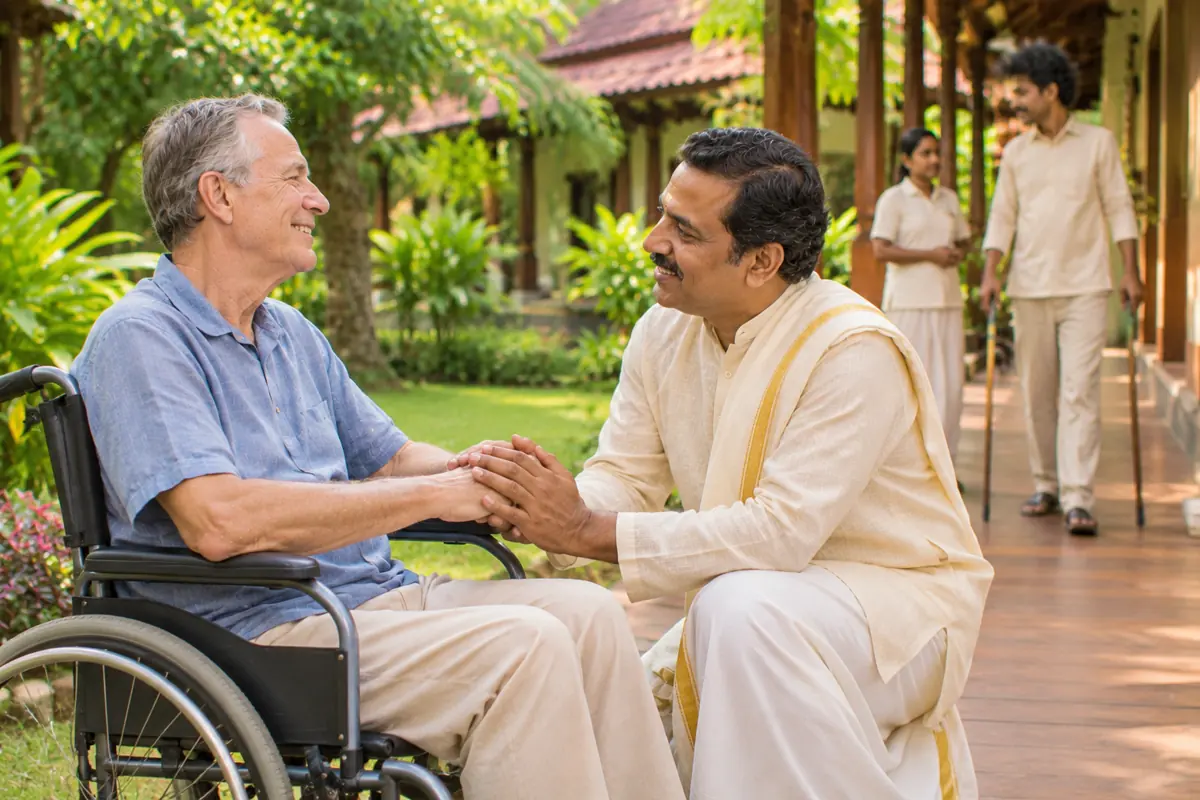
In a residential programme, trained therapists and nurses handle much of the day's care, but you remain the person who knows the patient best. You may help with meals, mobility and communication, attend sessions to learn techniques and speak at reviews. Ask the team to show you the safe way to help with transfers and positioning, so that you can continue at home.
Taking part in the programme
Caregivers are not spectators. Attending physiotherapy and occupational sessions allows you to learn the exercises, and joining reviews lets you share observations. Many centres also offer a short relaxation or breathing session you can share. Keep a simple daily note of meals, sleep, mood and progress, which is useful for the team and for the doctors at home.
Looking after yourself
Caregiving is demanding, and a worn-out caregiver cannot help for long. Eat regularly, take a walk each day, rest when the patient rests, and accept offers of help from staff and other families. Many centres offer relaxation or gentle yoga for companions. If you feel overwhelmed, tell the team; they have seen this before, and will understand.
Planning the return home
Before you leave, ask for a written summary, a home exercise programme and advice on diet and routine. Arrange follow-up with the neurologist and therapists, and prepare the home with clear paths, rails and a safe bathroom. Keep in touch with the centre for advice, and share the summary with the home team.
Setting honest expectations
Recovery in neurological conditions is gradual, and no programme can promise a particular result. A residential stay can offer structure, practice, comfort and encouragement for both of you. Talking about hopes and limits openly, with the physician and between yourselves, makes the journey calmer.
Working alongside your own doctors
Please keep your own doctors informed. Share your medical summary, bring your reports and keep taking whatever you have been prescribed. Please keep your own doctors informed, and make sure all prescribed medicines are taken on time. Please do not change medicines without medical advice.
Planning the journey
Apply for your e-Medical visa on India's official portal, usually with a hospital letter, a few weeks before travel. It is valid for 60 days from first arrival, allows three entries and cannot be extended. Book flights after approval, arrange travel insurance and choose an arrival time that gives you a rested first day. Check the portal for current rules before you apply.
Your friend and hand-holder as a caregiver: MyVaidyam
You do so much already, and that is where MyVaidyam comes in to help. We walk with you from your very first question to the day you return home, answering every question patiently and making sure that nothing is left to chance.
- An online consultation with an Ayurvedic physician, together with the patient and family.
- Help preparing the health summary, reports and therapists' plans.
- Guidance on choosing a reputable, accessible centre with companion arrangements.
- Help planning comfortable travel for you both.
- Support with the e-Medical visa and companion visa documents, flights, airport pickup and accommodation.
- A warm point of contact during your stay, and follow-up after you return home.
You are welcome to reach out at any stage. We would be delighted to help you begin.