This is increasingly possible, and when it is done well, the three can support one another beautifully.
This guide explains how an integrated residential programme combines Ayurveda, yoga and physiotherapy, how a day is arranged, whether Panchakarma can be combined with yoga therapy, who benefits, how to choose a centre and how to plan. And throughout, it shows how MyVaidyam can walk beside you as your friend and guide.
Ayurveda is offered here as a complementary, supportive approach that works alongside your own doctor's care, never as a replacement for it. Integrated programmes support comfort, movement and wellbeing. They do not promise a cure.
Quick Facts - Combining Ayurveda, Yoga and Physiotherapy in One Residential Program
| Topic | Summary |
|---|---|
| The idea | Three approaches, one coordinated plan |
| Ayurveda | Individual care, therapies, diet, herbal preparations |
| Yoga | Postures, breathing and meditation |
| Physiotherapy | Guided movement, strength and balance |
| Key ingredient | Coordination between teams |
| Before you travel | Your own doctors' agreement, especially after surgery or with a condition |
| Visa | e-Medical visa: 60 days from first arrival, triple entry, non-extendable |
| Your companion | MyVaidyam: planning, coordination and support before, during and after |
Why bring the three together?
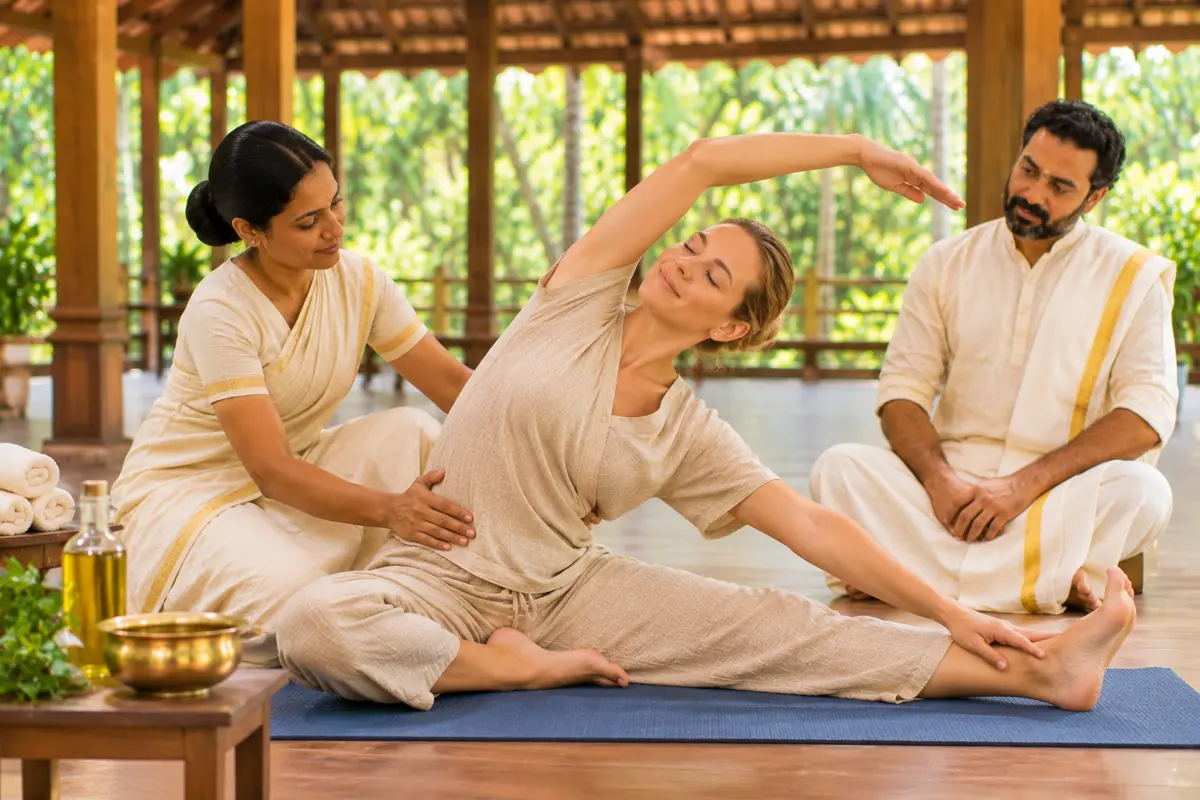
Each approach adds something the others do not. Ayurvedic therapies, such as warm oil massage and steam, help the body relax and nourish. Yoga steadies the breath and the mind and builds gentle flexibility. Physiotherapy, with its attention to strength, posture and balance, helps you move with confidence. Together they give a programme that is relaxing, active and practical, and that you can carry home.
A blended day, in three rhythms
| Ayurveda | Yoga | Physiotherapy | |
|---|---|---|---|
| Early morning | Warm water, rest | Gentle yoga and breath | |
| Mid-morning | Oil therapy and steam | Guided exercises | |
| Afternoon | Rest and review | Short walk or breathing | |
| Evening | Light supper, calm | Quiet meditation | Home exercises, if advised |
The plan changes with you. Your teams coordinate and adjust.
The example shows how the day can be shaped so that no single element crowds out the others.
What each approach contributes
| Approach | What it brings |
|---|---|
| Ayurveda | Assessment, oil therapies, steam, diet, herbal preparations, rest |
| Yoga | Gentle postures, breathing practices, relaxation and meditation |
| Physiotherapy | Assessment of movement, guided exercises, strength, balance and walking |
A thoughtful centre will help you decide how much of each you need, rather than offering everything at once.
Can Panchakarma be combined with yoga therapy?
Often, yes. During the preparation and recovery stages, gentle yoga and breathing fit very naturally, helping the body stay supple and the mind calm. Around the main Panchakarma procedures, the body needs rest, and yoga is kept very light or paused. A good team plans this sequence together, so tell the centre that you are interested in both, and ask how they coordinate.
Why coordination matters
An integrated programme works best when one physician or a small team looks after the whole plan. If the Ayurvedic physician, yoga teacher and physiotherapist each follow their own schedule, the days can feel crowded. When they share information, they can place a physiotherapy session when the body is warm and relaxed, choose a yoga class that suits your energy and protect rest after therapies.
A day, a week, a stay
In the first days, the programme is kept gentle while you settle, and the physician and teams learn about you. In the middle weeks, therapies, movement and yoga find their rhythm. Towards the end, the focus shifts to a home routine: your exercises, your breathing practice and your diet notes. The physician reviews you daily, so the blend can change as you do.
Who benefits
Integrated programmes are often chosen by guests who live with joint or back stiffness, who are rebuilding strength after illness or surgery, who wish to stay steady and independent as they age, or who simply want a thorough, restful, active stay. In every case your own doctors' advice comes first, and the plan is shaped around your health and goals.
A sample week in an integrated stay
In the first week, the emphasis is on settling: a thorough consultation, gentle oil therapies, easy yoga and a first physiotherapy assessment, with plenty of rest. In the second week, the rhythm deepens. Therapies continue, yoga classes become a little longer and the physiotherapist introduces exercises for strength, balance or walking, matched to what you can comfortably do. In a third or fourth week, the focus turns to consolidation and to teaching you a simple routine for home, with your exercises, breathing practices and diet notes written down.
What a yoga class and a physiotherapy session are like
A yoga class in this setting is gentle and graded. You are guided through slow movements, breathing and relaxation, and encouraged to rest whenever you wish. Nothing is competitive. A physiotherapy session begins with a conversation about how you move, followed by exercises, taught and adjusted to you. You leave each session knowing what to practise, and the team notes your progress.
Pacing and rest
The most common mistake in a blended programme is doing too much. A well-run centre keeps sessions short, protects rest after oil therapies and listens when you say you are tired. You are always free to skip a class or shorten a session, and your physician will adjust the plan. Quiet afternoons are part of the programme, not a gap in it.
For older guests
Older guests often find integrated care especially welcome, because it combines soothing therapies with gentle strength, balance and steadiness. Good centres offer seated and supported options, handrails and non-slip floors, and unhurried instruction. Tell the team about any history of falls, dizziness or difficulty walking, and discuss the plan with your own doctor before you travel.
Keeping it going at home
Before you leave, ask for a short written summary: your yoga and breathing practices, your physiotherapy exercises and your Ayurvedic diet and routine. Share it with your own doctors or physiotherapist, and begin with a few habits that felt easiest. A short daily practice does more than an occasional long one.
Questions to ask the centre
A few questions make the choice easy:
- Will the Ayurvedic physician, yoga teacher and physiotherapist share one plan?
- How are sessions timed around therapies and rest?
- What qualifications do the yoga teacher and physiotherapist have?
- How is the programme adapted to my condition and ability?
- Can you send a summary to my own doctor?
Working alongside your own doctors
Please keep your own doctors informed. Share your medical summary, bring your reports and keep taking whatever you have been prescribed. If you have had surgery or have a medical condition, ask your own doctor or surgeon whether the programme is suitable and when. Please do not change medicines without medical advice.
Choosing a centre for an integrated programme
Look for a qualified Ayurvedic doctor (BAMS or MD Ayurveda), a trained and registered physiotherapist, an experienced yoga teacher, a clear written plan, evidence that the teams coordinate, medical backup and honest answers. Be cautious of promises of a cure or of programmes that feel overcrowded.
Planning the journey
Apply for your e-Medical visa on India's official portal, usually with a hospital letter, a few weeks before travel. It is valid for 60 days from first arrival, allows three entries and cannot be extended. Book flights after approval, arrange travel insurance and choose an arrival time that gives you a rested first day. Check the portal for current rules before you apply.
Your friend and hand-holder in bringing the three together: MyVaidyam
Combining approaches is easier with a friend, and that is where MyVaidyam comes in. We walk with you from your very first question to the day you return home, answering every question patiently and making sure that nothing is left to chance.
- An online consultation with an Ayurvedic physician to discuss how an integrated programme could look.
- Help preparing your health summary and sharing it with the centre.
- Guidance on choosing a reputable centre with coordinated teams.
- Help checking what is included and what is arranged separately.
- Support with your e-Medical visa documents, flights, airport pickup and accommodation.
- A warm point of contact during your stay, and follow-up after you return home.
You are welcome to reach out at any stage. We would be delighted to help you plan a stay that brings it all together.