This is naturopathy, and in India it has a rich, well-loved tradition of its own, closely bound with yoga and with the country's long thinking about health and the natural world.
This guide explains what naturopathy means in India, what therapies you may meet, how it differs from and complements Ayurveda, what a day at a centre is like, how to choose a centre and how to plan your journey. And throughout, it shows how MyVaidyam can walk beside you as your friend and guide.
Naturopathy is offered here as a complementary, supportive approach that works alongside your own doctor's care, never as a replacement for it. A programme supports wellbeing and healthy habits. It does not promise a cure.
Quick Facts - Naturopathy in India
| Topic | Summary |
|---|---|
| Approach | Supporting the body with natural means: water, earth, sun, air, diet, rest |
| Often paired with | Yoga, and sometimes Ayurveda, in an integrative programme |
| Typical therapies | Hydrotherapy, mud therapy, massage, dietary guidance, yoga |
| Common aims | Relaxation, healthy habits, stress ease, comfort |
| Not | A cure, or a replacement for medical care |
| Typical lengths | One to three weeks, shaped by the physician |
| Visa | e-Medical visa: 60 days from first arrival, triple entry, non-extendable |
| Your companion | MyVaidyam: planning, coordination and support before, during and after |
What is naturopathy in India?
Naturopathy, sometimes called nature cure, is built on a simple idea: that the body has a remarkable ability to restore balance when it is given the right conditions. In India, this idea has deep roots. It was championed in the last century by Mahatma Gandhi, who wrote and spoke warmly about nature cure, and today it is formally recognised as part of the country's traditional health systems, together with yoga, under the Ministry of Ayush.
Practitioners usually study naturopathy and yoga together, and many centres reflect this in their daily rhythm. The result is a gentle, practical approach to health: eat simply, move gently, rest well, and make good use of water, earth, air and sunlight.
Five natural elements, five gentle approaches
Earth
Mud packs and wraps
Water
Hydrotherapy, such as baths and steam
Fire
Sunlight and gentle warmth
Air
Fresh air, breathing and movement
Space
Rest, simple food and quiet
Your physician chooses what suits you. No one needs every approach.
Indian naturopathy often speaks of the five great elements. Each is associated with a family of simple therapies, which together form the heart of a programme.
Therapies you may meet
Your physician chooses what suits you, and programmes differ from centre to centre.
| Therapy | What it involves |
|---|---|
| Hydrotherapy | Baths, sprays and wraps using water at various temperatures, often including a gentle steam bath |
| Mud therapy | Cool mud packs, applied to the body or abdomen, traditionally used for comfort |
| Massage | Gentle massage to relax the body, sometimes with oils |
| Sunlight and fresh air | Time in morning sun and open air, as appropriate |
| Diet guidance | Simple, mostly plant-based meals, sometimes with fruit or juice days |
| Yoga and breathing | Daily classes of gentle postures, breathing and meditation |
Food at the heart of the programme
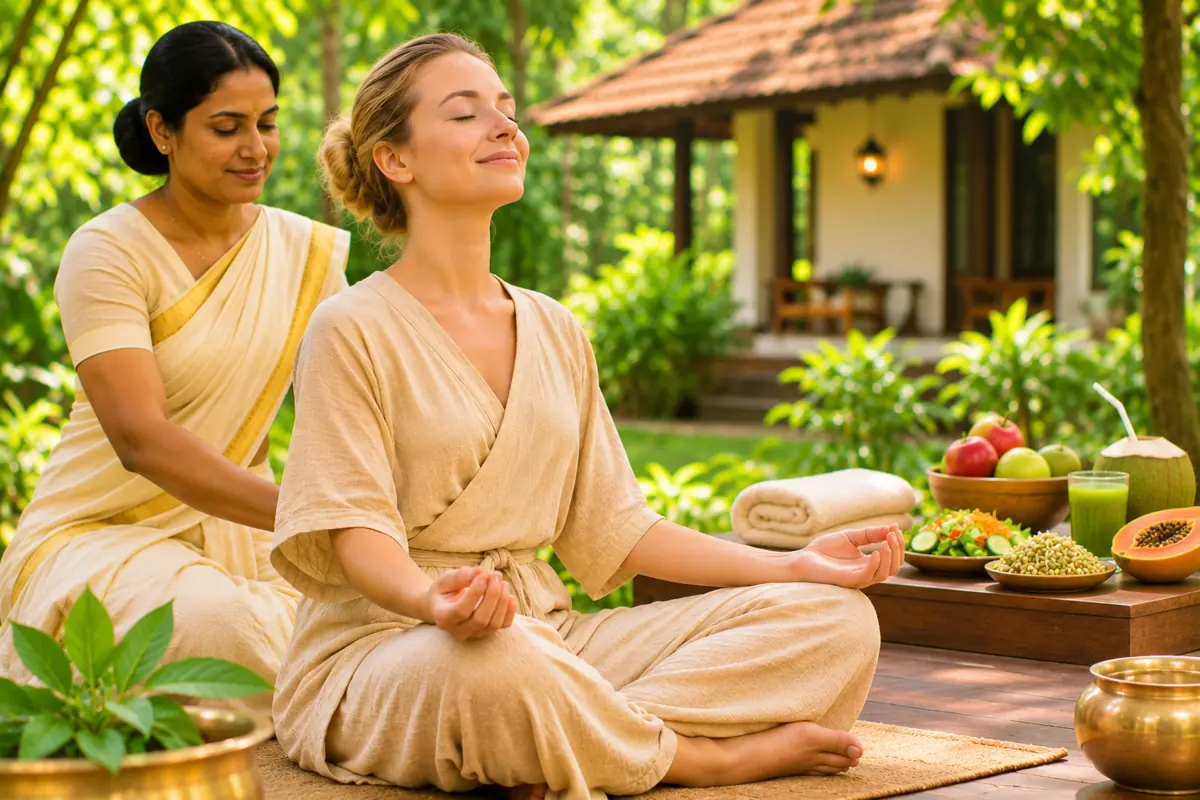
Food is the quiet backbone of naturopathy. Meals are typically simple, fresh and mostly vegetarian, with plenty of vegetables, fruit, grains and legumes, and with little or no refined food. Some programmes include lighter days, with fruit or juices, adapted to the person. Tell the centre about allergies and dietary needs at the start, and ask how meals are adapted to your health and your usual diet.
Yoga as part of the day
In India, naturopathy and yoga are close companions. Many centres begin the day with a class of gentle postures and breathing, followed by meditation in the evening. Classes are usually graded, so that beginners and older guests feel comfortable. You do not need experience, and you are always free to rest.
Naturopathy and Ayurveda: two companions
Many international guests wonder how the two relate. In short, both honour nature and both value food, routine and balance. They differ in emphasis, and many people enjoy the combination.
| Naturopathy | Ayurveda |
|---|---|
| Main tools Water, earth, sun, air, diet, yoga | Herbal medicines, oil therapies, diet, Panchakarma |
| Style Simple, natural, self-help oriented | Individualised, doctor-prescribed, constitution-based |
| Often chosen for Healthy habits, relaxation, lifestyle reset | Individualised wellbeing, supportive care, rejuvenation |
Some centres offer both, with physicians who coordinate the plan. If you are interested in combining them, ask the centre how this is arranged.
Who chooses naturopathy, and why
Guests come for many reasons: to rest from a busy life, to reset habits, to ease stress, to learn yoga and simple healthy cooking, or to support their wellbeing alongside medical care. What they share is the wish for a gentler, simpler way of looking after themselves, and the wish to bring something lasting home.
What a day might look like
A typical day is calm and structured. You rise early for water, a gentle walk and yoga, followed by a simple breakfast. Mid-morning brings your therapies, perhaps a steam bath, mud pack or massage, then a quiet lunch and a rest. In the afternoon there may be a talk on healthy living, a walk or a class, followed by an early, light supper, meditation and sleep. Many guests say they feel lighter, calmer and more rested within days.
How long should a programme be?
A week gives a restful introduction. Two weeks lets habits begin to settle, and three weeks suits those who want a fuller reset. Your physician will recommend the length that suits you. Remember that the e-Medical visa is valid for 60 days from first arrival and cannot be extended, so choose your dates with a comfortable margin.
Working alongside your own doctors
Please talk to your own doctor before you plan your stay, especially if you have a medical condition or take regular medicines, and share your medical summary with the centre. Keep taking whatever you have been prescribed. Some elements, such as lighter days or steam, may need adjusting for certain conditions, which is why a physician's assessment on arrival matters. Please do not change medicines without medical advice.
Choosing a naturopathy centre
Look at these, roughly in order of importance:
- The physician. A qualified practitioner with a recognised degree in naturopathy and yoga (such as BNYS), who sees you personally.
- The written plan. A clear plan with therapies, diet, yoga, inclusions and follow-up.
- Medical backup. Who is on duty, and which hospital is nearby.
- Setting and hygiene. Clean therapy rooms, safe water and a calm environment.
- Standards. Government recognition and accreditation, where applicable, are useful signs.
- Honesty. Be cautious of promises of a cure or of pressure to decide quickly.
Planning the journey
Apply for your e-Medical visa on India's official portal, usually with a hospital letter, a few weeks before travel. It is valid for 60 days from first arrival, allows three entries and cannot be extended. Book flights after approval, arrange travel insurance and choose an arrival time that gives you a rested first day. Check the portal for current rules before you apply.
Your friend and hand-holder on the way to a nature-cure stay: MyVaidyam
Starting a journey like this should feel simple, and that is where MyVaidyam comes in. We walk with you from your very first question to the day you return home, answering every question patiently and making sure that nothing is left to chance.
- An online pre-consultation with a physician to discuss your goals and the programme that suits you.
- Help preparing your health summary and sharing it with the centre.
- Guidance on choosing a reputable naturopathy or integrative centre, and on combining it with Ayurveda if you wish.
- Help checking what is included and what is arranged separately.
- Support with your e-Medical visa documents, flights, airport pickup and accommodation.
- A warm point of contact during your stay, and follow-up after you return home.
You are welcome to reach out at any stage. We would be delighted to help you plan a simple, restful stay.