These three approaches share a great deal, they often live under the same roof in India, and a thoughtful centre can help you find the one, or the blend, that suits you.
This guide explains each approach in simple terms, compares them side by side, offers a few questions to help you choose, looks at how they can be combined, including whether Panchakarma can be combined with naturopathy, and shows how MyVaidyam can walk beside you as your friend and guide.
These approaches are offered here as complementary and supportive, working alongside your own doctor's care, never as a replacement for it.
Quick Facts - How to Choose Between Ayurveda, Naturopathy and Yoga Therapy
| Topic | Summary |
|---|---|
| Ayurveda | Individual assessment, therapies, diet, herbal preparations |
| Naturopathy | Natural therapies, simple diet, yoga and lifestyle |
| Yoga therapy | Postures, breathing and meditation adapted to the person |
| Often combined | In integrative centres, with physicians coordinating |
| Best way to choose | A conversation with a physician about your goals |
| Not | A competition: each has its place |
| Visa | e-Medical visa: 60 days from first arrival, triple entry, non-extendable |
| Your companion | MyVaidyam: planning, coordination and support before, during and after |
Three companions, not rivals
Ayurveda, naturopathy and yoga therapy all grew from the same soil: a respect for nature, a belief in balance and a conviction that daily habits matter. They have different emphases, and different tools, but they speak to one another. Many Indian centres offer more than one, and many physicians are trained in more than one.
So the question is rarely "which is best?" It is more often "which fits me, and in what proportion?"
Which road suits you?
If you most want a personal, doctor-guided plan
If you most want a simple, natural lifestyle reset
If you most want movement, breath and a calmer
mind
If you most want a little of each, coordinated
Ayurveda
Naturopathy
Yoga therapy
An integrative stay
The signposts are only a starting point. A conversation with a physician will refine them.
Ayurveda in a few words
Ayurveda begins with you: your constitution, your present balance, your strength and your goals. From there, a physician shapes a personal plan, which may include warm oil therapies, steam, a diet chosen for you, herbal preparations, yoga and rest. It is the most individual of the three, and it is often chosen by guests who want a doctor-guided programme, particularly for a longer stay.
Naturopathy in a few words
Naturopathy, or nature cure, supports the body with simple, natural means: water therapies, mud packs, sunlight, fresh air, simple food and rest, often with yoga. It is practical and self-help oriented, and it is often chosen by guests who want to reset habits, ease stress and learn a healthier way of living. Our guide to naturopathy in India describes it in more detail.
Yoga therapy in a few words
Yoga therapy uses postures, breathing practices and meditation, adapted to the individual, to support wellbeing. It differs from a general yoga class by being tailored to your needs, health and ability, and by being guided by a trained teacher. It is often chosen by guests who want a calmer mind, a more flexible body and a practice they can take home.
Questions to help you choose
A few simple questions point the way:
- Do I want a plan made specially for me by a doctor? Ayurveda may suit.
- Do I want a simple, natural routine I can follow at home? Naturopathy may suit.
- Do I want to build a daily practice of movement and breath? Yoga therapy may suit.
- Do I have a medical condition that needs careful coordination? An integrative centre with a physician may suit.
- How long can I stay, and how much structure do I want?
If you are unsure, an online pre-consultation can help you decide.
A side-by-side view
The differences are easiest to see together.
| Ayurveda | Naturopathy | Yoga therapy |
|---|---|---|
| Main tools Therapies, diet, herbal preparations | Water, earth, sun, air, simple diet | Postures, breathing, meditation |
| Style Individual, doctor-guided | Natural and self-help | Practice-based, teacher-guided |
| Often chosen for Personal wellbeing plans, longer stays | Lifestyle reset, relaxation | Calm, flexibility, a home practice |
| Pace Varies, shaped by the physician | Structured and simple | Gentle, graded, daily |
Can they be combined?
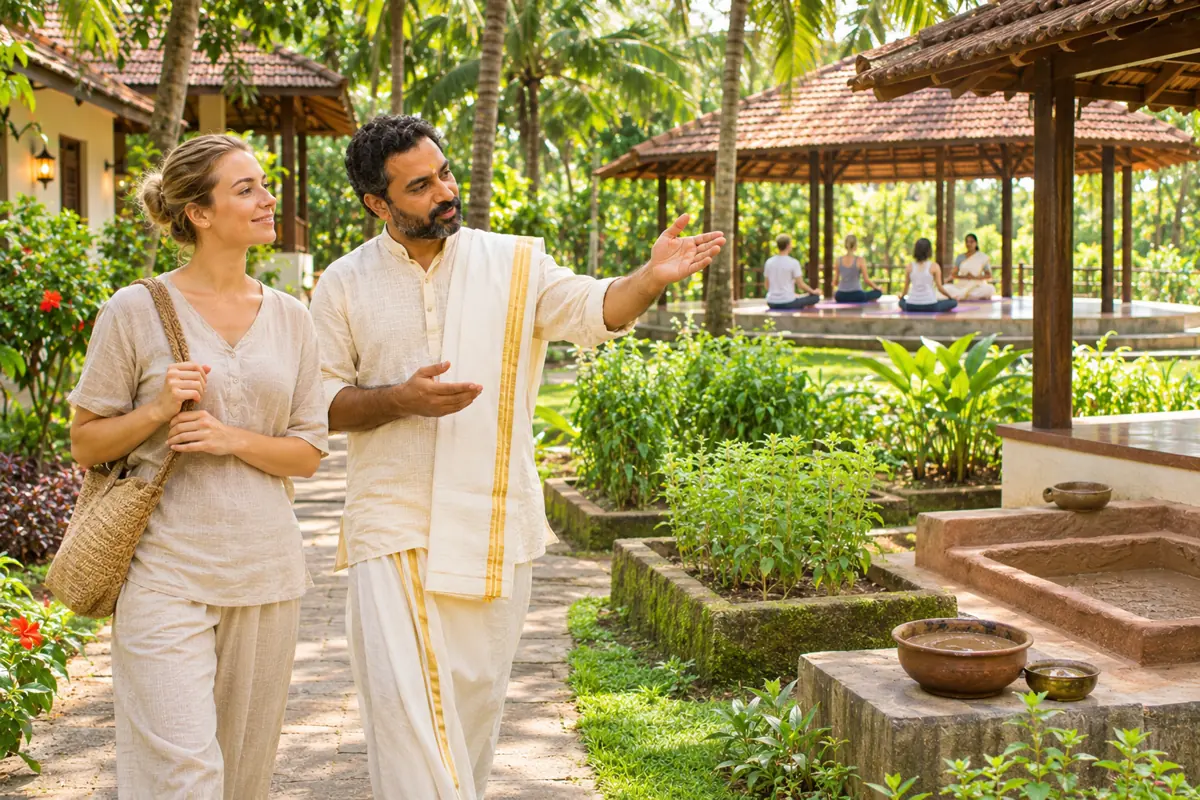
Often, yes. Many guests enjoy an integrative stay in which Ayurvedic therapies and diet are combined with yoga each morning and, in some centres, gentle naturopathic therapies such as steam or mud packs. The key is coordination. When one physician, or a team, looks after the whole plan, the elements support each other. When different approaches are layered without coordination, the programme can feel crowded.
Can Panchakarma be combined with naturopathy?
This is a common question. In the preparation and recovery stages of Panchakarma, gentle naturopathic elements, such as light yoga, simple food and quiet time in nature, often fit very naturally. Around the main Panchakarma procedures, the body needs rest, and additional strong therapies, such as fasting or intensive water treatments, are usually set aside. A thoughtful team plans the sequence together, so tell the centre that you are interested in both and ask how they coordinate.
A day in an integrative stay
In a centre that blends the approaches, a day might begin with warm water and a gentle yoga class, followed by breakfast. Mid-morning brings the therapies your physician has chosen, perhaps a warm oil massage and steam, or a simple naturopathic therapy such as a mud pack. After a rest and a nourishing lunch, the afternoon is quiet, with a short walk, a talk on healthy living or a breathing practice. Evening brings an early supper and a little meditation. The physician reviews you daily, so the mix can change as you do.
Common misunderstandings
A few ideas are worth clearing up. Yoga therapy is not only exercise. It includes breath, rest and meditation, and is adapted to the person. Naturopathy is not only about food. It uses water, earth, sun and air as well. Ayurveda is not only massage. Oil therapies are one part of a wider plan of diet, herbal care and routine. And more is not always better. A well-chosen, well-paced plan usually serves you better than a crowded one.
Working alongside your own doctors
Please keep your own doctors informed. Share your medical summary, bring your reports and keep taking whatever you have been prescribed. If you have a medical condition, ask your doctor whether any element, such as fasting or intensive heat, needs adjusting. Please do not change medicines without medical advice.
Choosing a centre
Look for qualified, registered practitioners in the approach you want, a clear written plan, a calm and clean setting, medical backup and honest answers. Be cautious of centres that promise a cure or press you to decide quickly, and prefer those that explain how their approaches work together.
Planning the journey
Apply for your e-Medical visa on India's official portal, usually with a hospital letter, a few weeks before travel. It is valid for 60 days from first arrival, allows three entries and cannot be extended. Book flights after approval, arrange travel insurance and choose an arrival time that gives you a rested first day. Check the portal for current rules before you apply.
Your friend and hand-holder in choosing your path: MyVaidyam
Choosing between three good options is easier with a friend, and that is where MyVaidyam comes in. We walk with you from your very first question to the day you return home, answering every question patiently and making sure that nothing is left to chance.
- An online pre-consultation with a physician to talk through your goals and which approach suits you.
- Help preparing your health summary and organising your reports.
- Guidance on choosing a reputable centre, including integrative ones that offer more than one approach.
- Help checking what is included and what is arranged separately.
- Support with your e-Medical visa documents, flights, airport pickup and accommodation.
- A warm point of contact during your stay, and follow-up after you return home.
You are welcome to reach out at any stage. We would be delighted to help you choose.