This guide explains how functional progress is measured during an integrative rehabilitation stay: what a baseline is, which measures are commonly used, how you and your family can keep your own records, how results are used to adjust the plan and how to read them kindly. And throughout, it shows how MyVaidyam can walk beside you as your friend and guide.
Ayurveda is offered here as a complementary, supportive approach that works alongside your own doctor's care, never as a replacement for it.
Quick Facts - Measuring Functional Progress During an Integrative Rehabilitation Stay
| Topic | Summary |
|---|---|
| Starts with | A baseline assessment and your goals |
| Common measures | Walking, balance, grip, transfers, comfort, sleep |
| Reviewed | At agreed intervals |
| Your part | Keep a simple diary |
| Used for | Adjusting the plan |
| Not | A promise of a particular result |
| Visa | e-Medical visa: 60 days from first arrival, triple entry, non-extendable |
| Your companion | MyVaidyam: planning, coordination and support before, during and after |
Why measure at all?
Day-to-day change is hard to see, especially for the person living it. A measure taken at the start and repeated at intervals reveals gains that memory would miss, and it shows where a different approach may help. It also gives you and your doctors at home a shared language, and it keeps everyone focused on what matters to you.
A staircase of measures
| 4. Participation | · Return to daily roles and routines |
|---|---|
| 3. Function | · Timed walks, transfers, grip, balance |
| 2. Comfort | · Pain, stiffness, sleep, mood |
| 1. Baseline | · Examination, scales, your goals |
Measures build on each other, from the first examination to everyday participation.
The baseline
On arrival, the physician and therapists record your starting point: examination findings, scores from simple scales, a few timed tasks and, importantly, your own goals in your own words. A clear baseline makes later changes meaningful.
Measures commonly used
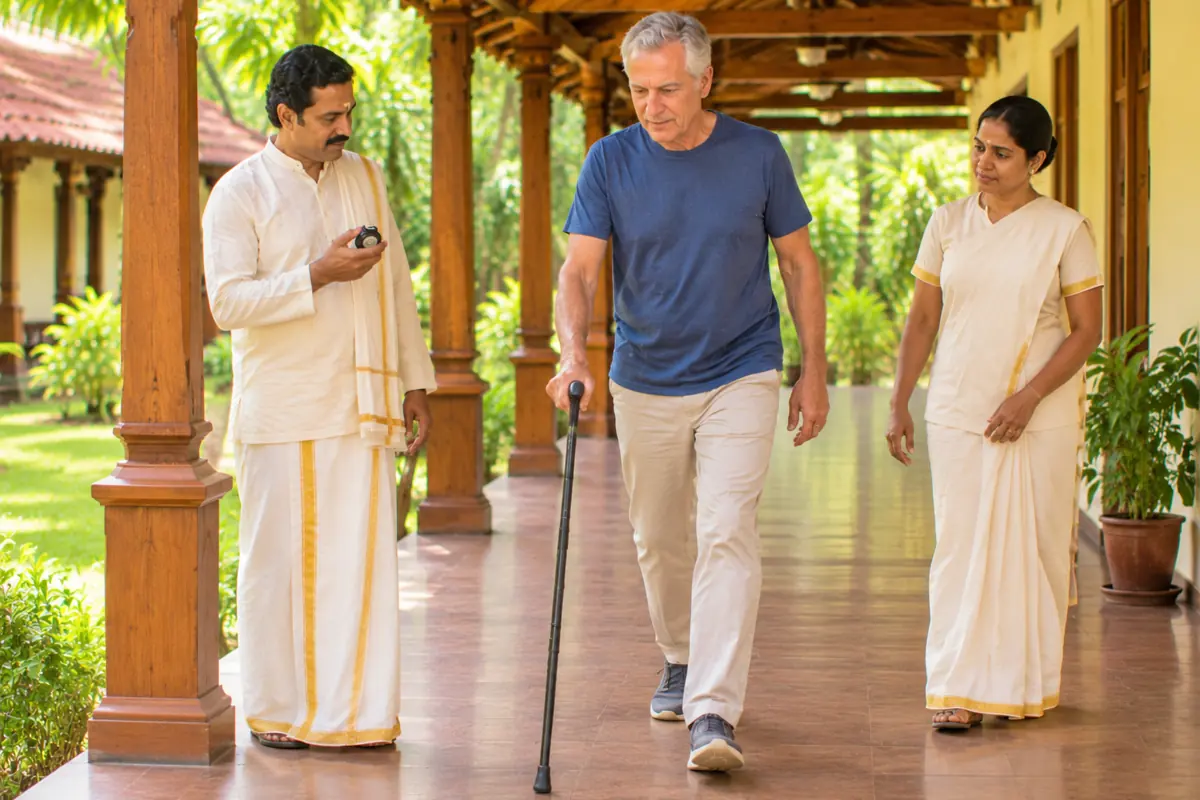
- Timed walking over a set distance, with or without an aid.
- Balance tests such as standing on one leg or sit-to-stand repeated.
- Grip strength and hand function.
- Range of movement of key joints.
- Pain and stiffness scores, in simple numbers.
- Sleep, energy and mood, noted daily.
Your own diary
A short daily note adds a great deal: how you slept, what you managed, what was hard, how your pain was. Families and caregivers can add what they notice. Patterns over days often tell more than any single score, and the diary travels home with you.
How often?
Typically, formal measures are repeated weekly or at agreed review points, with daily observations in between. A two-week stay may have a baseline and a final review; a longer stay will have several. Ask the team how often reviews happen and when you will hear the results.
Using the results
Results guide decisions: increasing exercise where progress is steady, easing off where fatigue shows, changing therapies or adding supports. A good team explains what the numbers mean in plain words and what they plan to do next.
Reading progress kindly
Progress is rarely a straight line. There will be good days and flat ones, and some measures will move faster than others. Compare yourself with your own baseline, not with others, and notice the small things, such as a steadier step or a better night. These are real gains.
Setting honest expectations
Measures show what has changed, and they cannot promise what will happen next. A thoughtful team will be open about both progress and limits, and will help you plan what comes after the stay.
Working alongside your own doctors
Please keep your own doctors informed. Share your medical summary, bring your reports and keep taking whatever you have been prescribed. Please share the final summary with your own doctors and therapists. Please do not change medicines without medical advice.
Planning the journey
Apply for your e-Medical visa on India's official portal, usually with a hospital letter, a few weeks before travel. It is valid for 60 days from first arrival, allows three entries and cannot be extended. Book flights after approval, arrange travel insurance and choose an arrival time that gives you a rested first day. Check the portal for current rules before you apply.
Your friend and hand-holder in tracking your progress: MyVaidyam
Seeing progress keeps hope alive, and that is where MyVaidyam comes in. We walk with you from your very first question to the day you return home, answering every question patiently and making sure that nothing is left to chance.
- An online consultation with an Ayurvedic physician to discuss your goals.
- Help preparing your reports and your starting-point notes.
- Guidance on choosing a reputable centre that measures and shares progress.
- Help understanding your reviews and written summary.
- Support with your e-Medical visa documents, flights, airport pickup and accommodation.
- A warm point of contact during your stay, and follow-up after you return home.
You are welcome to reach out at any stage. We would be delighted to help you begin.