This guide explains the Ayurvedic view, what a stay typically includes and how to plan with confidence. Ayurveda is offered as a complementary, supportive approach alongside your own doctor's care, never a replacement for it.
Quick Facts - Njavarakizhi
| Topic | Summary |
|---|---|
| What it is | Warmed boluses of cooked rice and milk, tied in cloth and massaged over the body |
| Other name | Shashtika shali pinda sweda |
| Typical session | Oil application, then warmed boluses in rhythmic strokes |
| Traditional use | Joint and muscle comfort |
| Standard care (NHS 111 Wales) | Exercise, weight management and pain relief for osteoarthritis |
| Cost | Compare itemised, dated quotes |
Understanding the rice of Kerala
Njavara is a traditional rice variety grown in Kerala and used both as food and in therapy. The preparation combines the rice with milk and a herbal decoction, which gives the boluses their nourishing character. The therapy is part of Kerala's cultural heritage as much as its Ayurvedic practice, and many guests enjoy seeing the preparation.
What njavarakizhi is
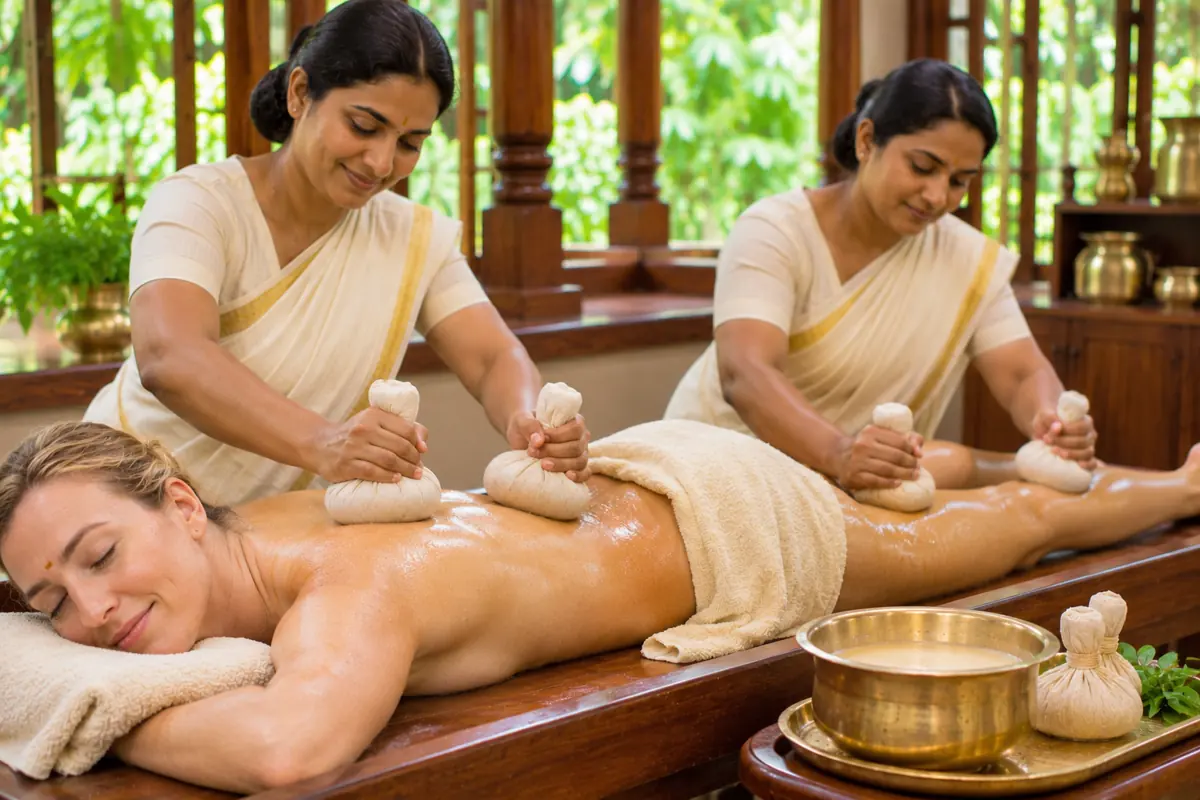
Njavara is a special variety of rice from Kerala. For this therapy it is cooked in milk and herbal decoction, tied into cloth boluses and applied warm, in rhythmic strokes, by two therapists working in unison. The physician chooses the preparation and the number of sessions.
A session, step by step
- A warm-oil application over the body.
- Boluses are warmed in the milk preparation.
- Two therapists apply them in rhythmic strokes.
- The boluses are re-warmed throughout.
- The body is wiped and you rest.
Building on usual care
NHS 111 Wales describes osteoarthritis care as exercise, weight management and pain relief, with heat or cold packs helpful for some. Njavarakizhi is offered as warm, nourishing complementary care beside that plan, and we make no claims about outcomes.
What the research shows
We did not find a joint or muscle trial that we could assess, and the single small study of children with cerebral palsy does not support its use for joints. We therefore make no effectiveness claims. NHS 111 Wales describes standard osteoarthritis care as exercise, weight management and pain relief, and njavarakizhi sits beside it as a warm, nourishing, complementary experience.
A sample programme rhythm
Every programme is individual, and this outline is only an illustration of how a stay can unfold.
- Days 1 to 3, preparing: arrival rest, a full consultation and a gentle start with oil massage.
- Days 4 to 10, njavarakizhi course: a session on chosen days, with gentle exercise, warm meals and a physician review.
- Days 11 to 14, consolidating: a lighter schedule, a review and a written plan for home.
Many guests extend their stay, and the physician will advise after the first review. Ask the centre for its own day-by-day plan.
How the boluses are prepared
The rice is cooked in the milk and herbal decoction, divided into portions and tied in cloth. The boluses are kept warm in the same liquid and used in turn. Ask your centre about how fresh preparation is organised and how the cloths are cleaned between guests.
Comfort and temperature
The boluses are applied warm, never hot, and the therapists check the temperature with you throughout. Tell the team at once if anything feels too warm, and mention numb areas or sensitive skin. Comfort comes before everything.
Aftercare
After a session you rest, keep warm and avoid cold draughts. Your therapist suggests when to bathe and what to wear. A quiet half hour afterwards is a pleasant part of the day.
Kerala, climate and the best season
Many Ayurveda centres are in Kerala, where the warm, humid climate is traditionally considered kind to the body and the monsoon months are popular for oil therapies. The drier months from October to March are comfortable for travel and sightseeing. For njavarakizhi, ask each centre which season it recommends, and whether rooms are air-conditioned or well ventilated. Ask about the season, treatment rooms and the calm of the surroundings. Our guide to the best time to travel compares the seasons.
Keeping a simple diary
A small notebook is one of the most useful things to bring. Each evening, jot down how you feel before and after each session, your sleep and your mood. After a week or two the pattern often becomes clear, and you and the physician can fine-tune the plan. A few notes each evening help your physician adapt the plan. The same notes give your own doctor a helpful picture when you return.
Travelling comfortably
A little planning makes the journey smoother. Book an aisle seat so you can stand and stretch, keep your medicines and reports in your hand luggage, and choose a flight that arrives at a comfortable hour. Plan a restful journey, arrive a day early and keep your medicines in your hand luggage. Ask the centre to arrange the transfer and a restful first day. Our guide to the attendant visa explains how a family member can travel with you.
Conversations to have before you travel
A short chat with your own doctor makes the stay smoother. Many guests ask:
- Are my medicines and plans up to date for the programme?
- How should I continue in the weeks after I return?
- Is there anything you would like the Ayurveda team to know?
- When would you like to see me after I return?
Sharing the answers with the Ayurveda physician helps the two teams work in step, and leaves you feeling confident and well supported.
Who tends to enjoy a stay
Guests who enjoy this therapy are often people who would like a calm, supervised treatment, those who value an unhurried pace and anyone who would like practical routines to take home. If you are unsure whether a stay suits you, a free online consultation is a good first step, before you book anything.
Choosing a centre
Rather than looking for a ranking, compare what matters to you: a qualified Ayurveda physician, a clear assessment, a written day-by-day plan, hygiene standards, accessible rooms and good access to a hospital. Ask each centre the same questions:
- Who will be my physician, and what are their qualifications?
- Which therapies and oils are planned for me, and why?
- How do you protect my comfort and privacy?
- How are herbal medicines sourced, and can I see the ingredient list?
- What does the quote include, and what is extra?
Preparing for your stay
Wear comfortable clothes, tell the team about skin sensitivities and food allergies, and bring your medicines. Avoid heavy meals before a session.
Planning your budget
Cost depends on room, length, therapies, physician time and medicines. Ask each centre for an itemised, dated quote for the same dates and inclusions, and add visa, flights, insurance and transfers. See the cost guide and verifying a doctor.
Travelling with confidence, and how MyVaidyam can help
- Share your reports and current medicines with the Ayurveda physician before you travel.
- Continue your prescribed medicines, and let your own doctor know your plans.
- Ask for ingredient lists for any herbal medicine, and choose labelled preparations.
- Plan rest after the flight so you can begin your stay comfortably.
- Fresh boluses are prepared for each session, and the temperature is checked throughout.
MyVaidyam can arrange a free online pre-consultation, have your reports reviewed by an Ayurvedic physician and request day-by-day plans and itemised quotes from centres so you can compare them calmly. Contact MyVaidyam to book your free online consultation.
Frequently Asked Questions on Njavarakizhi
References
- NHS 111 Wales. Osteoarthritis
- PubMed (PMID 24049406). Etiopathological study on cerebral palsy and its management by Shashtika Shali Pinda Sweda and Samvardhana Ghrita (abstract)
- NCCIH, US National Institutes of Health. Ayurvedic medicine: in depth
- Ministry of Ayush, Government of India. Official website