This guide explains the Ayurvedic view, what a stay typically includes and how to plan with confidence. Ayurveda is offered as a complementary, supportive approach alongside your own doctor's care, never a replacement for it.
Quick Facts - Pizhichil
| Topic | Summary |
|---|---|
| Other names | Sarvangadhara, Kayaseka (names vary by centre) |
| What it is | Warm medicated oil poured over the body with massage, on a wooden table (droni) |
| Duration | One clinic's page gives 45 to 60 minutes, and also one to one and a half hours |
| Course length | Set by the doctor |
| Supervision | Prescribed and reviewed by an Ayurvedic doctor |
| Cost | Compare itemised, dated quotes |
Understanding the royal oil bath
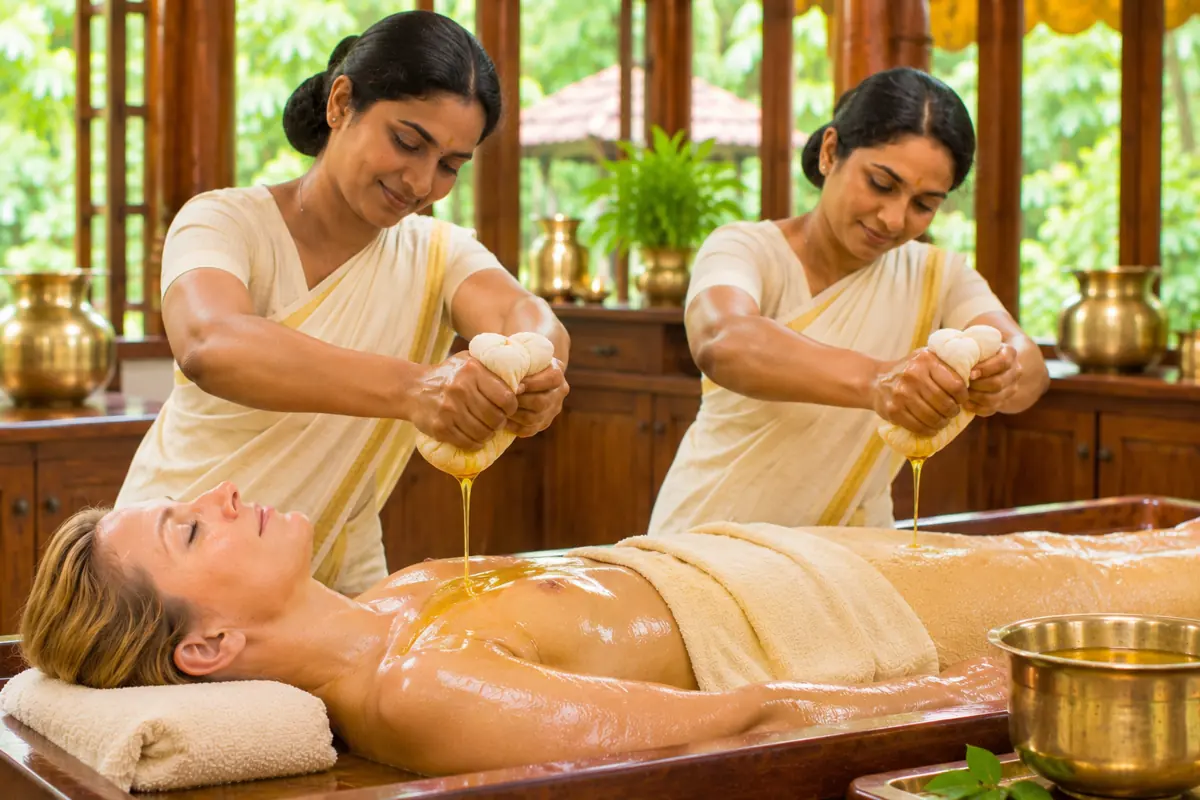
Pizhichil is known as a royal oil bath because of its generous use of warm oil and its rhythmic, synchronised massage by two or more therapists. The wooden table, called a droni, is carved to carry the oil gently away. Guests often say that it feels both luxurious and deeply restful.
What pizhichil is
In pizhichil two or more therapists pour warm medicated oil over the body in a steady stream while massaging in rhythm, with you lying on a specially made wooden table. The doctor chooses the oil, the duration and the number of days.
A session, step by step
- You change into a loincloth or gown and lie on the table.
- Warm oil is applied to the head and body.
- Therapists pour oil and massage in rhythm.
- The oil is kept warm throughout.
- The body is wiped and you rest, then bathe in warm water.
What the research shows
We did not find controlled studies of pizhichil that we could assess, and we make no effectiveness claims. It is a long-established Kerala therapy that many guests enjoy for its warmth and relaxation, prescribed and reviewed by an Ayurvedic doctor rather than chosen from a menu.
Other names and variations
| Name | Note |
|---|---|
| Pizhichil | The common Kerala name |
| Sarvangadhara | Name used by some centres |
| Kayaseka | Name used by some centres |
| Variation | Oils, durations and techniques differ by centre |
A sample programme rhythm
Every programme is individual, and this outline is only an illustration of how a stay can unfold.
- Days 1 to 3, preparing: arrival rest, a full consultation and a gentle start with oil massage.
- Days 4 to 10, pizhichil course: a session on chosen days, with rest, warm meals and a physician review.
- Days 11 to 14, consolidating: a lighter schedule, a review and a written plan for home.
Many guests extend their stay, and the physician will advise after the first review. Ask the centre for its own day-by-day plan.
Who decides the oil and the course
Your doctor decides the oil, the duration and the number of days after assessing you, and reviews you during the course. A good centre explains why, and does not offer pizhichil as a menu item. Ask for the reasoning in writing.
Comfort and temperature
The oil is applied warm, never hot, and the therapists check the temperature with you throughout. Tell the team at once if anything feels too warm. Your doctor takes your blood pressure, heart health and skin into account when planning.
Aftercare
After a session you rest, keep warm and avoid cold draughts, then bathe in warm water as advised. A quiet hour afterwards is a pleasant part of the day.
Kerala, climate and the best season
Many Ayurveda centres are in Kerala, where the warm, humid climate is traditionally considered kind to the body and the monsoon months are popular for oil therapies. The drier months from October to March are comfortable for travel and sightseeing. For pizhichil, ask each centre which season it recommends, and whether rooms are air-conditioned or well ventilated. Ask about the season, treatment rooms and the calm of the surroundings. Our guide to the best time to travel compares the seasons.
Keeping a simple diary
A small notebook is one of the most useful things to bring. Each evening, jot down how you feel before and after each session, your sleep and your mood. After a week or two the pattern often becomes clear, and you and the physician can fine-tune the plan. A few notes each evening help your physician adapt the plan. The same notes give your own doctor a helpful picture when you return.
Travelling comfortably
A little planning makes the journey smoother. Book an aisle seat so you can stand and stretch, keep your medicines and reports in your hand luggage, and choose a flight that arrives at a comfortable hour. Plan a restful journey, arrive a day early and keep your medicines in your hand luggage. Ask the centre to arrange the transfer and a restful first day. Our guide to the attendant visa explains how a family member can travel with you.
Conversations to have before you travel
A short chat with your own doctor makes the stay smoother. Many guests ask:
- Are my medicines and plans up to date for the programme?
- How should I continue in the weeks after I return?
- Is there anything you would like the Ayurveda team to know?
- When would you like to see me after I return?
Sharing the answers with the Ayurveda physician helps the two teams work in step, and leaves you feeling confident and well supported.
Who tends to enjoy a stay
Guests who enjoy this therapy are often people who would like a calm, supervised treatment, those who value an unhurried pace and anyone who would like practical routines to take home. If you are unsure whether a stay suits you, a free online consultation is a good first step, before you book anything.
Making the most of your free time
Between therapies there is time to enjoy the setting: strolls in the garden, reading in the shade, listening to music, gentle conversation with other guests or a visit to a nearby temple or backwater. The team can suggest easy outings that fit your energy. Garden walks, reading and quiet time are popular. Many guests find that this unhurried time is part of what helps them relax and recover.
Questions to ask before you book
These questions help you compare centres and plan with confidence.
- Who will be my physician, and what are their qualifications?
- Can the plan work around my usual medicines and appointments?
- Which oil is used, and how is the temperature checked?
- What does the quote include, and what is extra?
Preparing for your stay
Tell the team about your blood pressure, heart condition, skin sensitivities and any fever. Wear comfortable clothes, bring your medicines and avoid heavy meals before a session.
Planning your budget
Cost depends on room, length, therapies, physician time and medicines. Ask each centre for an itemised, dated quote for the same dates and inclusions, and add visa, flights, insurance and transfers. See the cost guide and verifying a doctor.
Travelling with confidence, and how MyVaidyam can help
- Share your reports and current medicines with the Ayurveda physician before you travel.
- Continue your prescribed medicines, and let your own doctor know your plans.
- Ask for ingredient lists for any herbal medicine, and choose labelled preparations.
- Plan rest after the flight so you can begin your stay comfortably.
- Your doctor prescribes and reviews pizhichil, with the oil temperature checked throughout.
MyVaidyam can arrange a free online pre-consultation, have your reports reviewed by an Ayurvedic physician and request day-by-day plans and itemised quotes from centres so you can compare them calmly. Contact MyVaidyam to book your free online consultation.