This guide explains how supportive Ayurvedic care can be part of life with chronic neurological disability, and how to set goals that are realistic and meaningful: what supportive care means, how to choose goals, who should be involved, what Ayurveda may offer, how to review and adjust goals and how families can help. And throughout, it shows how MyVaidyam can walk beside you as your friend and guide.
Ayurveda is offered here as a complementary, supportive approach that works alongside your own doctor's care, never as a replacement for it. Your own doctors lead your neurological care. This guide does not promise recovery.
Quick Facts - Supportive Ayurveda Care for Chronic Neurological Disability
| Topic | Summary |
|---|---|
| Aim | Comfort, function, quality of life |
| Goals | Small, specific, reviewed regularly |
| Involve | You, family, doctors, therapists |
| Ayurvedic support | Warmth, relaxation, diet, routine |
| Keep | Your neurological care and medicines |
| Not | A promise of recovery or cure |
| Visa | e-Medical visa: 60 days from first arrival, triple entry, non-extendable |
| Your companion | MyVaidyam: planning, coordination and support before, during and after |
Redefining progress
With chronic neurological disability, progress may be slow, uneven or about maintaining what you have. That is no less valuable. A steadier walk, an easier morning, better sleep, fewer cramps, a calmer mind or a happier meal are real gains that change daily life. Setting goals around such things keeps hope grounded and encouraging.
Goals that grow from the ground up
Quality of life
Comfort, dignity, participation
Independence
Transfers, dressing, eating, mobility
Function
Strength, balance, hand use, speech
Comfort and routine
Sleep, digestion, mood, daily rhythm
Small, practical goals often matter most, and they support the bigger ones.
What "supportive care" means
Supportive care looks after the whole person alongside the main medical treatment. It is concerned with comfort, relaxation, sleep, digestion, mood, nourishment and everyday function. In an Ayurvedic setting, it draws on warmth, gentle therapies, diet, routine and a calm, caring environment. It sits beside your neurologist's and therapists' care, never in place of it.
How to choose realistic goals
- Start with what matters most to you in daily life.
- Make goals specific: "walk to the garden gate" rather than "get better".
- Keep them small enough to achieve in weeks.
- Link each goal to an action you can practise.
- Include comfort and wellbeing goals as well as function.
- Agree how you will know you have reached them.
Who should be involved
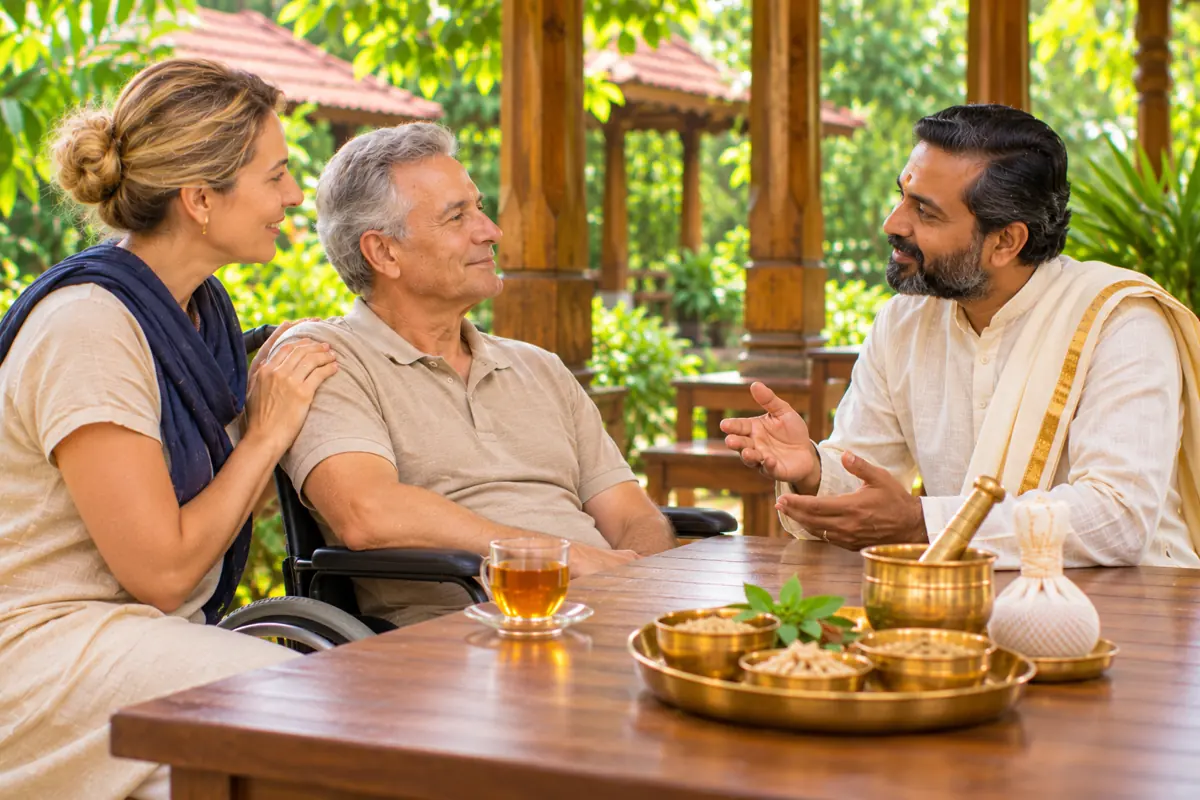
The most useful goals are set together: you, your family or caregiver, your neurologist, your therapists and the Ayurvedic physician. Your own doctors give the medical framework, your therapists suggest specific targets and the centre's team adapts the programme. Share your goals with everyone so that they pull in the same direction.
What Ayurveda may offer
Ayurveda traditionally offers warm oil massage and relaxation therapies, a nourishing diet adapted to your digestion and swallowing, regular routines, breathing practices and a calm, attentive environment. Many guests with chronic conditions describe feeling more relaxed, sleeping better and experiencing less muscle tightness. These are supportive effects, and your neurological care continues alongside.
A day at a residential centre
| Time | Typical activity |
|---|---|
| Early morning | Warm water, gentle mobility |
| Morning | Warm, gentle therapy |
| Late morning | Physiotherapy and practice of daily skills |
| Midday | Light meal and rest |
| Afternoon | Relaxation, breathing, gentle activity |
| Evening | Light supper, calm, early sleep |
Reviewing and adjusting goals
Goals are not fixed. Review them at regular intervals with your therapist: which were achieved, which need more time and which no longer matter. Celebrate what has been done, and adjust the next step. A diary or simple chart helps. If a goal feels too heavy, make it smaller; if it was easy, go a little further.
How families can help
Families can encourage practice, notice small changes and share in the celebration. They can also help keep goals realistic and kind, avoiding comparison with the past or with other people. Looking after the caregiver matters too, and a calm, rested family is the best support.
Setting honest expectations
No programme can promise recovery from a chronic neurological condition, and a thoughtful team will say so plainly. What a residential stay can offer is attention, structure, comfort and encouragement, and a chance to build habits that support your days. Honest goals protect hope.
Comfort, sleep and mood
Goals do not have to be about movement alone. Better sleep, easier digestion, less anxiety and a brighter mood are among the most valued gains, and they make everything else easier. Ayurvedic centres often attend closely to these, through routine, warm therapies, diet and calm surroundings. Ask the physician which of these could be goals for you, and how you will notice them.
When goals feel out of reach
There are days when goals feel too far away. That is natural, and it does not mean failure. A good team will help you make the goal smaller, find another route or focus for a while on comfort. Speaking openly about low days, with your family and your doctors, is part of the care and often the first step to feeling better.
Working alongside your own doctors
Please keep your own doctors informed. Share your medical summary, bring your reports and keep taking whatever you have been prescribed. Please keep your own doctors informed, and continue your prescribed medicines as advised. Please do not change medicines without medical advice.
Choosing a centre
Look for a qualified Ayurvedic doctor (BAMS or MD Ayurveda), registered with the appropriate board, experience with neurological guests, trained therapists, nursing support, accessibility and a hospital nearby. Be cautious of anyone who promises recovery or who dismisses your goals.
Planning the journey
Apply for your e-Medical visa on India's official portal, usually with a hospital letter, a few weeks before travel. It is valid for 60 days from first arrival, allows three entries and cannot be extended. Book flights after approval, arrange travel insurance and choose an arrival time that gives you a rested first day. Check the portal for current rules before you apply.
Your friend and hand-holder in setting your goals: MyVaidyam
Good goals start with a good conversation, and that is where MyVaidyam comes in. We walk with you from your very first question to the day you return home, answering every question patiently and making sure that nothing is left to chance.
- An online consultation with an Ayurvedic physician, together with family if you wish.
- Help preparing your medical summary and the goals you would like to discuss.
- Guidance on choosing a reputable, accessible centre.
- Help planning comfortable travel for you and your companion.
- Support with your e-Medical visa documents, flights, airport pickup and accommodation.
- A warm point of contact during your stay, and follow-up after you return home.
You are welcome to reach out at any stage. We would be delighted to help you begin.