This guide explains how yoga therapy and supportive Ayurvedic care may be combined to help joint mobility. It covers why your doctor comes first, what yoga therapy is, how it differs from a general class, how a joint-friendly session is built, how Ayurveda's warm therapies fit alongside, what a residential day looks like and how to continue at home. And throughout, it shows how MyVaidyam can walk beside you as your friend and guide.
Ayurveda is offered here as a complementary, supportive approach that works alongside your own doctor's care, never as a replacement for it. It does not promise to restore a joint.
Quick Facts - Yoga Therapy and Ayurveda for Joint Mobility
| Topic | Summary |
|---|---|
| What it is | Tailored gentle movement, breath and relaxation for joints |
| First step | Assessment by your doctor or physiotherapist |
| Ayurvedic support | Warm therapies, diet, routine |
| Session style | Slow, adapted, supported by props |
| Pain | Used as a guide, never pushed |
| Not | A promise of restored movement |
| Visa | e-Medical visa: 60 days from first arrival, triple entry, non-extendable |
| Your companion | MyVaidyam: planning, coordination and support before, during and after |
Why movement matters for joints
Joints are nourished by movement. Gentle, regular motion helps spread the lubricating fluid in the joint, keeps surrounding muscles strong and maintains the range we need for daily life. When pain makes us stop moving, stiffness grows, and a cycle begins. The aim of joint-friendly yoga is to restart movement gently, within comfort.
A gentle sequence for stiff joints
Warm
Warm oil, warmth, relaxed muscles
Mobilise
Easy joint circles, slow stretches
Strengthen
Gentle holds, breath-led poses
Settle
Breathing, rest, quiet
Sessions follow a calm rhythm, adapted to each person.
Assess first
Please have persistent joint pain or stiffness assessed. Ask your doctor or physiotherapist which joints are involved, which movements to avoid and whether you are fit to travel. Red, hot, swollen joints, sudden severe pain or a joint that locks should be seen promptly. Share the assessment with the centre so that your yoga therapist can plan around it.
What yoga therapy is
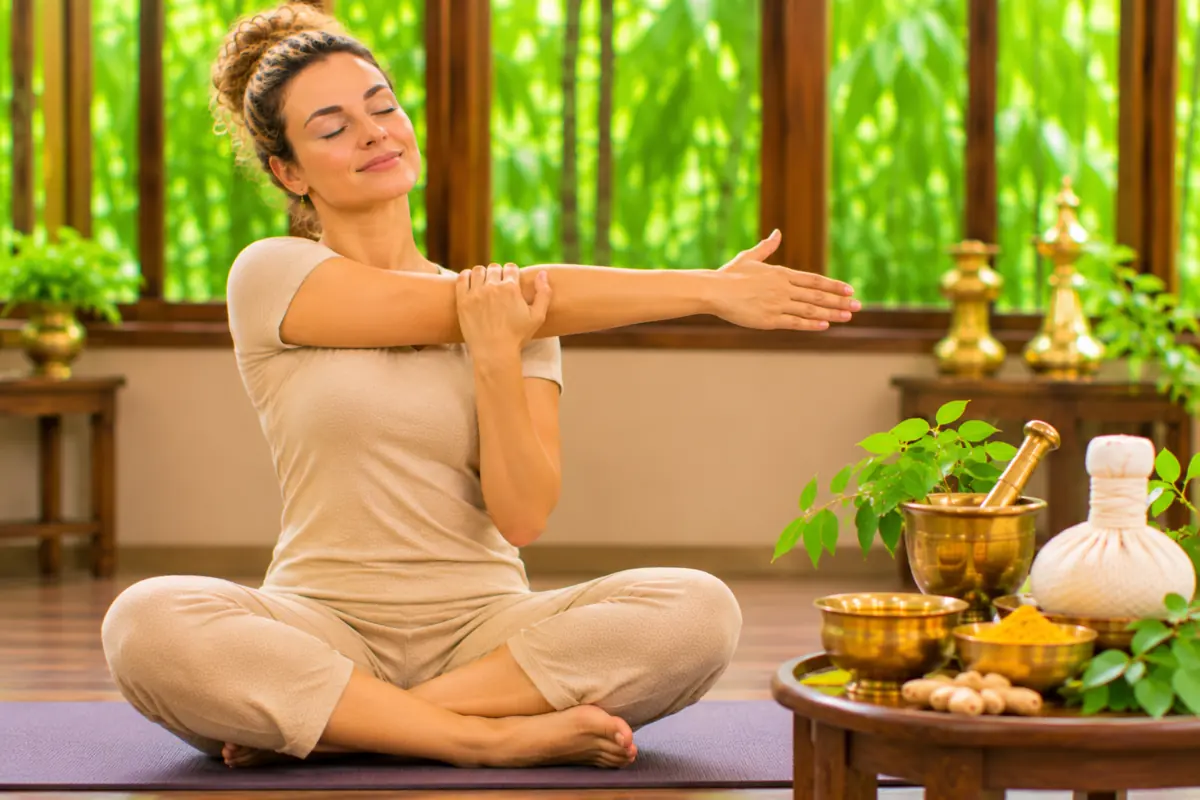
Yoga therapy applies yoga's tools, such as postures, breath practices, relaxation and attention, to a particular health need, in a way tailored to the person. It differs from a general class in that the therapist has assessed you, adapts every movement, uses props and works with your doctors' advice. The pace is slower and the focus is on comfort and function.
A joint-friendly session
- Warm-up: gentle joint circles, done lying or seated.
- Slow range-of-movement work, within comfort.
- Supported strengthening, often with a chair, wall or bolster.
- Standing balance, held close to a support.
- Breath practices to ease tension.
- A final rest, so the body can settle.
Adapting for different joints
For knees, poses are done with bent knees, well supported and avoiding deep squats. For hips, gentle openings are done lying down. For shoulders, arm movements are slow and below shoulder height at first. For hands and wrists, gentle opening and closing, and warm soaks beforehand. A skilled therapist watches your face as well as your posture, and stops short of discomfort.
How Ayurveda may support
Ayurveda associates stiff, aching joints with dryness and cold, and its traditional response is warmth and oil. Supportive programmes may include warm herbal oil massage, gentle steam, warm herbal poultices and a warm, nourishing diet. These can relax the muscles around a joint and make movement feel easier, which is why they are often scheduled before yoga or physiotherapy. Strong pressure on an irritated joint is avoided.
A day at a residential centre
| Time | Typical activity |
|---|---|
| Early morning | Warm water, breathing, gentle joint mobility |
| Morning | Warm therapy for the affected joints |
| Late morning | Yoga therapy and physiotherapy |
| Midday | Light meal and rest |
| Afternoon | Gentle walk, relaxation |
| Evening | Light supper, calm, early sleep |
Taking it home
- Ask for a short written sequence with pictures.
- Practise a little every day, even ten minutes.
- Warm the joints first, with a bath or shower.
- Keep walking, building gradually.
- Follow up with your doctor and share the centre's summary.
Setting honest expectations
Joint conditions vary, and some stiffness may remain. No programme can promise to restore a joint, and the centre will say so. What many guests find is that regular, gentle practice helps them move with more ease and confidence, and that is a gain worth having.
Breath: the quiet partner of movement
Breath links every movement in yoga therapy. Slow, easy breathing signals the body to relax, which lets muscles around a stiff joint soften, and it gives you a simple way to check your effort: if the breath becomes strained, the movement is too much. Many guests find that learning to breathe through gentle movement is the most useful skill they take home.
Working alongside your own doctors
Please keep your own doctors informed. Share your medical summary, bring your reports and keep taking whatever you have been prescribed. Please keep taking prescribed medicines, and discuss any new therapy with your own doctors first. Please do not change medicines without medical advice.
Choosing a centre
Look for a qualified Ayurvedic doctor (BAMS or MD Ayurveda), registered with the appropriate board, a trained yoga therapist, a physiotherapist on the team and a clear written plan. Be cautious of anyone who promises to cure arthritis or who pushes you into deep poses.
Planning the journey
Apply for your e-Medical visa on India's official portal, usually with a hospital letter, a few weeks before travel. It is valid for 60 days from first arrival, allows three entries and cannot be extended. Book flights after approval, arrange travel insurance and choose an arrival time that gives you a rested first day. Check the portal for current rules before you apply.
Your friend and hand-holder in finding the right programme: MyVaidyam
A good plan starts with a good conversation, and that is where MyVaidyam comes in. We walk with you from your very first question to the day you return home, answering every question patiently and making sure that nothing is left to chance.
- An online consultation with an Ayurvedic physician to discuss your joints and goals.
- Help preparing your health summary and reports.
- Guidance on choosing a reputable centre with trained yoga therapists and physiotherapy.
- Help understanding your written plan.
- Support with your e-Medical visa documents, flights, airport pickup and accommodation.
- A warm point of contact during your stay, and follow-up after you return home.
You are welcome to reach out at any stage. We would be delighted to help you begin.