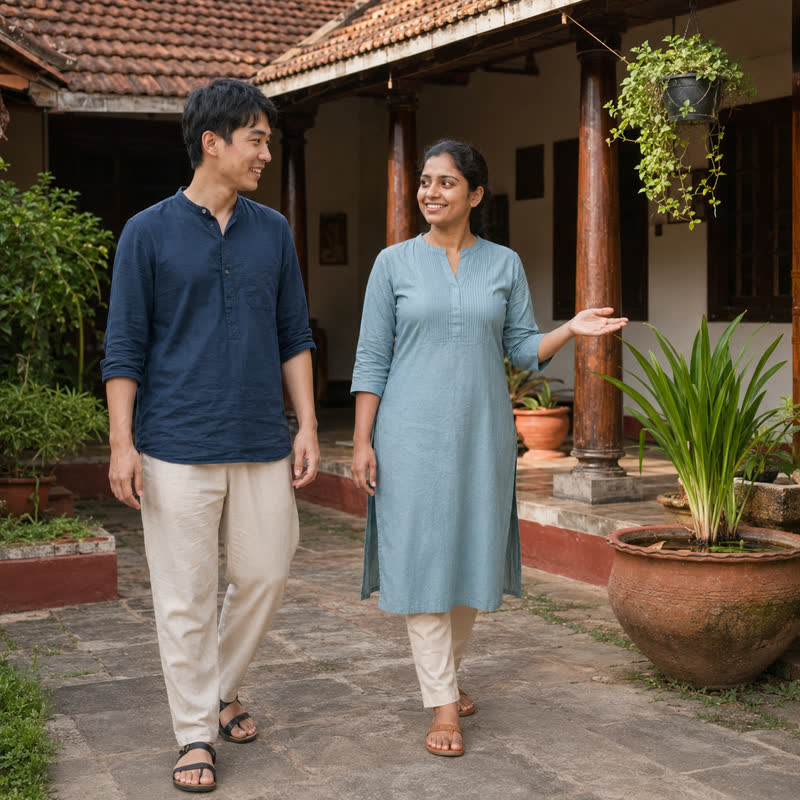
This guide explains the thinking behind meals at a residential centre, what you may be served, how the diet is adapted to the individual, to men and women, and to older guests, what to tell the kitchen and how to carry the habits home. And throughout, it shows how MyVaidyam can walk beside you as your friend and guide.
Ayurveda is offered here as a complementary, supportive approach that works alongside your own doctor's care, never as a replacement for it. This article describes general principles, and your physician will shape the plan for you.
Quick Facts - Ayurvedic Diet During a Residential Treatment Program for International Patients
| Topic | Summary |
|---|---|
| Principle | Food is part of treatment, planned with your therapies |
| Typical meals | Warm, simple, freshly cooked, easily digested |
| Common ingredients | Rice, lentils, vegetables, ghee, mild spices |
| Adapted to | Your constitution, health, age and programme stage |
| Tell the kitchen | Allergies, dietary needs and any medical diet |
| Often asked to avoid | Alcohol and outside food during the stay |
| Visa | e-Medical visa: 60 days from first arrival, triple entry, non-extendable |
| Your companion | MyVaidyam: planning, coordination and support before, during and after |
Why food is part of treatment
Ayurveda places digestion, called agni, at the centre of health. Well-digested food nourishes the body, while food that is hard to digest is thought to burden it. A residential stay offers something rare: complete control of the day's meals, so that every plate supports the programme. This is why the kitchen at a good centre works hand in hand with the physician.
Many guests are surprised to find that the diet feels like a quiet pleasure rather than a restriction. Food arrives warm and fragrant, at the same time each day, with nothing to plan or decide.
A balanced plate: the six tastes
Sweet
Rice, grains, milk, ghee
Sour
Buttermilk, lemon, tamarind
Salty
A little rock salt
Pungent
Ginger, pepper, mustard
Bitter
Greens, turmeric, bitter gourd
Astringent
Lentils, beans, pomegranate
Your physician adjusts the balance for you.
Ayurveda describes six tastes: sweet, sour, salty, pungent, bitter and astringent. A thoughtful kitchen aims to include them across the day, in the amounts that suit you, rather than leaning heavily on one.
What a meal at a residential centre is like
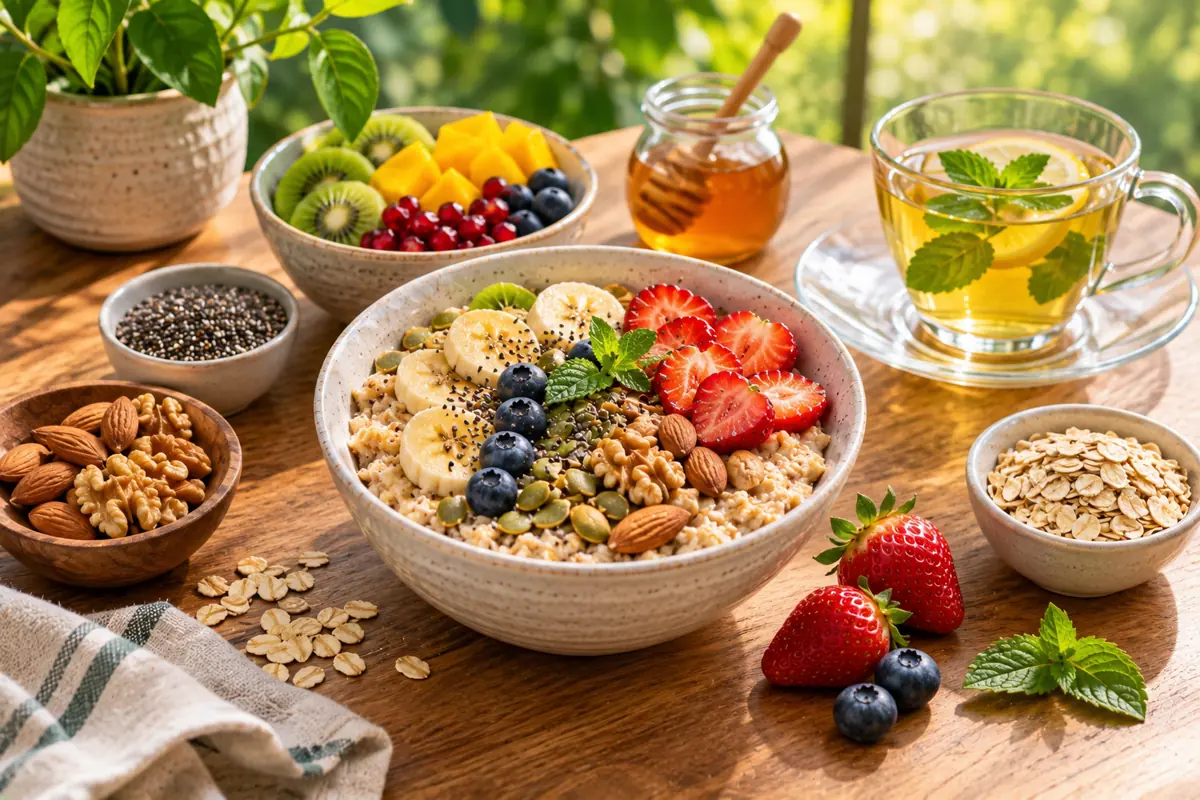
Meals are usually vegetarian, freshly cooked and served warm. You may be offered a simple breakfast of porridge, steamed rice cakes or lightly spiced vegetables, a main meal of rice with lentils and cooked vegetables, and a lighter supper. Spices such as cumin, coriander, fennel, ginger and turmeric are used gently, for flavour and for digestion. Ghee is used in measured amounts. Food is rarely cold, fried or heavily processed.
Drinks and daily habits
Warm water is the quiet companion of an Ayurvedic day. Many centres serve boiled water throughout the day, and sometimes a gentle herbal water made with ginger, cumin, coriander or fennel. Meals are eaten at regular times, seated and unhurried, with the last meal early in the evening. Many guests find that these simple habits help their sleep and their appetite settle within days.
A diet shaped around you
There is no single Ayurvedic diet. Your physician considers your constitution, digestion, health conditions, medicines, age and the season, and then shapes the plan. One guest may be advised to favour warm, oily and nourishing food, another to choose lighter, drier dishes, and a third to take small amounts of certain foods. The kitchen follows the physician's instructions, so what you are served may differ from the person at the next table.
Food and your therapies
Your diet also moves with your programme. In the preparation stage, meals are light and easy to digest. Around the main procedures of Panchakarma, they become lighter still, and afterwards they return gradually to richer food over several days, as described in our guide to the main procedures. For many guests, this graded approach is one of the most valuable things they learn.
Men's nutrition during a stay
Men often arrive with a good appetite and ask whether the food will be enough. The answer is nearly always yes. Meals are filling, with rice, lentils, vegetables and ghee, and physicians pay attention to strength, energy and activity levels. If you train regularly or have a physically demanding job, tell your physician so that the plan can reflect it.
Nutrition for older guests
For older guests, the kitchen can offer softer, smaller and more frequent meals, adapted to chewing and swallowing, and to appetite that may vary through the day. Warm fluids, gentle spices and easily digested foods are the foundation. Tell the physician about any difficulty with eating, and ask how the kitchen will support you.
Allergies, vegetarian and special diets
Most Ayurveda centres serve vegetarian food. If you are vegan, follow a gluten-free diet or have allergies, say so before you arrive and again on your first day, and ask how the kitchen manages them. Tell the physician if you follow a medical diet, such as for diabetes or high blood pressure, so that the plan can be coordinated, and keep taking your prescribed medicines. A good kitchen will happily explain what is in each dish.
What to leave behind during your stay
Most centres ask guests to avoid alcohol and outside food during the programme, and to skip cold drinks, heavy snacks and late meals. This is not a test of willpower. The aim is simply to let the programme work as it was designed to, and most guests find that they miss these things far less than they expected.
Eating well together
If a companion is travelling with you, meals are an easy way to share the experience. Many centres offer the same food to companions, adapted to their needs, and some arrange a separate meal plan. Ask in advance, so that everyone is looked after.
Carrying the habits home
The most lasting benefits of a residential diet are often the simplest. Before you leave, ask the physician for diet notes you can follow at home, and share them with your own doctors. Warm water in the morning, regular mealtimes, a lighter supper and a few well-loved spices can carry the spirit of your stay into everyday life.
Working alongside your own doctors
Please keep your own doctors informed. Share your medical summary, bring your reports and keep taking whatever you have been prescribed. If you follow a medical diet, ask your doctors how it should be adapted during the stay. Please do not change medicines without medical advice.
Planning the journey
Apply for your e-Medical visa on India's official portal, usually with a hospital letter, a few weeks before travel. It is valid for 60 days from first arrival, allows three entries and cannot be extended. Book flights after approval, arrange travel insurance and choose an arrival time that gives you a rested first day. Check the portal for current rules before you apply.
Your friend and hand-holder on the way to a nourishing stay: MyVaidyam
Knowing that your food will suit you makes a stay feel like home, and that is where MyVaidyam comes in. We walk with you from your very first question to the day you return home, answering every question patiently and making sure that nothing is left to chance.
- An online consultation with an Ayurvedic physician to discuss your health, your usual diet and your goals.
- Help sharing your dietary needs and allergies with the centre before you arrive.
- Guidance on choosing a reputable centre whose kitchen suits your needs.
- Help checking what is included and what is arranged separately.
- Support with your e-Medical visa documents, flights, airport pickup and accommodation.
- A warm point of contact during your stay, and follow-up after you return home.
You are welcome to reach out at any stage. We would be delighted to help you plan a nourishing stay.