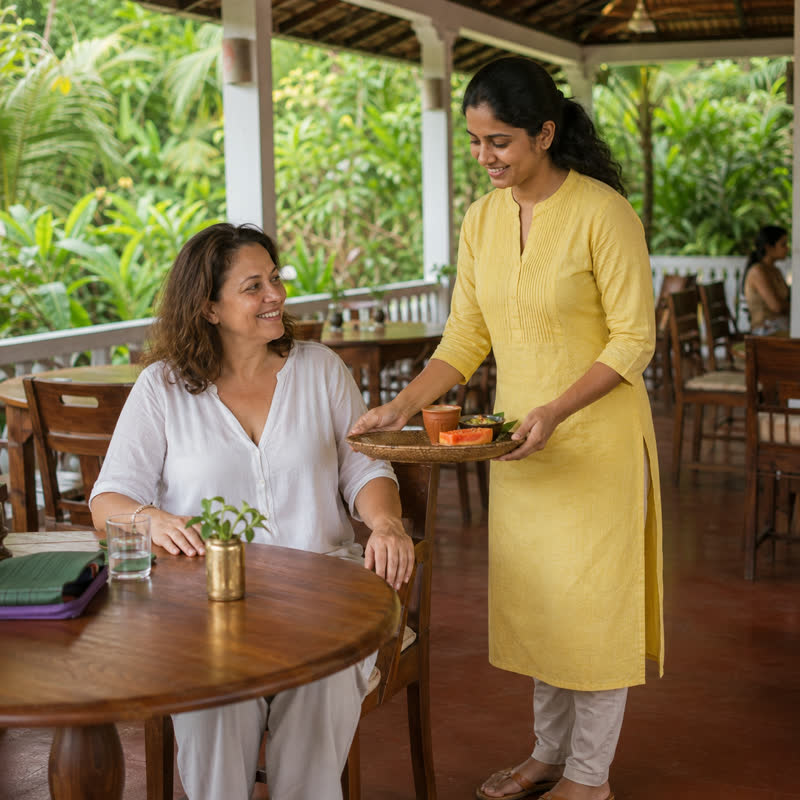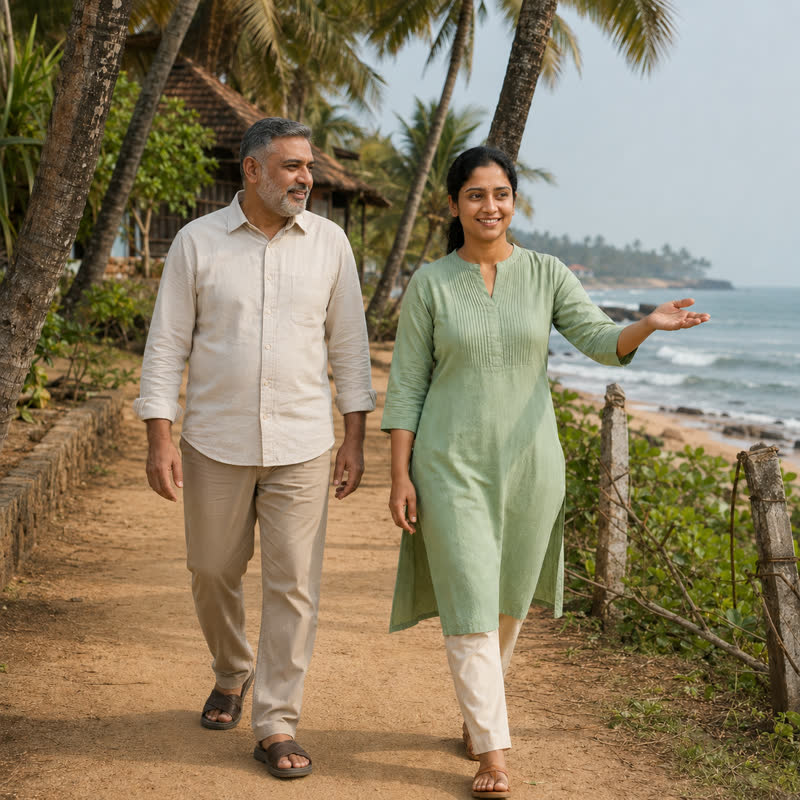
Today we call this mindful eating, and it is one of the simplest and most lasting gifts of a residential stay.
This guide explains in plain language how mindful eating works in Ayurveda: why your doctor's dietary advice comes first, the traditional guidelines for eating, how to practise step by step, what a mindful meal feels like, how it helps digestion and satisfaction, what a residential day looks like and how to practise at home. And throughout, it shows how MyVaidyam can walk beside you as your friend and guide.
Ayurveda is offered here as a complementary, supportive approach that works alongside your own doctor's care, never as a replacement for it. It does not promise any health outcome.
Quick Facts - Mindful Eating in Ayurveda
| Topic | Summary |
|---|---|
| Principle | How you eat matters as much as what you eat |
| Key habits | Seated, calm, slow, no screens, stop short of full |
| Traditional advice | Eat when hungry, in a pleasant place |
| Helps with | Digestion, satisfaction, awareness of hunger |
| First step | Follow your doctor's dietary advice |
| Not | A promise of any health outcome |
| Visa | e-Medical visa: 60 days from first arrival, triple entry, non-extendable |
| Your companion | MyVaidyam: planning, coordination and support before, during and after |
Eating, but not tasting
Many of us finish a meal and could not say what it tasted like. Attention has wandered to phones, news and worries, and the body, receiving food without notice, signals fullness late. Ayurveda observes that such meals leave us heavy and unsatisfied, and recommends bringing awareness back to the table.
A mindful meal, in six steps
1. Pause: breathe before the first bite
2. Look: notice colour, aroma, texture
3. Taste: small bites, chewed well
4. Put down the fork between mouthfuls
5. Notice fullness, stop a little short
6. Rest briefly before moving on
The practice is simple, and anyone can start with a single meal.
Start with your doctor
Please follow any dietary advice from your doctor or dietitian, particularly for diabetes, kidney, heart or digestive conditions, and tell the centre if you have a history of disordered eating, since a gentle approach is best. Mindful eating works within those limits. Continue every prescribed medicine.
What Ayurveda advises
- Eat when truly hungry, not out of habit.
- Eat in a calm, pleasant, clean place.
- Sit down, and give the meal your attention.
- Eat neither too fast nor too slow.
- Chew well, and stop before you feel full.
- Avoid eating when upset, rushed or distracted.
Practising step by step
Begin with one meal a day. Sit, put the phone away and take a slow breath. Look at the food, notice its smell and take a small bite. Chew until the flavour changes, pause, and notice how hungry you still feel. Many people find that halfway through they are surprised by how satisfied they are.
A day at a residential centre
| Time | Typical activity |
|---|---|
| Early morning | Warm water, breathing, gentle stretches |
| Morning | Light, warm breakfast, eaten slowly |
| Late morning | Yoga or a walk |
| Midday | Main meal in a quiet dining room, then rest |
| Afternoon | Relaxation, quiet time |
| Evening | Light, early supper, calm, early sleep |
Taking it home
- Practise one mindful meal a day.
- Eat seated, without screens.
- Stop a little short of full.
- Keep regular meal times.
- Share the centre's summary with your doctor.
Working alongside your own doctors
Please keep your own doctors informed. Share your medical summary, bring your reports and keep taking whatever you have been prescribed. Please keep taking prescribed medicines, and discuss any change in eating habits with your own doctors first. Please do not change medicines without medical advice.
Choosing a centre
Look for a qualified Ayurvedic doctor (BAMS or MD Ayurveda), registered with the appropriate board, a dietitian, a calm dining room, a kitchen that cooks to your plan and a clear written plan. Be cautious of anyone who promises weight loss through mindfulness alone.
Planning the journey
Apply for your e-Medical visa on India's official portal, usually with a hospital letter, a few weeks before travel. It is valid for 60 days from first arrival, allows three entries and cannot be extended. Book flights after approval, arrange travel insurance and choose an arrival time that gives you a rested first day. Check the portal for current rules before you apply.
Your friend and hand-holder in finding the right programme: MyVaidyam
A good plan starts with a good conversation, and that is where MyVaidyam comes in. We walk with you from your very first question to the day you return home, answering every question patiently and making sure that nothing is left to chance.
- An online consultation with an Ayurvedic physician to discuss your eating habits and goals.
- Help preparing your health summary and dietary notes.
- Guidance on choosing a reputable centre with a calm dining setting.
- Help understanding your written plan.
- Support with your e-Medical visa documents, flights, airport pickup and accommodation.
- A warm point of contact during your stay, and follow-up after you return home.
You are welcome to reach out at any stage. We would be delighted to help you begin.