This guide explains in plain terms how a constitution, or prakriti, influences diet, what the three doshas traditionally suggest, how a physician combines this with your present state and season, and how to enjoy the results. And throughout, it shows how MyVaidyam can walk beside you as your friend and guide.
Ayurveda is offered here as a complementary, supportive approach that works alongside your own doctor's care, never as a replacement for it.
Quick Facts - How Ayurvedic Diets Are Personalized by Constitution
| Topic | Summary |
|---|---|
| Based on | Constitution, digestion, season and current state |
| Three doshas | Vata, pitta, kapha |
| Common thread | Warm, fresh, simply spiced food |
| Planned by | Your Ayurvedic physician |
| Adapted for | Allergies, preferences and medical diets |
| Not | A one-size-fits-all list |
| Visa | e-Medical visa: 60 days from first arrival, triple entry, non-extendable |
| Your companion | MyVaidyam: planning, coordination and support before, during and after |
Food as part of care
Ayurveda holds that what we eat, when we eat and how we eat all matter. A diet that suits one person may not suit another, and the same person may need different food in different seasons or at different times of life. Personalising the diet is therefore a natural part of a residential programme.
Three constitutions, three styles of eating
Vata type
Light, quick, variable
- Warm, moist, grounding foods
- Regular mealtimes
- Soups, stews, cooked grains
- Gentle spices
Pitta type
Sharp, warm, focused
- Cooling, fresh foods
- Sweet, bitter, astringent tastes
- Avoid very spicy, sour dishes
- Do not skip meals
Kapha type
Steady, solid, slow
- Light, warm, dry foods
- Pungent and bitter tastes
- Smaller portions
- Lighter evenings
These are traditional generalisations. Most people are a blend, and your physician will look at you as a whole.
What is a constitution?
Prakriti is your natural constitution, thought to be set at birth and described through the three doshas. Your physician assesses it through conversation, observation and pulse, and also notes your current state, or vikriti, which may differ from your usual pattern. Both shape what is chosen for you.
How the doshas guide food choices
| Dosha | Traditional tendency | Dietary leaning |
|---|---|---|
| Vata | Tends to be light, dry and variable | Warm, moist, grounding food and regular meals |
| Pitta | Tends to be warm, sharp and intense | Cooling, mild food, without long gaps between meals |
| Kapha | Tends to be heavy, steady and slow | Light, warm, stimulating food in modest portions |
This is a general guide only. Your physician may suggest something quite different once they know you.
Beyond constitution: digestion and season
Constitution is only one factor. A physician also asks about your digestion, appetite and energy, and considers the season, because the same food may suit you differently in a hot, humid month and a cool, dry one. During a Panchakarma programme, the diet also follows the stage you are in, from light preparation to graded recovery.
What a personalised plate may look like
You may find that the centre serves a base of rice, lentils and cooked vegetables, adjusted for you: a little more ghee here, fewer pungent spices there, a cooling herb in your water, or smaller evening portions. Meals are usually vegetarian, freshly cooked and warm, and eaten in calm surroundings.
Allergies, preferences and medical diets
Tell the kitchen about allergies, intolerances and preferences, and about any diet advised by your own doctors, such as for diabetes or heart health. A good centre will adapt meals while keeping the Ayurvedic principles gentle and practical. Nothing in a personalised plan should conflict with your own doctor's advice.
Taking it home
- Ask your physician for a written summary of what suited you.
- Choose simple, fresh foods that you enjoy.
- Eat at regular times and avoid late, heavy suppers.
- Adjust gently with the seasons.
- Do not follow strict restrictions for long without guidance.
Seasons and the rhythm of the day
Ayurveda also adapts food to the time of year and the time of day. In hot, humid weather, lighter and more cooling foods are favoured, while in cool, dry weather, warm, moist and slightly richer dishes are more common. The main meal is traditionally taken at midday, when digestion is thought to be strongest, with a lighter, earlier supper. Your physician will tell you how this applies in your centre.
Tastes and balance
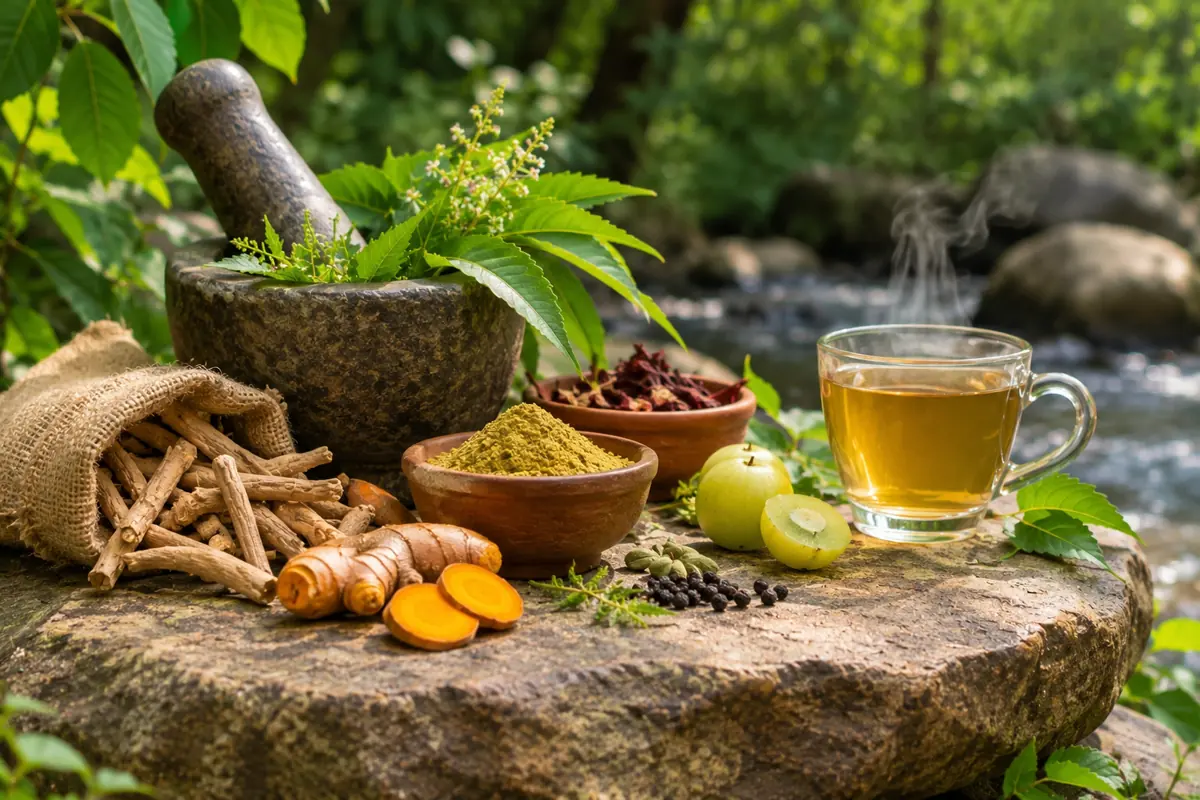
Ayurveda describes six tastes: sweet, sour, salty, pungent, bitter and astringent. A balanced meal includes a little of each, and a personalised plan may gently emphasise some and reduce others according to your constitution. Spices such as cumin, coriander, fennel and ginger are used in small amounts to support digestion, rather than to make food hot.
Eating well beyond the plate
Personalisation is not only about what is on the plate. Eating slowly, in a calm place, at regular times, and only when hungry is considered just as important. Guests often find that these habits are the easiest and most lasting gifts to take home.
Working alongside your own doctors
Please keep your own doctors informed. Share your medical summary, bring your reports and keep taking whatever you have been prescribed. If you have a medical condition, check with your own doctors before changing your diet. Please do not change medicines without medical advice.
Choosing a centre that personalises well
Look for a qualified Ayurvedic doctor (BAMS or MD Ayurveda), registered with the appropriate board, who asks about your food habits, explains the reasoning and works with a kitchen that can follow it. Be cautious of anyone who labels you with a type in a few seconds and hands you a long list of forbidden foods.
Planning the journey
Apply for your e-Medical visa on India's official portal, usually with a hospital letter, a few weeks before travel. It is valid for 60 days from first arrival, allows three entries and cannot be extended. Book flights after approval, arrange travel insurance and choose an arrival time that gives you a rested first day. Check the portal for current rules before you apply.
Your friend and hand-holder in eating well on your journey: MyVaidyam
Good food is one of the joys of an Ayurveda stay, and that is where MyVaidyam comes in. We walk with you from your very first question to the day you return home, answering every question patiently and making sure that nothing is left to chance.
- An online consultation with an Ayurvedic physician to discuss your diet and goals.
- Help noting allergies, preferences and medical diets.
- Guidance on choosing a reputable centre with a thoughtful kitchen.
- Help understanding your dietary plan.
- Support with your e-Medical visa documents, flights, airport pickup and accommodation.
- A warm point of contact during your stay, and follow-up after you return home.
You are welcome to reach out at any stage. We would be delighted to help you begin.