Guests often return home saying that the routine, more than any single therapy, is what they took with them.
This guide describes a practical, gentle daily routine for international guests: how the day is traditionally shaped, how to build a version that fits real life, how to adapt it to a Western work schedule, how seniors can keep it gently going after a retreat and how to keep it after you return from India. And throughout, it shows how MyVaidyam can walk beside you as your friend and guide.
Ayurveda is offered here as a complementary, supportive approach that works alongside your own doctor's care, never as a replacement for it. These are general suggestions for wellbeing, and your physician will tailor them to you.
Quick Facts - Dinacharya
| Topic | Summary |
|---|---|
| Meaning | Dinacharya: the Ayurvedic daily routine |
| Core habits | Regular rising, warm water, main meal at midday, early supper, early sleep |
| Best approach | Start with two or three habits and build gradually |
| Adapt to | Your work, family, climate and season |
| Ask your physician | For a routine shaped to you before you leave |
| Not | A rigid rulebook |
| Visa | e-Medical visa: 60 days from first arrival, triple entry, non-extendable |
| Your companion | MyVaidyam: planning, coordination and support before, during and after |
Why routine matters
Ayurveda sees the body as responding to rhythm. When meals, sleep, movement and rest keep a steady pattern, digestion tends to settle, energy steadies and the mind calms. When days are irregular, many people feel it. A residential stay gives you a few weeks of perfect rhythm, which is often when guests first notice how much difference it makes. The task is to carry a little of it home.
A gentle rhythm for the whole day
| On waking | Rise unhurried, drink warm water, a few quiet minutes |
|---|---|
| Morning | Gentle movement or yoga, a light breakfast |
| Midday | The main meal of the day, eaten sitting down, followed by a short walk |
| Afternoon | Work or activity, with a pause and warm water |
| Evening | A light, early supper and an unhurried evening |
| Night | Lights low, screens down, early to bed |
Treat this as a guide, not a timetable. Your physician will suggest changes for your constitution, health and season.
The morning
The tradition favours waking at an unhurried hour, ideally before the day gets busy, and beginning gently. A glass of warm water, a few minutes of quiet and some stretching, yoga or a short walk are traditional. Many people add a short breathing practice. A light breakfast, at a regular time, follows. Even ten minutes of this, done most days, makes a visible difference to how the day begins.
The middle of the day
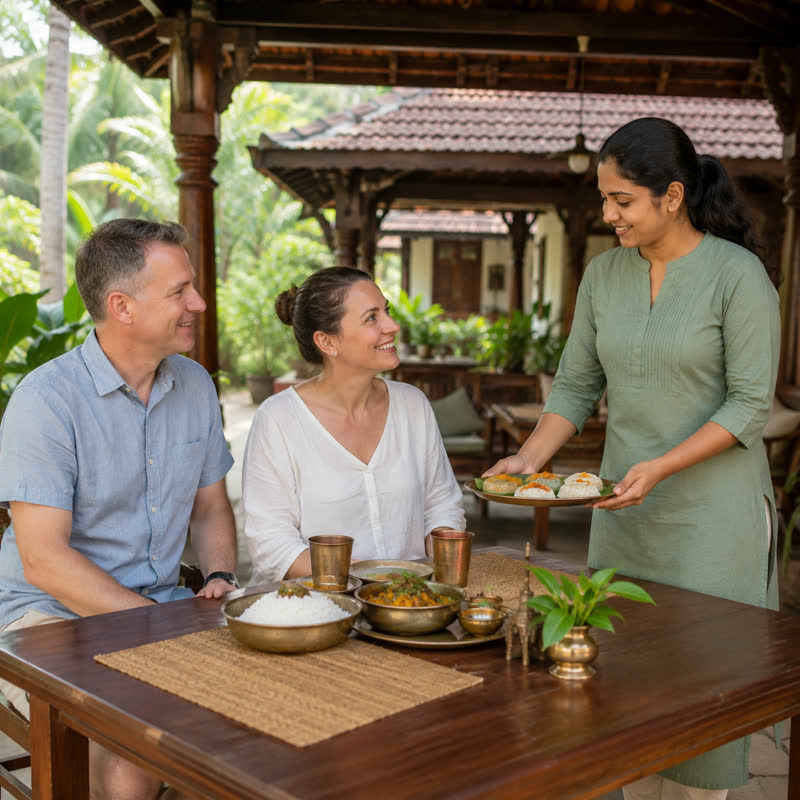
Tradition regards midday as the time when digestion is strongest, so the main meal of the day is ideally eaten then, sitting down, without screens and without hurry. A short walk afterwards is a gentle habit. In the afternoon, a pause for warm water or a herbal tea helps maintain steadiness.
The evening and night
Evening is for winding down. A lighter, earlier supper, ideally a few hours before bed, is traditional, and so is a quiet, unhurried evening. Many people enjoy a warm bath or a gentle self-massage with oil before bed, as their physician advises, and then lights low and an early night. Sleep, in Ayurveda, is one of the three pillars of health, so protecting it is time well spent. Even a small change, such as putting the phone away thirty minutes earlier, can help.
Adapting dinacharya to a Western work schedule
Most guests return to full diaries, and a routine that works only on retreat will not last. The solution is to keep the principles and bend the details.
- Keep a steady wake time and bedtime, even at weekends, as far as you can.
- Prepare a warm breakfast or tea in a few minutes.
- Make lunch your fullest meal where possible, and eat away from your desk.
- Take a short walk in daylight at some point.
- Keep supper lighter and earlier, and switch screens off before bed.
- Choose two or three habits at first, and add more gradually.
Building a routine after you return from India
The weeks after a stay are the best time to establish a routine, because the habit is fresh. Before you leave, ask your physician for a short written routine, diet notes and any herbal preparations to continue. Begin with the habits that felt easiest and most enjoyable, and let the rest follow. Keep a note of how you feel, and share it with your own doctors and your Ayurvedic physician at follow-up.
Routine for healthy ageing
For older guests, a gentle routine can be especially welcome. Regular meals, warm water through the day, gentle movement, a calm evening and a steady bedtime support comfort and independence. After a retreat, a simple, reliable routine at home helps carry the benefits forward. If you take regular medicines or have a medical condition, keep your own doctor informed and follow their advice about timing and activity.
Seasons and travel
Routine bends gracefully with the seasons. In cold weather, warmer food and drinks and a little more rest are traditional, while in hot weather lighter meals and cooler surroundings help. When you travel, keep the anchors, a regular wake time, warm water and a lighter supper, and let the rest flex.
Common questions about routine
Do I have to wake very early? No. A regular, unhurried time that suits your life is the aim. What if I work night shifts? Keep the principles of regular meals, warm water and a quiet wind-down, anchored to your own day. What if I miss a day? Simply begin again. A routine is a friend, not a judge. Can the whole family join in? Yes, and many find that shared meals and an earlier supper become some of the happiest habits at home.
Making it stick
A few ideas make habits last. Attach a new habit to an existing one, such as warm water after brushing your teeth. Keep the routine pleasant, not strict. Forgive missed days and resume the next morning. And share it with a family member, so the routine becomes part of the household.
Working alongside your own doctors
Please keep your own doctors informed. Share your medical summary, bring your reports and keep taking whatever you have been prescribed. If you have a medical condition, ask your doctors whether any part of a routine, such as fasting, exercise or oil massage, needs adjusting. Please do not change medicines without medical advice.
Choosing a physician who shapes a routine for you
Look for a qualified Ayurvedic doctor (BAMS or MD Ayurveda), registered with the appropriate board, who asks about your daily life, work and sleep, and who gives you a written routine to take home. Be cautious of anyone who hands out the same list to everyone.
Planning the journey
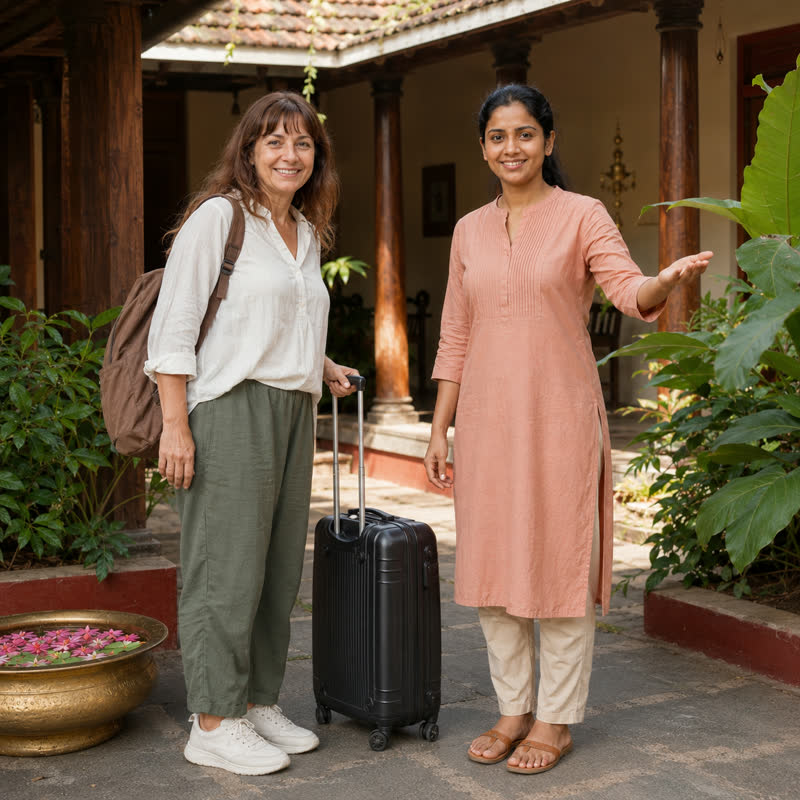
Apply for your e-Medical visa on India's official portal, usually with a hospital letter, a few weeks before travel. It is valid for 60 days from first arrival, allows three entries and cannot be extended. Book flights after approval, arrange travel insurance and choose an arrival time that gives you a rested first day. Check the portal for current rules before you apply.
Your friend and hand-holder in keeping your routine going: MyVaidyam
A routine is easier to keep with a friend, and that is where MyVaidyam comes in. We walk with you from your very first question to the day you return home, answering every question patiently and making sure that nothing is left to chance.
- An online consultation with an Ayurvedic physician to plan your programme and your home routine.
- Help preparing your health summary and organising your reports.
- Guidance on choosing a reputable centre that sends you home with a written routine.
- Help understanding what is included and what is arranged separately.
- Support with your e-Medical visa documents, flights, airport pickup and accommodation.
- A warm point of contact during your stay, and follow-up after you return home.
You are welcome to reach out at any stage. We would be delighted to help you build a routine that lasts.