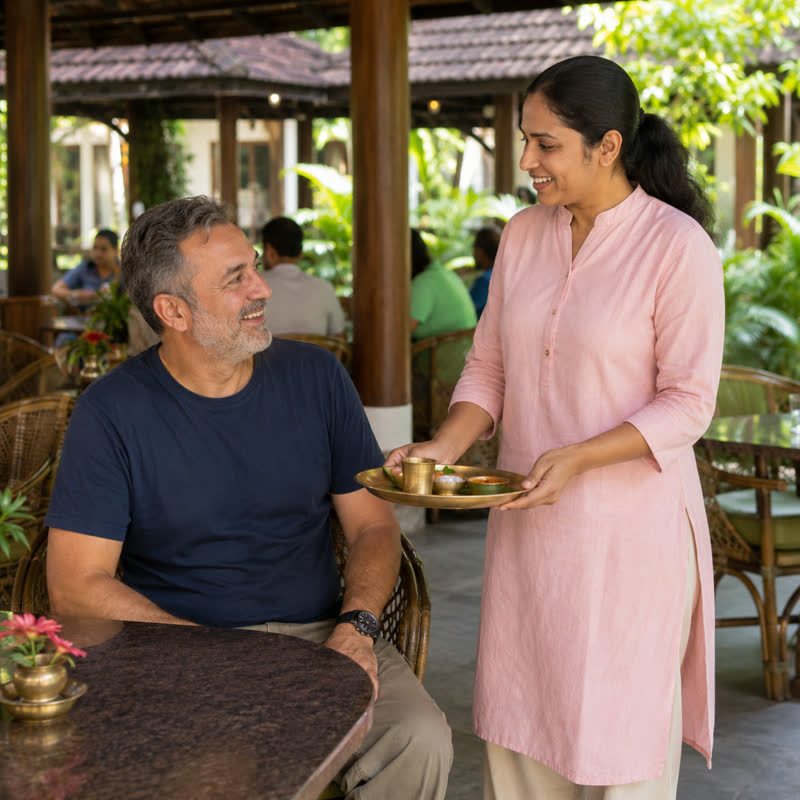
As ever, the key is a conversation before you arrive.
This guide explains in plain language how high-protein needs can be managed during an Ayurveda wellness programme: why your own doctor leads, how to describe your needs, which foods provide protein, how the dietitian plans your day, how to handle training and supplements, what a residential day looks like and how to continue at home. And throughout, it shows how MyVaidyam can walk beside you as your friend and guide.
Ayurveda is offered here as a complementary, supportive approach that works alongside your own doctor's care, never as a replacement for it. It does not replace the advice of your own doctors or dietitian.
Quick Facts - Managing High-Protein Needs During an Ayurveda Wellness Program
| Topic | Summary |
|---|---|
| Protein sources | Lentils, beans, whole grains, dairy, nuts and seeds |
| Tell the centre | Your usual intake, goals, training and supplements |
| Programme days | Often lighter; discuss expectations |
| Needs care in | Kidney or liver conditions, high supplement use |
| Guide | Your doctor and the centre's dietitian |
| Not | A promise of any outcome |
| Visa | e-Medical visa: 60 days from first arrival, triple entry, non-extendable |
| Your companion | MyVaidyam: planning, coordination and support before, during and after |
A different kind of plate
A typical Ayurvedic plate looks different from a Western high-protein meal, with rice, dal, vegetables and perhaps curd, in place of meat or protein shakes. Yet lentils and beans are excellent protein sources, and when combined with grains they provide a complete balance.
Protein from plants and dairy, in a day
Dal
lentils, soups
Beans
cooked, spiced
Dairy
as advised
Nuts
small amounts
Grains
whole, mixed
Portions and choices are set to your needs.
Start with your doctor
Please discuss your protein intake with your own doctor, particularly if you have kidney, liver or metabolic conditions, take supplements or medicines that interact with diet, or are recovering from illness or surgery. Continue every prescribed medicine, and tell the centre about all supplements you use.
Describing your needs
- What you eat in a typical day, and how much protein.
- Your training routine and goals.
- Any supplements, powders or bars you use.
- Allergies, intolerances and preferences.
- Whether you are recovering from illness, injury or surgery.
Foods that provide protein
Moong, toor and other lentils, chickpeas, kidney beans and soy foods where suitable, soft cheese or curd and milk where appropriate, nuts and seeds in measured amounts, and whole grains and millets all contribute.
Programme days and training
During a cleansing or therapy-focused programme, food is deliberately lighter, and strenuous exercise is usually set aside to allow the body to rest. Discuss with the physician how to balance your training and protein needs with the aims of the programme.
Supplements
Please do not bring or use protein supplements without telling the centre. Your own doctor's advice remains the guide, particularly if you have kidney or liver conditions.
A day at a residential centre
| Time | Typical activity |
|---|---|
| Early morning | Warm water, gentle yoga and breathing |
| Morning | Protein-rich breakfast, therapy and rest |
| Late morning | Gentle activity or a walk |
| Midday | Main meal with dal, grains and vegetables |
| Afternoon | Nuts or a light protein snack, teaching |
| Evening | Light supper, calm, early sleep |
Taking it home
- Build meals around lentils, beans and whole grains.
- Spread protein across the day.
- Keep checking supplements with your doctor.
- Share the centre's summary with your doctor.
Working alongside your own doctors
Please keep your own doctors informed. Share your medical summary, bring your reports and keep taking whatever you have been prescribed. Please keep taking prescribed medicines, and discuss any dietary change with your own doctors first. Please do not change medicines without medical advice.
Choosing a centre
Look for a qualified Ayurvedic doctor (BAMS or MD Ayurveda), registered with the appropriate board, a dietitian, a clean kitchen and a clear willingness to discuss your food needs openly.
Planning the journey
Apply for your e-Medical visa on India's official portal, usually with a hospital letter, a few weeks before travel. It is valid for 60 days from first arrival, allows three entries and cannot be extended. Book flights after approval, arrange travel insurance and choose an arrival time that gives you a rested first day. Check the portal for current rules before you apply.
Your friend and hand-holder in finding the right programme: MyVaidyam
A good plan starts with a good conversation, and that is where MyVaidyam comes in. We walk with you from your very first question to the day you return home, answering every question patiently and making sure that nothing is left to chance.
- An online consultation with an Ayurvedic physician to discuss your goals.
- Help preparing your health summary and medicine list.
- Guidance on choosing a reputable centre.
- Help understanding your written plan.
- Support with your e-Medical visa documents, flights, airport pickup and accommodation.
- A warm point of contact during your stay, and follow-up after you return home.
You are welcome to reach out at any stage. We would be delighted to help you begin.