This guide explains the Ayurvedic view, what a stay typically includes and how to plan with confidence. Ayurveda is offered as a complementary, supportive approach alongside your own doctor's care, never a replacement for it.
Quick Facts - Ayurveda Programmes for Fibromyalgia for International Patients in India
| Topic | Summary |
|---|---|
| Usual care (NIAMS) | Treatment focuses on relieving symptoms, with medicines for pain and sleep |
| Exercise (NCCIH) | Repeatedly shown to be among the most effective treatments; start gently |
| Massage (NCCIH) | Short-term relief is possible when gentle |
| Ayurvedic view | Muscle pain and fatigue are linked to vata and tiredness of tissues |
| Aim | Comfort, rest and steady energy |
| Cost | Compare itemised, dated quotes |
Understanding fibromyalgia
NIAMS describes fibromyalgia as a condition marked by widespread pain, fatigue and sleep problems, often with tender areas, difficulty concentrating and sensitivity to touch or temperature. It cannot be cured, but treatment focuses on easing symptoms, and NCCIH notes that exercise has repeatedly been shown to be among the most effective approaches, best started gently and built up slowly. Medicines for pain and sleep, good sleep habits and stress management also play a role, guided by your own doctor.
A residential Ayurveda stay offers a gentle environment in which paced activity, warmth, rest and good sleep come together in one calm schedule.
How Ayurveda looks at widespread pain
Ayurveda links widespread muscle aches and fatigue with vata and depleted energy, and emphasises nourishing meals, warm-oil massage, rest and a regular routine. The physician paces every element to your energy that day.
Building on your usual care
NIAMS notes that fibromyalgia has no cure but can be eased through treatment that focuses on symptoms, and NCCIH reports that exercise has repeatedly been shown to be one of the most effective treatments, starting gently. A residential stay supports this with a gentle daily pace, warmth and good sleep.
What the research shows
NCCIH describes tai chi, yoga and mindfulness as promising approaches and notes that massage may give short-term relief when gentle. Controlled research on Ayurveda for fibromyalgia is limited, and a stay is best seen as supportive care.
What a residential programme may include
| Element | What it generally involves |
|---|---|
| Assessment | History, review of reports and medicines |
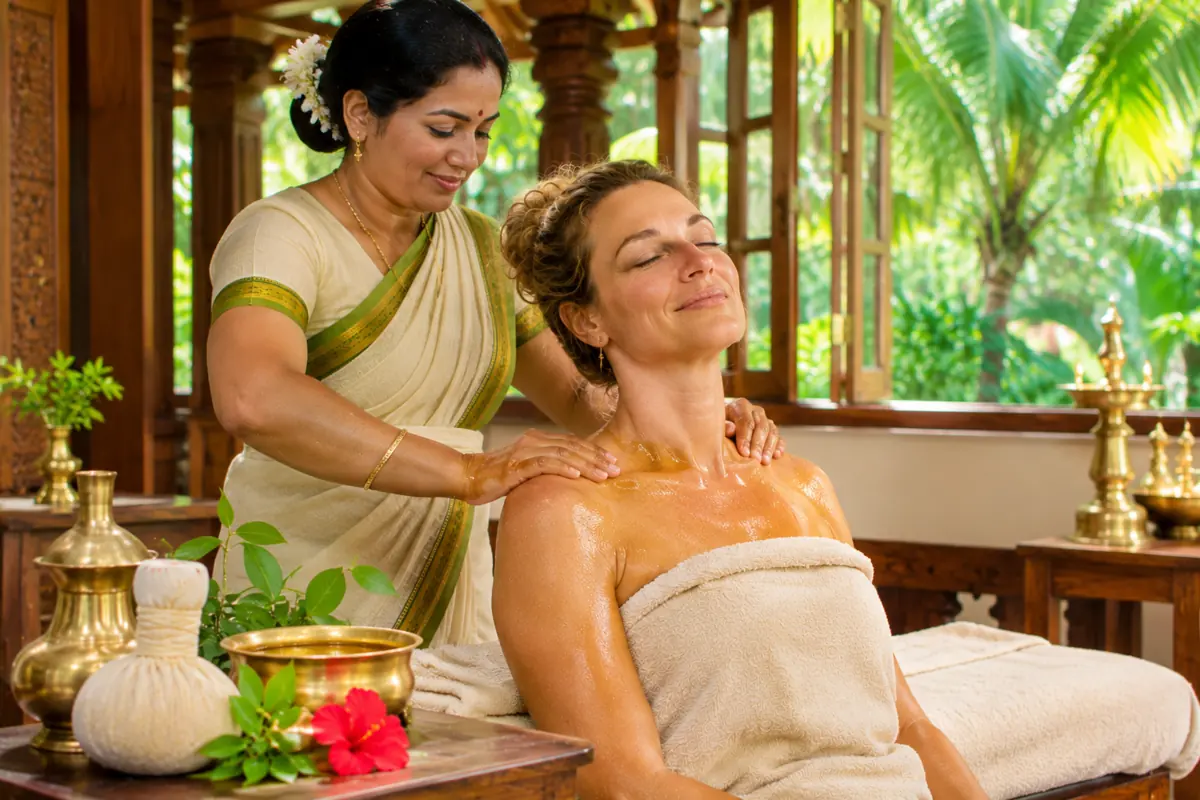
| Gentle massage | Soft warm-oil massage, adapted to your comfort |
| Warmth | Warm baths and gentle heat |
| Movement | Short walks, stretching and gentle yoga |
| Diet | Nourishing, freshly cooked meals |
| Sleep | A regular, early evening routine |
A typical day on a gentle programme
- Early morning: slow stretching and a warm breakfast.
- Mid-morning: a physician review and a soft massage.
- Afternoon: a nourishing lunch and a long rest.
- Evening: a short walk, a calm dinner and early sleep.
Why a calm setting helps
Pacing is the key to comfortable days. At a residential centre you can alternate activity and rest without the usual demands. Many guests return with a gentle daily exercise routine and a better sense of how to pace their day.
The Ayurvedic view of widespread pain and fatigue
Ayurveda links widespread muscle aches and fatigue with vata and with depleted energy of the tissues, associated with stress, poor sleep, irregular meals and overexertion. The tradition emphasises nourishing food, warm oil massage, rest, regular routines and a calm mind. Physicians compare these descriptions with modern diagnoses while recognising that the frameworks are not identical.
A careful physician therefore asks about your pain pattern, sleep, energy and digestion, and plans a gentle, paced programme.
The therapies you may meet
Here is what the most common programme elements involve. Your physician chooses which are suited to you.
- Abhyanga: a soft warm-oil massage, adapted to your comfort.
- Warm baths and heat: gentle warmth to ease muscle tension.
- Shirodhara: a calming stream of warm oil over the forehead.
- Padabhyanga: a foot massage with warm oil.
- Herbal medicines: preparations chosen by the doctor and checked against your medicines.
- Yoga and breathing: gentle practices paced to your energy.
A sample programme rhythm
Every programme is individual, and this outline is only an illustration of how a stay can unfold.
- Days 1 to 3, settling in: arrival rest, a full consultation and a gentle start with soft massage and light meals.
- Days 4 to 10, the main programme: a daily rhythm of gentle movement, soft massage, warmth, nourishing meals and rest, paced to your energy each day.
- Days 11 to 14, consolidating: a lighter schedule, a review of how you feel and a written pacing plan for home.
Many guests extend their stay, and the physician will advise after the first review. Ask the centre for its own day-by-day plan.
The art of pacing
Pacing means balancing activity and rest so that good days are enjoyed without overdoing it. A residential stay teaches it naturally: short walks, breaks between activities, regular meals and a firm bedtime. Teachers suggest simple tools such as activity timers, planned rest periods and a traffic-light approach to energy. Ask the team to help you write a pacing plan that fits your life.
Gentle movement
NCCIH highlights exercise as one of the most effective approaches, begun gently. A stay offers warm-water-style gentle stretching, slow walks, tai chi-like flowing movements and yoga adapted to your comfort. Start small, build slowly and notice how you feel the next day. Ask the team to write down a short routine you can repeat at home.
Sleep and a calm evening
Unrefreshing sleep is a major part of fibromyalgia. A residential stay supports sleep with a regular schedule, quiet evenings, a warm foot massage and breathing practice. Ask for a quiet room and a supportive mattress, and bring any pillows that you find comfortable. Many guests say that the sleep routine is the part they value most.
Kerala, climate and the best season
Many Ayurveda centres are in Kerala, where the warm, humid climate is traditionally considered kind to the body and the monsoon months are popular for oil therapies. The drier months from October to March are comfortable for travel and sightseeing. For fibromyalgia, ask each centre which season it recommends, and whether rooms are air-conditioned or well ventilated. Ask about quiet rooms, warm baths and the pace of the day. Our guide to the best time to travel compares the seasons.
Keeping a simple diary
A small notebook is one of the most useful things to bring. Each evening, jot down your pain, energy, sleep, activity and mood. After a week or two the pattern often becomes clear, and you and the physician can fine-tune the plan. A one-to-ten score for energy each evening helps pacing. The same notes give your own doctor a helpful picture when you return.
Travelling comfortably
A little planning makes the journey smoother. Book an aisle seat so you can stand and stretch, keep your medicines and reports in your hand luggage, and choose a flight that arrives at a comfortable hour. Plan a restful journey with breaks, carry a cushion and arrive with a quiet first day. Ask the centre to arrange the transfer and a restful first day. Our guide to the attendant visa explains how a family member can travel with you.
Conversations to have before you travel
A short chat with your own doctor makes the stay smoother. Many guests ask:
- Are my medicines and plans up to date for travel?
- Which exercises would you like me to continue?
- Is there anything you would like the Ayurveda team to know?
- When would you like to see me after I return?
Sharing the answers with the Ayurveda physician helps the two teams work in step, and leaves you feeling confident and well supported.
Who tends to enjoy a stay
Guests who enjoy these programmes are often people who would like a calm place to pace themselves, those whose daily lives leave little room for rest and anyone who would like practical routines to take home. If you are unsure whether a stay suits you, a free online consultation is a good first step, before you book anything.
Your first day
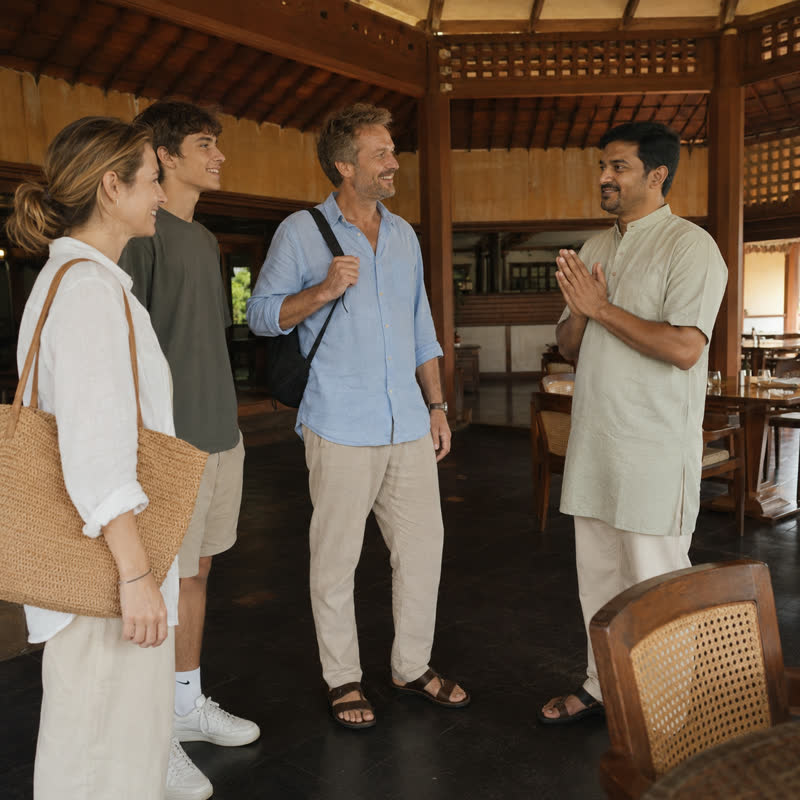
Most centres keep the first day deliberately quiet. After a warm welcome and a light meal, you rest, meet your physician for a full consultation and receive a written plan for the days ahead. Bring your reports and medicine list to that conversation, ask any questions and tell the team how you are feeling after the journey. Share your pain pattern and sleep at this first meeting. Our guide to your first day at an Ayurveda centre explains what to expect.
Questions guests often ask
Will the massage be soft? Yes, it is adapted to you. Can I rest between sessions? Yes, rest is part of the day. Can I bring my own pillow? Yes. How much activity is expected? Gentle and optional. How long should I stay? The physician advises after reviewing your reports.
Preparing for your stay
Bring a list of medicines and a short note of your pain and sleep pattern. Plan the journey with extra rest, comfortable seating and help with luggage, and allow a quiet first day to settle in. Bring a pillow or cushion that you find comfortable, and tell the team which positions ease you.
Questions to ask before you book
These questions help you compare centres and plan with confidence.
- Who will be my physician, and what are their qualifications?
- Can the plan work around my usual medicines and appointments?
- How is the programme paced to my energy each day?
- What does the quote include, and what is extra?
Planning your budget
Cost depends on room, length, therapies, physician time and medicines. Ask each centre for an itemised, dated quote for the same dates and inclusions, and add visa, flights, insurance and transfers. See the cost guide and verifying a doctor.
Travelling with confidence, and how MyVaidyam can help
- Share your reports and current medicines with the Ayurveda physician before you travel.
- Continue your prescribed medicines, and let your own doctor know your plans.
- Ask for ingredient lists for any herbal medicine, and choose labelled preparations.
- Plan rest after the flight so you can begin your stay comfortably.
MyVaidyam can arrange a free online pre-consultation, have your reports reviewed by an Ayurvedic physician and request day-by-day plans and itemised quotes from centres so you can compare them calmly. Contact MyVaidyam to book your free online consultation.