This guide explains how usual osteoarthritis care works, where an Ayurveda stay can fit alongside it, and how to choose a centre with confidence. Ayurveda is offered as a complementary, supportive approach alongside your own doctor's care, never a replacement for it.
Quick Facts - Ayurveda Programmes for Osteoarthritis Comfort for International Patients in India
| Topic | Summary |
|---|---|
| Usual care (NHS) | Exercise, weight management, pain medicines, supports, surgery for some |
| What a stay offers | Oil and heat therapies, yoga or gentle movement, diet, rest |
| Evidence | NCCIH: evidence is limited, so use as a supportive addition |
| Key criterion | Willingness to coordinate with your own doctor |
| Medicine safety | Ask for ingredient lists |
| Cost | Compare itemised, dated quotes |
How osteoarthritis is usually managed
The NHS describes osteoarthritis as a condition with no cure, where treatments can ease symptoms. These include exercise that combines muscle strengthening with general fitness, weight management where relevant, pain medicines, supportive measures such as insoles, braces or walking aids, steroid injections for some people, and surgery for a small number. It says the evidence for complementary therapies is limited.
A residential Ayurveda stay can sit comfortably beside this plan, particularly where it encourages gentle movement and a settled routine.
What a programme may involve
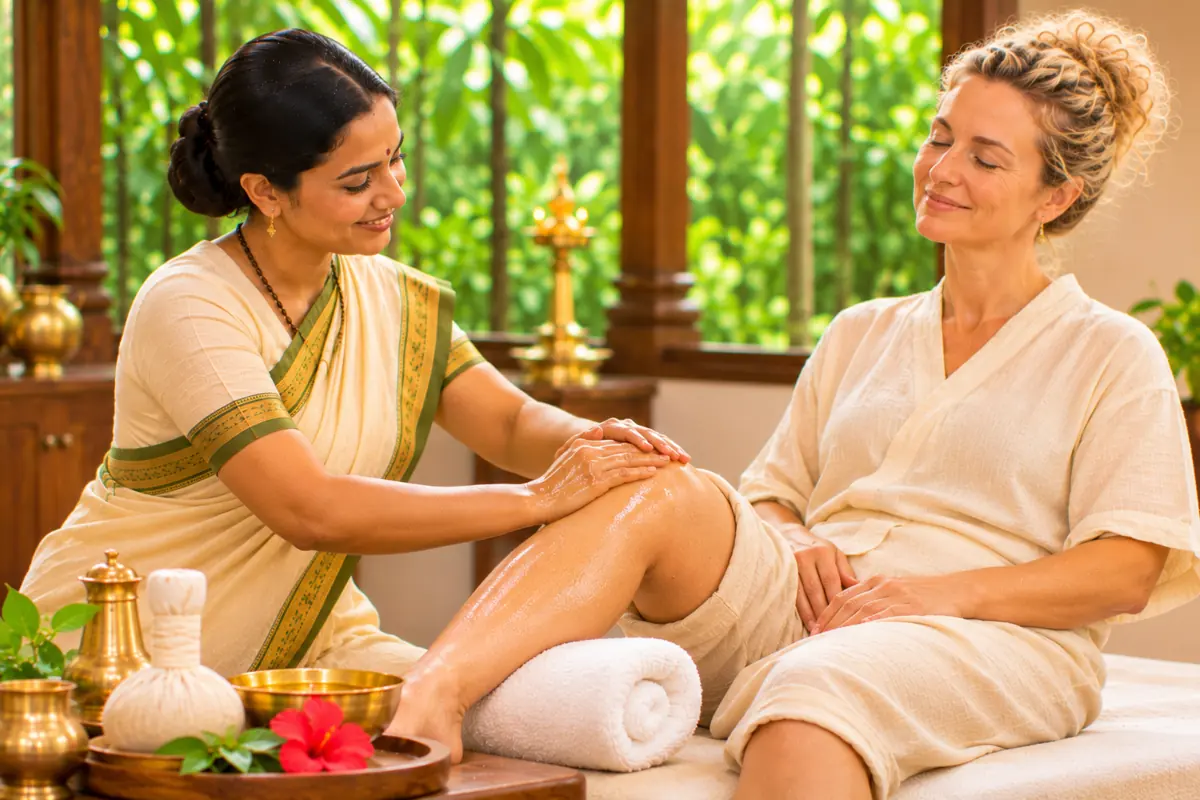
Programmes for joint complaints often combine a consultation, oil-based and heat-based therapies applied to the affected joints, dietary guidance, gentle movement or yoga, and rest. Some include herbal medicines taken by mouth. Treatments vary by physician and centre, and the suitability of oils, heat and medicines depends on your health. The aim is comfort, routine and guidance. See classical Panchakarma.
About the evidence
NCCIH says the evidence for natural products in osteoarthritis is too limited for conclusions, and that research on Ayurveda is limited and often small. This is why a stay is best chosen for the comfort, care and routine it offers, in partnership with your usual treatment.
Choosing a centre with confidence
Look for named, qualified physicians, willingness to coordinate with your specialist, ingredient lists for any medicine, honest descriptions of what to expect, and a clear plan for flares and emergencies. See our guide for arthritis and joint problems and verifying a doctor.
Planning your budget
Cost depends on duration, room, number of therapies, physician time and medicines. Ask for an itemised, dated quote showing what is included, medicines, extras and refund terms. See the cost guide.
When to speak to your own doctor first
Seek prompt medical advice for a hot, red, very swollen joint, fever, sudden severe pain, inability to bear weight, numbness, or any new or worsening symptom. If pain is limiting your life, discuss options with your own doctor, including whether surgery is appropriate. A wellness stay is best planned around your usual care.
Travelling with confidence, and how MyVaidyam can help
- Tell your doctor about your plans, and keep taking prescribed medicines.
- Do not delay advised surgery or appointments without advice.
- Ask for ingredient lists, and avoid products promising unusually fast pain relief.
- Tell the physician if you have skin problems, circulation problems or an acutely hot, swollen joint, as heat and oil therapies may not suit you then.
- Check interactions if you take blood thinners or anti-inflammatories; see medicines and Ayurveda.
MyVaidyam can arrange a free online pre-consultation, have your reports reviewed by an Ayurvedic physician and help you put these questions to centres. Contact MyVaidyam to book your free online consultation.