This guide explains in plain language what hydrotherapy is in a naturopathy setting and what to expect: why your own doctor is consulted first, the common treatments, how temperature is managed, who may need care, how it fits with Ayurveda and yoga, what a residential day looks like and how to carry the habit home. And throughout, it shows how MyVaidyam can walk beside you as your friend and guide.
Ayurveda is offered here as a complementary, supportive approach that works alongside your own doctor's care, never as a replacement for it. It does not promise to treat any condition.
Quick Facts - Hydrotherapy in Naturopathy
| Topic | Summary |
|---|---|
| What it is | Use of water, warm, cool or steam, for comfort |
| Common forms | Warm tub baths, hip baths, steam, wet wraps, spinal baths |
| Session length | Usually 10 to 30 minutes |
| Often combined with | Yoga, Ayurveda, diet, rest |
| Needs care in | Heart, blood pressure, pregnancy, skin conditions |
| Not | A treatment for any condition |
| Visa | e-Medical visa: 60 days from first arrival, triple entry, non-extendable |
| Your companion | MyVaidyam: planning, coordination and support before, during and after |
Why water?
Warm water relaxes muscles and calms the mind, and cool water refreshes. Naturopathy builds on this everyday experience, using water in carefully measured ways to support rest, circulation and a sense of well-being. It is gentle, familiar and easy to carry home.
Water, three ways
Warm
soaks and baths for relaxation
Cool
brief, gentle cooling, if suited
Steam
a short sit in mild steam, with a cool head cloth
Temperatures are always checked, and kept comfortable.
Start with your doctor
Please discuss hydrotherapy with your own doctor if you have a heart condition, blood pressure problems, diabetes, circulation or skin conditions, kidney disease, or if you are pregnant or have a fever. Tell the naturopathy doctor about all medicines and conditions, and continue every prescribed medicine.
Common treatments
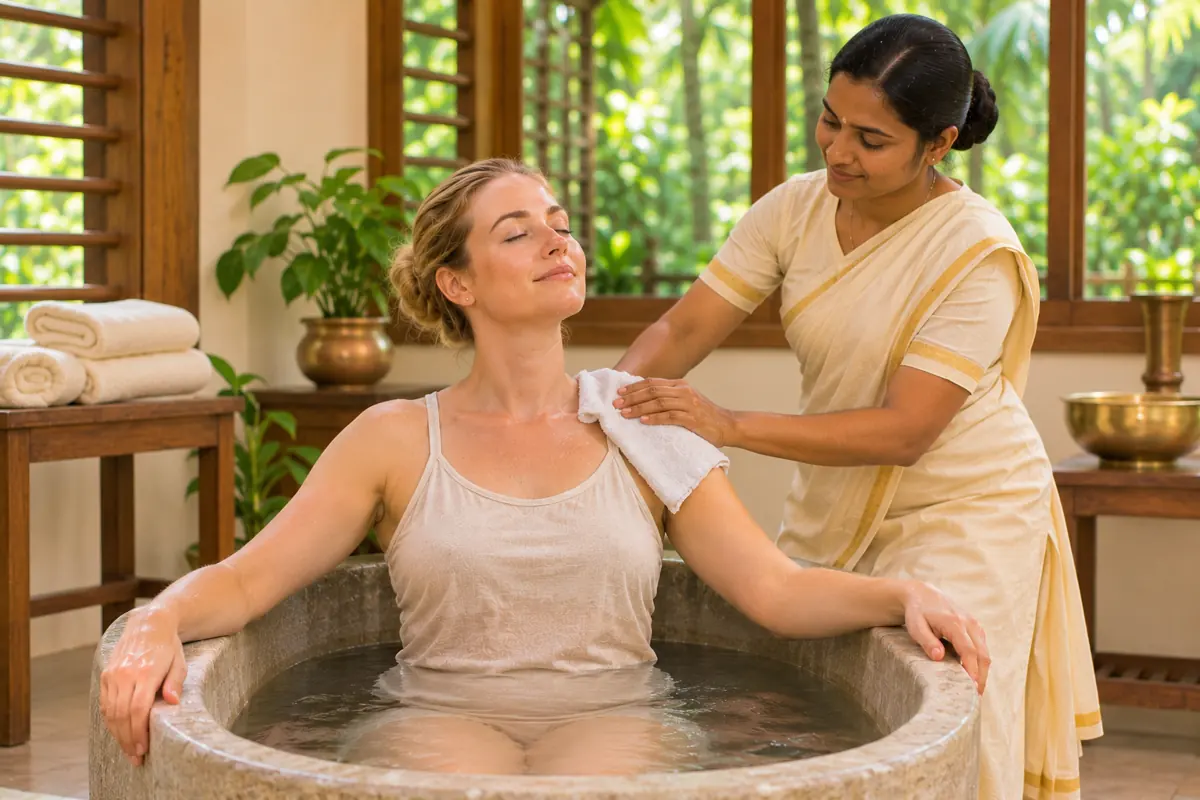
- Warm tub or immersion baths for relaxation.
- Hip baths, sitting in water to the hips, warm or cool.
- Steam baths, short and mild, with a cool cloth on the head.
- Wet sheet or abdominal wraps, snug and soothing.
- Spinal baths and foot soaks.
- Gentle water massage, sometimes with a spray.
How naturopathy and Ayurveda fit together
Naturopathy and Ayurveda are different traditions, but they share a belief in nature, simplicity and the body's own capacity for balance. In many centres a guest might begin the day with yoga, take a warm bath, enjoy an Ayurvedic oil massage and eat a light, wholesome meal. The physician coordinates the elements so that nothing is overdone.
How temperature is managed
The therapist tests water temperature before you enter and adjusts it to your comfort. Sessions are kept short, with a drink of water and a rest afterwards. If you feel lightheaded, too warm or uneasy, please say so at once, and the session will be adjusted or stopped. This is not a treatment to endure; comfort is the guide.
Who may need care
The physician may adapt or avoid some hydrotherapy for people with heart or blood pressure conditions, low or reduced skin sensation, open wounds, fever, pregnancy, very low strength or certain skin problems. Older guests are supervised closely, and each treatment is kept gentle.
A day at a residential centre
| Time | Typical activity |
|---|---|
| Early morning | Warm water, yoga and breathing |
| Morning | Hydrotherapy session, such as a hip bath or steam |
| Late morning | Rest, then light activity |
| Midday | Simple, wholesome main meal and rest |
| Afternoon | Ayurvedic therapy, walking or relaxation |
| Evening | Light early supper, calm, early sleep |
Taking it home
- A warm bath in the evening can settle the day.
- Foot soaks are an easy, gentle habit.
- Keep water temperature comfortable, never extreme.
- Stay hydrated, and rest afterwards.
- Share the centre's summary with your doctor.
Setting honest expectations
Hydrotherapy is a supportive, comforting practice, and no therapy can promise to treat any condition. A residential stay offers trained therapists, safe facilities and time to rest, and many guests value the simple pleasure of it as much as any outcome.
Making the most of a session
Wear something loose, drink water beforehand and avoid a heavy meal just before. Tell the therapist how the temperature feels, and take your time getting out. Afterwards, rest for a while, keep warm and drink water. Many guests find that the quiet moments after a treatment are as valuable as the treatment itself, and an unhurried pace is part of the benefit.
Water and the rest of the programme
Hydrotherapy works best as one thread among many: food that is light and simple, yoga that is gentle, sleep that is regular and time that is unhurried. The physician weaves these together, adjusting as your stay unfolds, so that the whole programme feels coherent and kind to your body.
Working alongside your own doctors
Please keep your own doctors informed. Share your medical summary, bring your reports and keep taking whatever you have been prescribed. Please keep taking prescribed medicines, and discuss any therapy with your own doctors before you begin. Please do not change medicines without medical advice.
Choosing a centre
Look for a qualified naturopathy doctor (BNYS) and an Ayurvedic doctor (BAMS or MD Ayurveda), registered with the appropriate boards, trained therapists, clean facilities with well-kept equipment and a clear written plan. Be cautious of anyone who promises cures through water therapy alone.
Planning the journey
Apply for your e-Medical visa on India's official portal, usually with a hospital letter, a few weeks before travel. It is valid for 60 days from first arrival, allows three entries and cannot be extended. Book flights after approval, arrange travel insurance and choose an arrival time that gives you a rested first day. Check the portal for current rules before you apply.
Your friend and hand-holder in finding the right programme: MyVaidyam
A good plan starts with a good conversation, and that is where MyVaidyam comes in. We walk with you from your very first question to the day you return home, answering every question patiently and making sure that nothing is left to chance.
- An online consultation with a physician to discuss your health and goals.
- Help preparing your health summary and medicine list.
- Guidance on choosing a reputable naturopathy and Ayurveda centre.
- Help understanding your written plan.
- Support with your e-Medical visa documents, flights, airport pickup and accommodation.
- A warm point of contact during your stay, and follow-up after you return home.
You are welcome to reach out at any stage. We would be delighted to help you begin.