It is the period in which the body is looked after gently, food returns step by step, and the benefits of the programme are given time to settle.
This guide explains what paschat karma involves, how the graded return to food works, how to rest and move in these days, what you may feel, how long it usually lasts, when it is comfortable to fly home and how to carry the care into your everyday life. And throughout, it shows how MyVaidyam can walk beside you as your friend and guide.
Ayurveda is offered here as a complementary, supportive approach that works alongside your own doctor's care, never as a replacement for it. Paschat karma is part of a programme that supports wellbeing. It does not promise a cure.
Quick Facts - Paschat Karma Explained
| Topic | Summary |
|---|---|
| Meaning | Paschat means after; karma means action or procedure |
| Place in Panchakarma | The third stage, after purvakarma and pradhana karma |
| Main elements | Graded diet, rest, gentle routine, review |
| Common feeling | Lightness, calm and a returning appetite |
| Length | Set by your physician, depending on the programme |
| Not | An afterthought: it is part of the programme |
| Visa | e-Medical visa: 60 days from first arrival, triple entry, non-extendable |
| Your companion | MyVaidyam: planning, coordination and support before, during and after |
What is paschat karma?
Classical Panchakarma has three stages. Purvakarma prepares the body. Pradhana karma carries out the main procedures. Paschat karma is the recovery that follows, in which the digestion is gently rebuilt and the body is given rest.
It may be the least dramatic stage, but ask experienced physicians and they will tell you it is where much of the quiet work is done. A well-led recovery helps the programme settle, and it is a lovely, restful part of the stay.
The gentle return to your usual food
Lightest
Fuller and richer
Rice water
Warm and thin
Thin porridge
Soft and simple
Thicker porridge
With a little ghee
Soft rice, light lentils
Gently spiced
Usual meals
Still warm and fresh
The heart of paschat karma is a graded return to food, traditionally called samsarjana krama. Meals begin very lightly and become richer day by day, so that the digestion can strengthen without hurry.
How the graded diet works
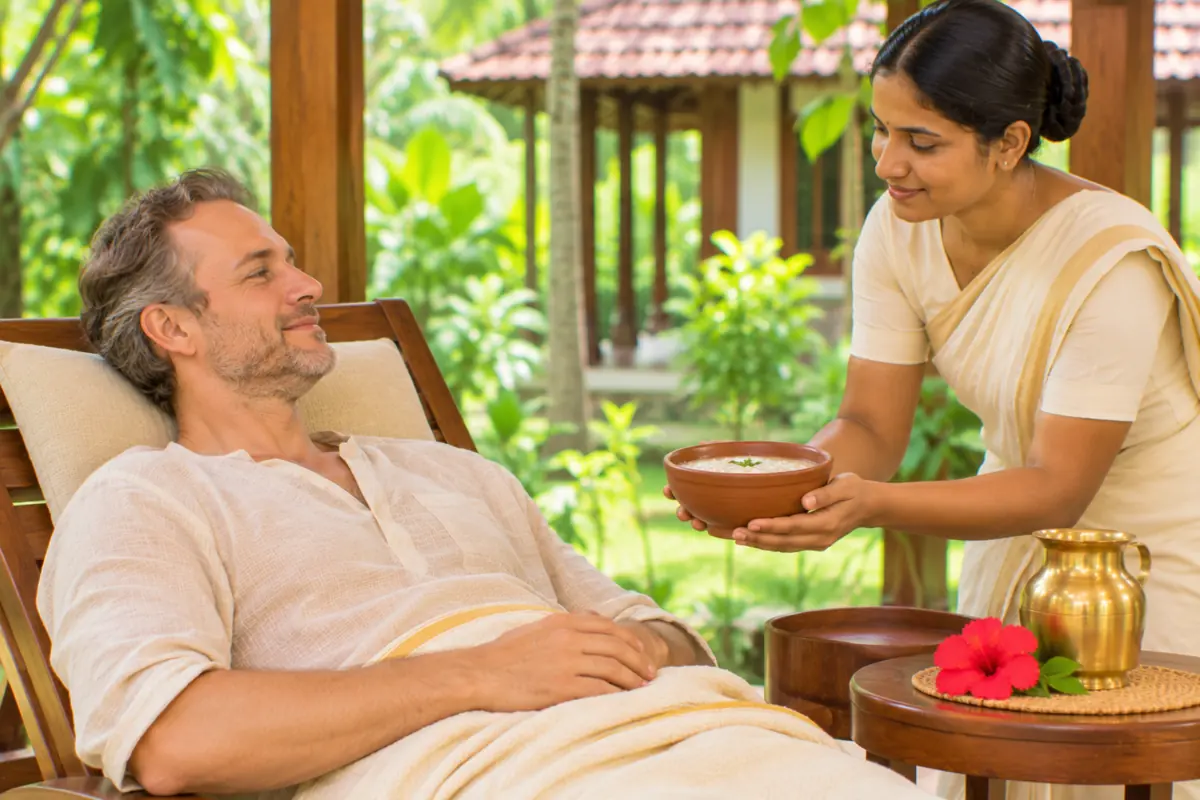
In the first days, meals are warm, thin and simple, such as rice water or a thin rice porridge. As the appetite returns, they become thicker and a little richer, with a touch of ghee, then soft rice with light lentil soup and gentle spices. Finally, you return to your usual meals, still warm and freshly cooked. The physician decides how many days each step lasts, depending on how you feel. Your kitchen team follows the plan, so there is nothing to work out yourself.
Rest and a gentle routine
Rest is part of the treatment. In these days, guests are encouraged to sleep well, to keep to regular mealtimes and to take things slowly. Gentle walks and light yoga are usually welcome, while strenuous exercise, long outings and late nights are best left until later. Many centres suggest warm water, warm clothing and avoiding cold drinks and strong winds, in keeping with the tradition of caring for the body after cleansing.
What you may feel
Most guests describe a lightness of body and mind, a clearer appetite and a deep, calm sleep. Some feel a little tired in the first days, which is natural. Energy usually returns steadily. Tell your physician how you feel each day, and the plan will be adjusted. Everyone responds differently, and there is no right pace.
A day in paschat karma
Days in this stage are quiet and gentle. You wake without hurry, enjoy a warm drink and a light breakfast, and perhaps take a slow walk in the garden. Your physician visits to see how you are. Meals follow the graded plan, with long rests between them. The afternoon may bring a short gentle therapy if your physician advises it, and the evening is calm, with an early supper and early sleep. Guests often say these are the days they remember most fondly.
How long does it last?
The length varies with the person and the procedures they have had. In many programmes it lasts several days, and some physicians continue the gentle regimen for longer. Your physician will explain how long they recommend. When you plan your stay, ask the centre how many days it sets aside for recovery, and remember that the e-Medical visa is valid for 60 days from first arrival and cannot be extended, so allow a comfortable margin.
Tonics and what comes next
In some programmes, once recovery is well established, the physician may suggest herbal tonics or a gentle rejuvenation therapy to nourish the body further. These are chosen individually and are never essential. If they are suggested, ask what they are and note the names so that you can share them with your own doctors.
Flying home after Panchakarma
Because paschat karma is gentle and unhurried, it is wise to plan your flight home for after your recovery has settled. Avoid flying the day after a main procedure, and ask your physician when it is comfortable to travel. Keep any written summaries, herbal preparations and follow-up plans in your hand luggage, and give yourself a quiet day or two when you reach home.
Carrying recovery into your everyday life
The care of paschat karma does not have to end at the centre. Before you leave, ask for a simple routine for the days ahead: what to eat, how to rest, what to avoid and when to resume your usual activities. Many guests return to work gradually, easing back over a week or two, and keep a few gentle habits such as warm water, regular meals and an earlier supper.
If a companion is with you
A companion can help a great deal during recovery, from sharing meals to keeping you company on gentle walks. Ask the centre how they will be looked after, and whether they can learn some of the simple routines to continue at home.
Working alongside your own doctors
Please keep your own doctors informed. Share your Ayurvedic summary when you return, and keep taking whatever you have been prescribed. If you have a medical condition, ask your doctors how to resume your usual routine, and tell them about any herbal preparations you were given. Please do not change medicines without medical advice.
Choosing a centre that values recovery
Look at these, roughly in order of importance:
- The physician. A qualified Ayurvedic doctor (BAMS or MD Ayurveda), registered with the appropriate board, who reviews you daily.
- A clear recovery plan. The graded diet and routine explained in writing.
- The kitchen. A team that follows the physician's plan carefully.
- A calm setting. Somewhere quiet to rest.
- Medical backup. Who is on duty at night, and which hospital is nearby.
- Honesty. Be cautious of programmes that rush recovery or promise a cure.
Planning the journey
Apply for your e-Medical visa on India's official portal, usually with a hospital letter, a few weeks before travel. It is valid for 60 days from first arrival, allows three entries and cannot be extended. Book flights after approval, arrange travel insurance and leave room at the end of your programme for recovery before you fly home. Check the portal for current rules before you apply.
Your friend and hand-holder through the whole programme: MyVaidyam
A programme is more than its main therapies, and that is where MyVaidyam comes in. We walk with you from your very first question to the day you return home, answering every question patiently and making sure that nothing is left to chance.
- An online consultation with an Ayurvedic physician to plan all three stages of Panchakarma.
- Help preparing your health summary and a written plan after your consultation.
- Guidance on choosing a reputable centre with a thoughtful approach to recovery.
- Help choosing flight dates that leave room for recovery.
- Support with your e-Medical visa documents, airport pickup and accommodation.
- A warm point of contact during your stay, and follow-up after you return home.
You are welcome to reach out at any stage. We would be delighted to help you plan a complete, well-supported programme.