They can sound unfamiliar, even daunting, to a first-time reader, so this guide takes them one at a time, in plain, friendly language, and explains how a thoughtful physician decides what, if anything, is right for you.
Along the way it describes what each procedure involves, how a day around a procedure is arranged, how the body is looked after afterwards, how to choose a centre and how to plan your journey. And throughout, it shows how MyVaidyam can walk beside you as your friend and guide.
Ayurveda is offered here as a complementary, supportive approach that works alongside your own doctor's care, never as a replacement for it. These procedures are carried out under a physician's supervision, chosen individually, and are not promised as a cure.
Quick Facts - Pradhana Karma Explained
| Topic | Summary |
|---|---|
| Meaning | Pradhana means main; karma means action or procedure |
| Place in Panchakarma | The second of three stages, after purvakarma and before paschat karma |
| Classical procedures | Vamana, virechana, basti, nasya, raktamokshana |
| How chosen | By a qualified Ayurvedic physician, for each individual |
| Always followed by | Rest and a gentle, graded diet |
| Not | A cure, or a programme for everyone |
| Visa | e-Medical visa: 60 days from first arrival, triple entry, non-extendable |
| Your companion | MyVaidyam: planning, coordination and support before, during and after |
What is pradhana karma?
Classical Panchakarma unfolds in three stages: purvakarma, the preparation; pradhana karma, the main procedures; and paschat karma, the careful recovery. Pradhana karma is the middle chapter, and it is the one that people usually mean when they speak of "doing Panchakarma."
The word pancha means five, and the five procedures are traditionally described as cleansing therapies that support the body's own balance. In practice, a physician usually selects one or two for a given person, adapted to their constitution, strength and circumstances, and the stay is built around them.
The five classical procedures at a glance
| Vamana | Therapeutic emesis | Traditionally associated with kapha |
|---|---|---|
| Virechana | Therapeutic purgation | Traditionally associated with pitta |
| Basti | Medicated enema, with oils or decoctions | Traditionally associated with vata |
| Nasya | Medicated oils through the nose | Traditionally used for the head and neck |
| Raktamokshana | Traditional blood-letting | Listed in some traditions; not offered by every centre |
Behind each lies a long tradition of careful preparation, supervision and aftercare.
Virechana: a gentle purgation
Virechana uses carefully chosen herbal preparations to encourage the body to cleanse through the bowel. It is one of the procedures most commonly included in programmes for international guests. It is given after the preparation of purvakarma, usually in the morning, and the guest is observed through the day and then rests. Tradition associates it with pitta, and it is often included in general cleansing programmes.
Basti: medicated enema
Basti uses warm medicated oils or herbal decoctions, given gently as an enema, and it is described in the classical texts as among the most important procedures of all. It is often given as a course over several days, with the oil and decoction types alternated by the physician. Tradition associates it with vata. In a good centre it is carried out privately, hygienically and with great care.
Nasya: oils through the nose
Nasya is the gentlest of the five. After a warm face massage and steam, a few drops of medicated oil are placed in the nose, and the guest rests briefly afterwards. It is traditionally used for the head and neck area and is often included as a quiet, short therapy alongside others.
Vamana: therapeutic emesis
Vamana is a classical procedure in which the body is guided, under close supervision, to release through the upper digestive tract. It is associated with kapha and requires careful preparation. It is not offered to everyone, and many centres reserve it for guests whose physician feels it is suitable. If it is proposed, ask the physician to explain why, what to expect and how you will be looked after.
A note on raktamokshana
Raktamokshana, a traditional procedure involving blood-letting, is listed as the fifth in some traditions, while others count it separately. Many centres do not include it for visiting guests. If your physician suggests it, ask for a full explanation, and speak to your own doctor beforehand.
How a physician chooses
There is no standard menu. Your physician considers your constitution, strength, digestion, age, health conditions, medicines and the season, and then decides which procedures, if any, are right. Some guests are guided towards a gentler programme of oil therapies, steam and diet, without any of the main procedures at all. That is a considered path, not a lesser one.
A day around a procedure
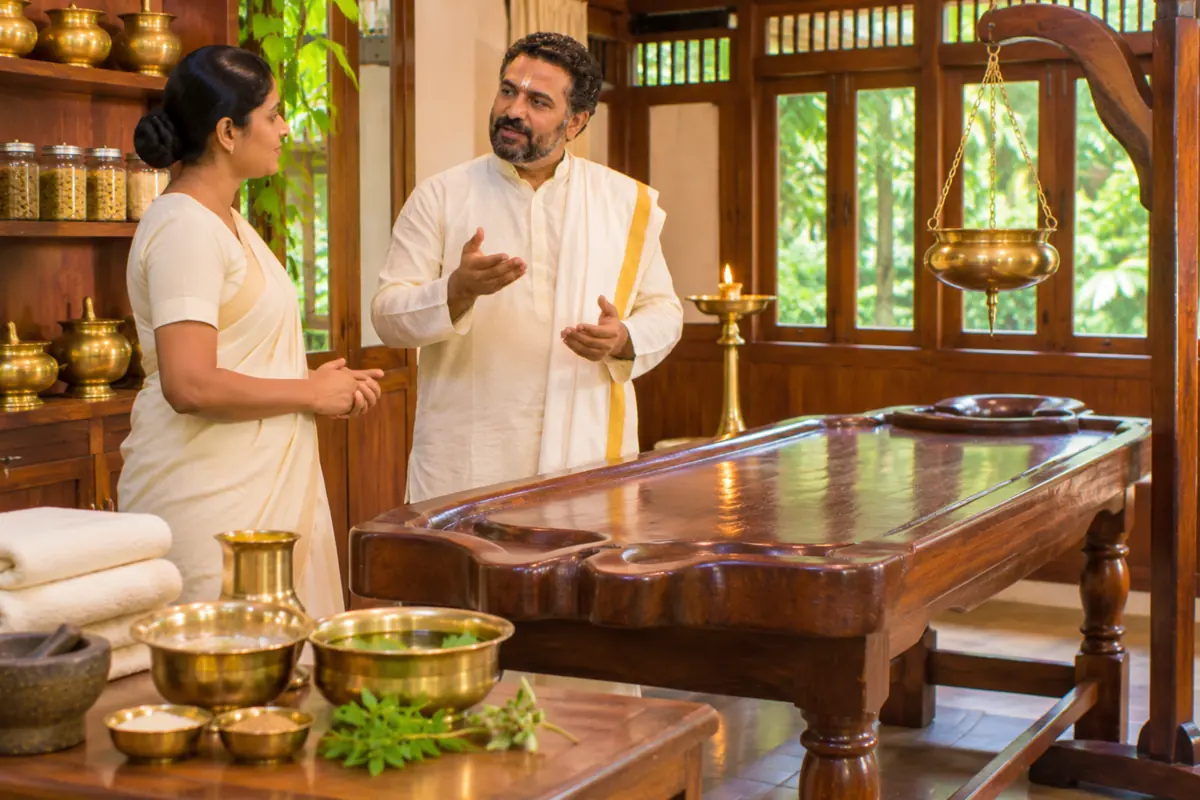
On a procedure day, the schedule is quiet and unhurried. You rise early, have a light breakfast or none, as advised, and receive the procedure in a private therapy room. A nurse or therapist stays close by, and the physician checks on you. Afterwards you rest, in comfort, with warm water or light food as advised. The evening is peaceful, with an early supper and sleep. Many guests find these days surprisingly calm.
Recovery: the gentle return to food
After each procedure comes a carefully planned return to normal eating, called samsarjana krama. Meals begin very light, perhaps rice water or a thin porridge, and gradually become richer over several days. This stage is as important as the procedure itself, because it allows the digestion to recover gently. You will be told exactly what to eat and when, and the kitchen will follow the plan.
How it feels
Guests describe the experience in many ways. Most notice tiredness after a procedure, followed by a feeling of lightness, a clearer head and a better appetite once recovery is complete. Everyone responds differently, so tell your physician honestly how you feel and they will adjust the plan.
Is it right for you?
A thoughtful physician will talk to you at length before suggesting any of these procedures. Your age, strength, medical history and medicines all matter, and some people are guided towards a gentler approach, or advised to wait.
Working alongside your own doctors
Please talk to your own doctor before you plan a Panchakarma programme, and share your medical summary. Bring your reports and a list of your medicines, and keep taking whatever you have been prescribed. Ask your physician to write down any herbal preparations so that you can show them to your doctors at home. Please do not change medicines without medical advice.
Choosing a centre for Panchakarma
Look at these, roughly in order of importance:
- The physician. A qualified Ayurvedic doctor (BAMS or MD Ayurveda), registered with the appropriate board, who will see you personally.
- Experience. A centre that performs these procedures regularly and can describe them clearly.
- The written plan. A clear plan with each stage, the diet, inclusions and follow-up.
- Privacy and hygiene. Private therapy rooms, clean equipment and trained staff.
- Medical backup. Who is on duty at night, and which hospital is nearby.
- Honesty. Be cautious of promises of a cure or of pressure to undergo more than you are comfortable with.
Planning the journey
Apply for your e-Medical visa on India's official portal, usually with a hospital letter, a few weeks before travel. It is valid for 60 days from first arrival, allows three entries and cannot be extended. Book flights after approval, arrange travel insurance and choose an arrival time that gives you a rested first day. Check the portal for current rules before you apply.
Your friend and hand-holder on the way to a Panchakarma stay:
MyVaidyam
A programme like this deserves thoughtful, patient support, and that is where MyVaidyam comes in. We walk with you from your very first question to the day you return home, answering every question kindly and making sure that nothing is left to chance.
- An online consultation with an Ayurvedic physician to talk through what Panchakarma could look like for you.
- Help preparing your health summary and a written plan after your consultation.
- Guidance on choosing a reputable centre and a programme length that suits you.
- Help checking what is included and what is arranged separately.
- Support with your e-Medical visa documents, flights, airport pickup and accommodation.
- A warm point of contact during your stay, and follow-up after you return home.
You are welcome to reach out at any stage. We would be delighted to help you begin with confidence.