In some traditions it is counted as the fifth procedure of Panchakarma, while in others it is considered separately.
This guide explains in a calm, balanced way what raktamokshana is, how it is described in the tradition, how modern safety standards shape its use today, why many centres do not offer it to visiting guests and what to ask if it is ever suggested. And throughout, it shows how MyVaidyam can walk beside you as your friend and guide.
Ayurveda is offered here as a complementary, supportive approach that works alongside your own doctor's care, never as a replacement for it. Raktamokshana is not part of most visitors' programmes, and no one is expected to undergo it.
Quick Facts - Raktamokshana in Ayurveda
| Topic | Summary |
|---|---|
| Meaning | Raktamokshana means releasing blood |
| In the tradition | Described in the classical texts, in specific circumstances |
| Place in Panchakarma | Counted as the fifth procedure in some traditions |
| Today | Used selectively, and not offered by many centres |
| Your right | To ask questions and to decline |
| Before any decision | A full assessment and a conversation with your own doctor |
| Visa | e-Medical visa: 60 days from first arrival, triple entry, non-extendable |
| Your companion | MyVaidyam: planning, coordination and support before, during and after |
What is raktamokshana?
Raktamokshana is a traditional therapy in which small amounts of blood are released by methods described in the Ayurvedic texts. The texts describe different techniques, some using leeches, others using fine instruments or cups, and they emphasise the skill and judgment of the practitioner.
It is one of the oldest elements of Ayurvedic practice, and it is discussed in the classical literature alongside the other cleansing therapies. Its place in modern practice is far smaller, and many Ayurvedic centres, particularly those welcoming international guests, do not offer it.
Tradition and today, side by side
In the tradition
- One of the classical therapies
- Described for certain conditions
- Performed by trained practitioners
- Often given in small, local forms
In modern practice
- Used selectively, if at all
- Needs a physician's full assessment
- Hygiene and sterile technique matter
- Many centres do not offer it to visitors
The picture is simple: a historic therapy, kept in view for its place in the tradition, and used in modern settings only with great care.
How the tradition describes it
The classical authors describe raktamokshana as suited to particular conditions, chosen after careful assessment of the person, and they stress that it should not be used lightly. In some traditions it is a local therapy, applied to a small area, and in others it is described in broader terms. Whatever the form, the texts place weight on skill, appropriateness and care, which is also how thoughtful physicians approach it today.
Modern safety considerations
Today, the key questions are practical ones. Any therapy that involves blood must be performed with strict hygiene, with sterile, single-use equipment and trained hands, in a setting that meets modern standards of infection control. It also needs an assessment of the person's health, medicines and blood conditions, and a clear explanation and consent. Many centres decide that they cannot meet these requirements for a short stay and so do not offer it. That is a responsible choice, and nothing is lost by it.
Why many centres do not offer it to visitors
Programmes for international guests focus on oil therapies, steam, diet, yoga and, where suitable, other Panchakarma procedures, all of which can be offered safely and comfortably. Raktamokshana is not essential to a programme, and many physicians feel that other approaches serve visiting guests well. If you come across it in your reading, you do not need to worry that you are missing something.
If it is ever suggested to you
If a physician proposes raktamokshana, a few questions help you feel at ease:
- Why do you think this suits me, and are there gentler alternatives?
- Who will perform it, and what are their qualifications?
- What equipment is used, and is it single-use or sterilised?
- How will my health and medicines be taken into account?
- What happens afterwards, and what if I have concerns?
- May I talk to my own doctor first?
A good centre answers all of these willingly, and you are always free to say no.
A reassuring note for guests
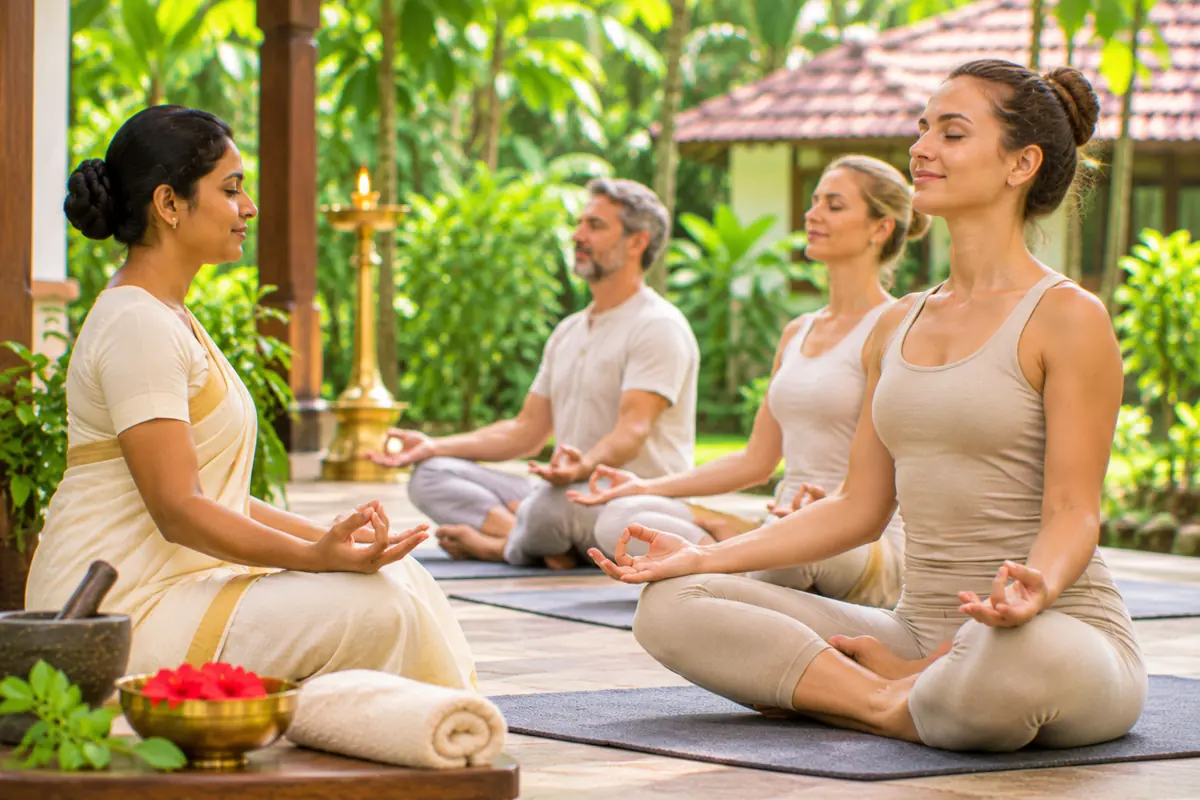
Most guests, on a typical Ayurveda stay, will never meet raktamokshana. The core of a good programme is the consultation, the diet, the oil therapies and steam, the yoga and rest, and the quiet daily review by your physician. These are the heart of the experience, and they are enough.
Working alongside your own doctors
Please keep your own doctors informed. Share your medical summary, bring your reports and keep taking whatever you have been prescribed. If you take blood-thinning medicines or have a blood condition, please tell your physician at the start. Please do not change medicines without medical advice.
Choosing a centre that explains clearly
Look for a qualified Ayurvedic doctor (BAMS or MD Ayurveda), registered with the appropriate board, who sees you personally, a clear written plan, clean therapy rooms and a nearby hospital. Be cautious of any centre that cannot explain a procedure plainly or that presses you to accept it.
Planning the journey
Apply for your e-Medical visa on India's official portal, usually with a hospital letter, a few weeks before travel. It is valid for 60 days from first arrival, allows three entries and cannot be extended. Book flights after approval, arrange travel insurance and choose an arrival time that gives you a rested first day. Check the portal for current rules before you apply.
Your friend and hand-holder in choosing with confidence: MyVaidyam
Understanding every part of your programme is part of feeling at ease, and that is where MyVaidyam comes in. We walk with you from your very first question to the day you return home, answering every question patiently and making sure that nothing is left to chance.
- An online consultation with an Ayurvedic physician to discuss your programme and any questions.
- Help preparing your health summary and reports.
- Guidance on choosing a reputable centre that explains its therapies clearly.
- Help reviewing your written plan, including what is included and what is arranged separately.
- Support with your e-Medical visa documents, flights, airport pickup and accommodation.
- A warm point of contact during your stay, and follow-up after you return home.
You are welcome to reach out at any stage. We would be delighted to help you choose with confidence.