It is one of the gentlest and most useful parts of the programme.
This guide explains samsarjana krama in plain terms: why it is used, what each step looks like, how long it usually takes, how to follow it at a centre, in a hotel or at home, and what to expect. And throughout, it shows how MyVaidyam can walk beside you as your friend and guide.
Ayurveda is offered here as a complementary, supportive approach that works alongside your own doctor's care, never as a replacement for it. Your physician will set the steps and timing for you.
Quick Facts - Samsarjana Krama
| Topic | Summary |
|---|---|
| Meaning | A stepwise, graded diet after cleansing procedures |
| Purpose | To rebuild digestion gently |
| Typical foods | Rice water, thin and thicker porridge, soft rice with light lentils |
| Length | Set by the physician, often several days |
| Followed at | A centre, a hotel or home, with guidance |
| Not | A diet to design alone |
| Visa | e-Medical visa: 60 days from first arrival, triple entry, non-extendable |
| Your companion | MyVaidyam: planning, coordination and support before, during and after |
Why a graded diet?
After the main procedures of Panchakarma, the digestive fire is thought to be resting. Heavy or rich food too soon could feel like a shock. A graded diet lets the appetite return naturally and the digestion strengthen, so that you rejoin your usual meals feeling light and comfortable. It is part of paschat karma, the recovery stage, and a well-led recovery is where much of the benefit settles.
Climbing back to your usual meals
Rice water
Warm, thin
Thin porridge
Soft, simple
Thicker porridge
A touch of ghee
Soft rice, light lentils
Gentle spices
Usual meals
Warm and fresh
The steps are simple, and the physician decides how many days each one lasts.
The steps in plain words
Different physicians and regions have their own variations. A common vegetarian sequence looks like this:
| Step | What you eat | What it does |
|---|---|---|
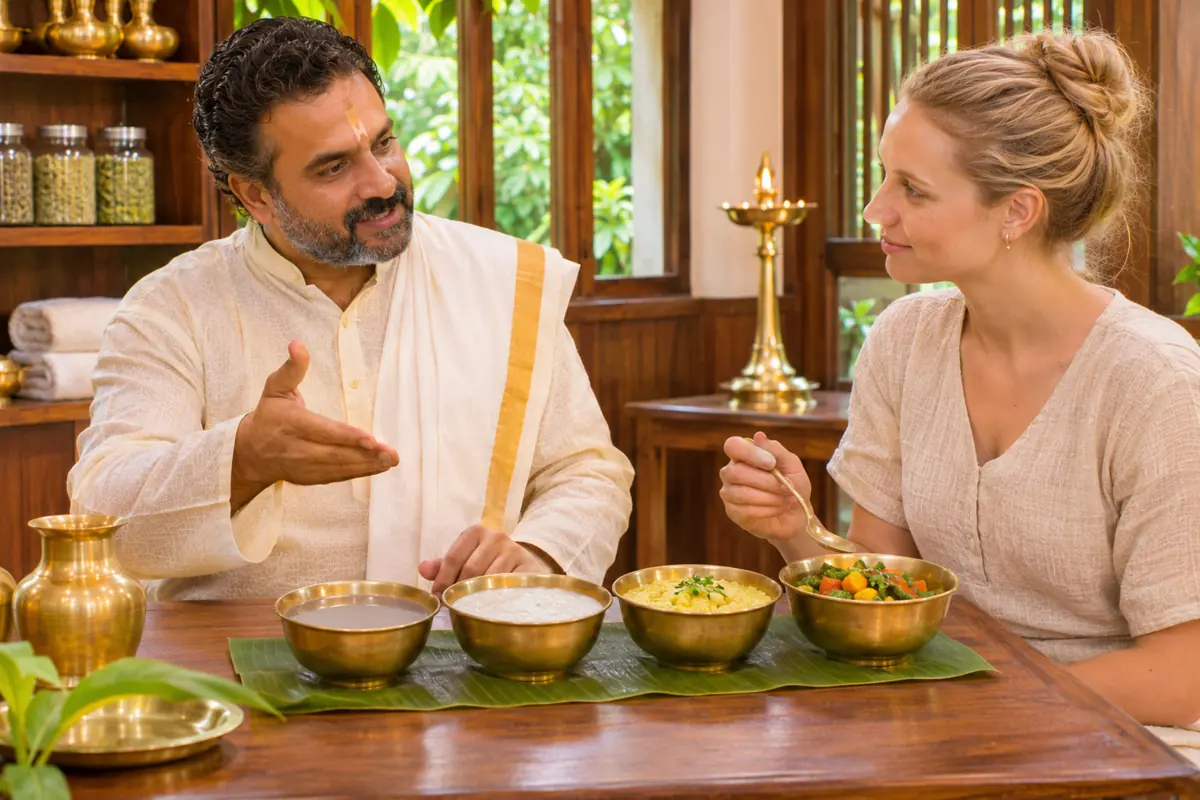
| Step 1 | Warm, thin rice water, lightly salted | Very gentle, helps the appetite wake up |
| Step 2 | Thin rice porridge | Soft and easy to digest |
| Step 3 | Thicker porridge, with a little ghee | Slightly richer and more nourishing |
| Step 4 | Soft rice with light lentil soup and gentle spices | Closer to a normal meal |
| Step 5 | Your usual meals, still warm and freshly cooked | Back to regular eating |
Some classical sequences include other foods, and your physician may adapt them to your diet and preferences.
How long does it take?
The length depends on the procedures you have had and how your appetite returns. It is commonly several days, and the physician reviews you daily and moves you on when you are ready. Because the e-Medical visa is valid for 60 days from first arrival and cannot be extended, allow room for this stage in your plan.
At the centre: nothing to work out
In a residential centre, the kitchen follows your physician's instructions, so each meal arrives at the right step. Tell the kitchen about allergies and dietary needs, and ask if something does not feel right. Rest between meals, and keep warm water by your side.
A practical guide for the days after you leave
Many international guests are flying home or moving to a hotel while still in the later steps. A few practical tips help:
- Ask your physician exactly which step you are on and what comes next.
- Choose simple foods such as plain rice, lentil soup, steamed vegetables and warm water.
- Cook or order food freshly, warm and mildly spiced.
- Avoid cold, fried, very spicy or heavy meals until your physician says it is time.
- Keep regular meal times and an early supper.
- Carry a written step-by-step plan, so you can follow it anywhere.
What you may feel
Most guests notice returning appetite, a feeling of lightness and good sleep as they move up the steps. If you feel unwell, hungry or unsure, tell your physician. The plan can be adjusted, and you do not need to wait for your next review.
Making the steps comfortable
A few small touches make the stepwise diet more enjoyable. Serve food warm, in small portions, and eat slowly without screens or hurry. A pinch of cumin, ginger or rock salt is often used to gently wake the appetite. Guests who usually eat late or snack often are encouraged to settle into regular mealtimes, and many find that this rhythm stays with them after they return home. If a step feels too plain, tell your physician; a small change of seasoning or texture can often be arranged within the plan.
Working alongside your own doctors
Please keep your own doctors informed. Share your medical summary, bring your reports and keep taking whatever you have been prescribed. If you have a medical diet, such as for diabetes, ask your doctors how the steps should be adapted. Please do not change medicines without medical advice.
Choosing a centre that guides your recovery diet
Look for a qualified Ayurvedic doctor (BAMS or MD Ayurveda), registered with the appropriate board, a clear written recovery diet, a kitchen that follows it carefully and a physician who reviews you daily. Be cautious of programmes that rush you back to ordinary meals.
Planning the journey
Apply for your e-Medical visa on India's official portal, usually with a hospital letter, a few weeks before travel. It is valid for 60 days from first arrival, allows three entries and cannot be extended. Book flights after approval, arrange travel insurance and choose an arrival time that gives you a rested first day. Check the portal for current rules before you apply.
Your friend and hand-holder through every step of recovery: MyVaidyam
A gentle recovery is easier with a friend, and that is where MyVaidyam comes in. We walk with you from your very first question to the day you return home, answering every question patiently and making sure that nothing is left to chance.
- An online consultation with an Ayurvedic physician to plan all stages of Panchakarma, including recovery.
- Help preparing your health summary and diet needs.
- Guidance on choosing a reputable centre with a thoughtful recovery diet.
- Help choosing flight dates that leave room for recovery.
- Support with your e-Medical visa documents, airport pickup and accommodation.
- A warm point of contact during your stay, and follow-up after you return home.
You are welcome to reach out at any stage. We would be delighted to help you plan a complete, well-supported programme.