This guide explains what purvakarma is, why classical practitioners place such value on it, what each step involves, what a typical day feels like, how long it usually lasts and how to prepare for it. And throughout, it shows how MyVaidyam can walk beside you as your friend and guide, whichever part of India you choose for your stay.
Ayurveda is offered here as a complementary, supportive approach that works alongside your own doctor's care, never as a replacement for it. Purvakarma is part of a programme that supports wellbeing. It does not promise a cure.
Quick Facts - Purvakarma Explained
| Topic | Summary |
|---|---|
| Meaning | Purva means before; karma means action or procedure |
| Place in Panchakarma | The first of three stages: purvakarma, pradhana karma and paschat karma |
| Typical steps | Digestive kindling, internal oil, external oil, steam, rest |
| Common aims | To prepare the body gently for the main therapies |
| Typical length | Several days, set by the physician |
| Who decides | A qualified Ayurvedic physician, after assessment |
| Visa | e-Medical visa: 60 days from first arrival, triple entry, non-extendable |
| Your companion | MyVaidyam: planning, coordination and support before, during and after |
What is purvakarma?
Classical Panchakarma is organised in three stages. The first is purvakarma, the preparation. The second is pradhana karma, the main procedures, such as therapeutic emesis, purgation, medicated enemas and nasal therapy. The third is paschat karma, the gentle period of recovery, diet and routine that follows.
Purvakarma is the bridge into the programme. Its purpose is to prepare the body so that the main therapies can be received comfortably. It is a calm, nurturing phase that involves warm food, oil, steam and rest.
Why preparation matters
Ayurvedic teachers often use an image from everyday life. Before cloth is dyed, it is washed and prepared so that the colour will take evenly. In the same way, the body is prepared before the main therapies so that they can be received gently and well.
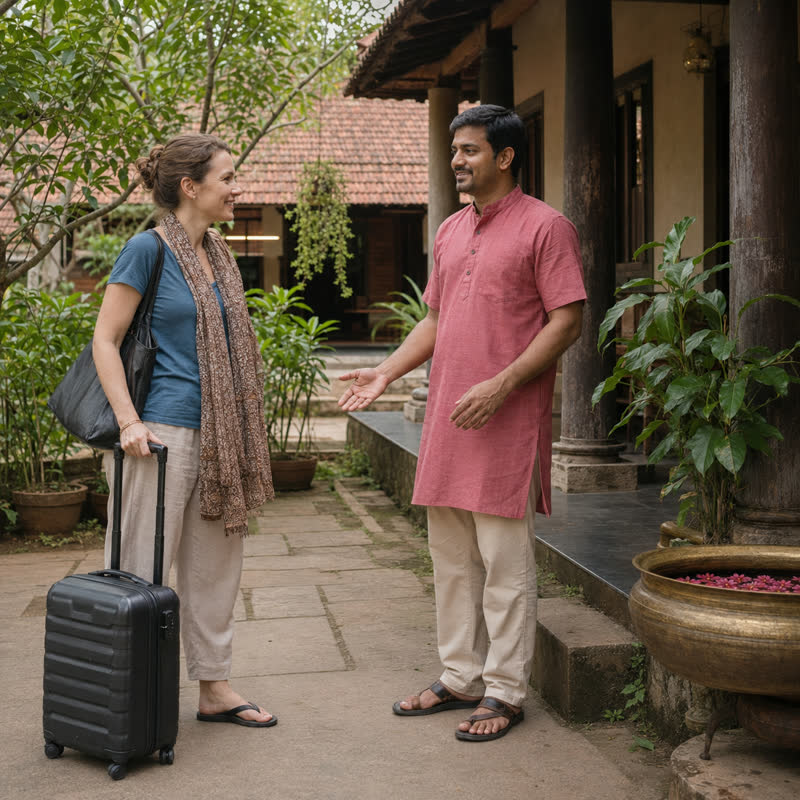
For international guests, it also offers a few days to arrive, settle, sleep well and begin to feel at home.
The steps, at a glance
- 1
Kindle digestion
Light, warm food and gentle herbs
- 2
Internal oil
Small, measured amounts of medicated ghee
- 3
Oil and warmth outside
Herbal oil massage and gentle steam
- 4
Rest and readiness
A quiet day before the main therapies
Then comes pradhana karma, the main Panchakarma procedures, and paschat karma , the gentle recovery that follows.
Your physician decides the order and duration. What follows explains each step in turn.
Step one: kindling digestion
Ayurveda places digestion at the heart of health, so preparation often begins there. Guests are usually given light, warm, easily digested meals, perhaps a simple rice and lentil porridge, together with gentle herbs or warm water, chosen by the physician to wake up the appetite. The sense of lightness that follows is something many people notice within a day or two.
Step two: internal oil
In many programmes, the next step is taking a small, carefully measured amount of medicated ghee each morning, with the amount gradually adjusted over several days. This is one of the traditional hallmarks of purvakarma. The physician watches closely how you respond, and the plan is shaped to your comfort and constitution. Because this step is individual, it is never something to attempt on your own.
Guests sometimes find the taste unusual at first, and centres will happily suggest ways to make it more pleasant.
Step three: oil and warmth outside
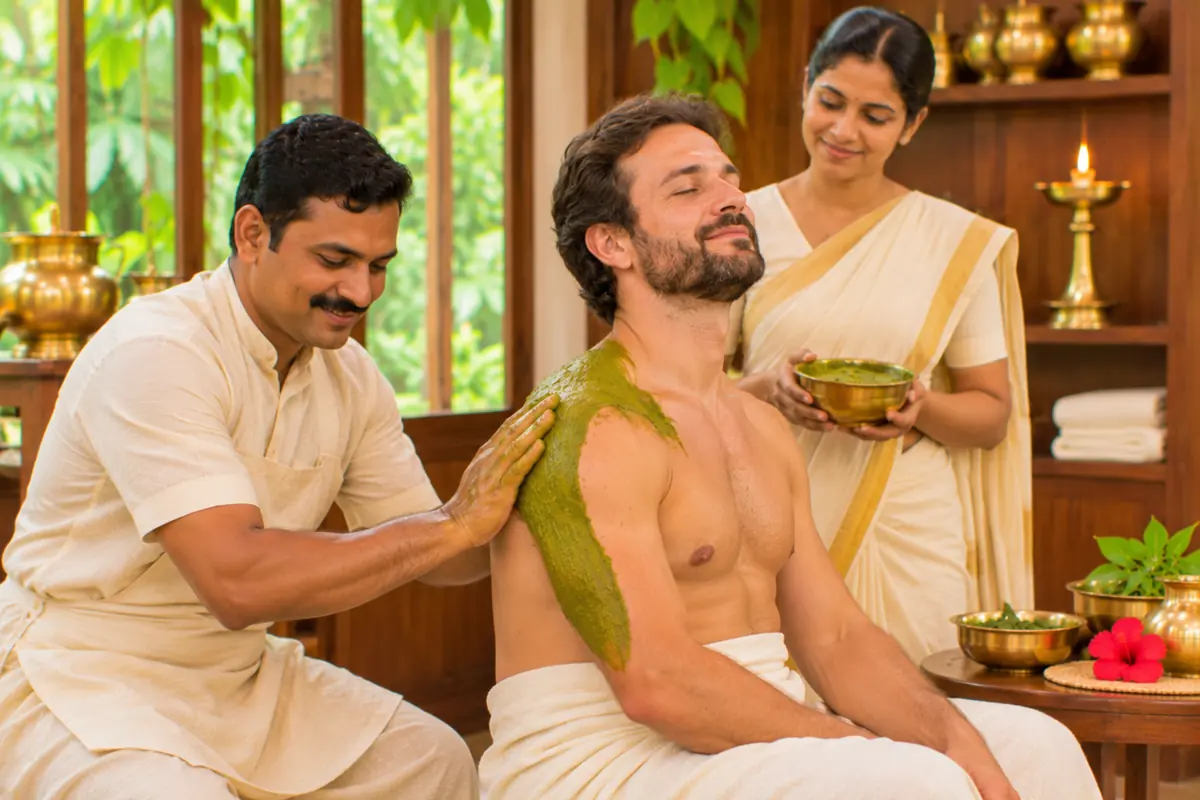
Alongside the internal oil, the body receives warm herbal oil massage, called abhyanga, followed by gentle herbal steam, called swedana. These therapies are deeply relaxing, and for many people they are the reason a stay feels like a retreat as well as a treatment.
| Therapy | What it involves |
|---|---|
| Abhyanga | Warm herbal oil massage, usually given by trained therapists, often two at a time |
| Swedana | Gentle herbal steam, usually in a comfortable chamber with the head kept cool |
| Shirodhara | Sometimes added, a slow stream of warm oil over the forehead for calm and sleep |
Step four: rest and readiness
Before the main procedures begin, the physician usually leaves a day for rest, with a lighter diet and plenty of quiet. Only then does pradhana karma begin.
What a day of purvakarma feels like
Days in this phase are gentle and predictable. You wake early, take your morning dose if your plan includes one, and enjoy a light breakfast. Later come your massage and steam, a warm bath, lunch and a long rest. Evenings are quiet, with a light supper and early sleep. Many people feel a little sleepy, a little warm and wonderfully unhurried.
Food and routine during preparation
Meals in this phase are warm, simple and freshly cooked, often rice, lentils, steamed vegetables and mild spices. Most centres ask guests to avoid alcohol and outside food. Tell the kitchen about allergies and dietary needs at the start.
How long does purvakarma last?
The length varies with the person and the programme. In many centres it is a matter of several days, with a longer or shorter period depending on how you respond. When you plan your stay, ask the centre how many days they expect to set aside, and remember that the e-Medical visa is valid for 60 days from first arrival and cannot be extended, so allow a comfortable margin.
Is purvakarma right for everyone?
Purvakarma, like Panchakarma itself, is not a one-size-fits-all programme. A physician considers your age, strength, digestion, health conditions and medicines before deciding on the plan. Some people are guided towards a gentler programme, which is what a thoughtful assessment is for.
Working alongside your own doctors
Please talk to your own doctor before you plan a Panchakarma programme, and share your medical summary. Bring your reports and a list of your medicines, and keep taking whatever you have been prescribed. Ask your physician to write down any herbal preparations so that you can show them to your doctors at home. Please do not change medicines without medical advice.
Choosing a centre for Panchakarma
Look at these, roughly in order of importance:
- The physician. A qualified Ayurvedic doctor (BAMS or MD Ayurveda), registered with the appropriate board, who will see you personally.
- The written plan. A clear plan with the stages, therapies, diet, inclusions and follow-up.
- Setting and hygiene. Clean therapy rooms, trained therapists and a calm place to rest.
- Medical backup. Who is on duty at night, and which hospital is nearby.
- Standards. Government recognition and NABH accreditation are useful signs, though not guarantees.
- Honesty. Be cautious of promises of a cure or of any pressure to decide quickly.
Planning the journey
Apply for your e-Medical visa on India's official portal, usually with a hospital letter, a few weeks before travel. It is valid for 60 days from first arrival, allows three entries and cannot be extended. Book flights after approval, arrange travel insurance and choose an arrival time that gives you a rested first day. Because purvakarma begins so gently, arriving a day early is a lovely way to settle in. Check the portal for current rules before you apply.
Your friend and hand-holder on the way to a Panchakarma stay:
MyVaidyam
A programme as thoughtful as Panchakarma deserves thoughtful planning, and that is where MyVaidyam comes in. We walk with you from your very first question to the day you return home, answering every question patiently and making sure that nothing is left to chance.
- An online consultation with an Ayurvedic physician to talk through your goals and how Panchakarma could look for you.
- Help preparing your health summary and a written plan after your consultation.
- Guidance on choosing a reputable centre and a programme length that suits you.
- Help checking what is included and what is arranged separately.
- Support with your e-Medical visa documents, flights, airport pickup and accommodation.
- A warm point of contact during your stay, and follow-up after you return home.
You are welcome to reach out at any stage. We would be delighted to help you begin your Panchakarma journey with confidence.